

Oculus Rift? Wearing a simple T-shirt, with a messy hairstyle and trying to look credible in his teenage enthusiasm, 19-year-old Palmer Luckey gave the slogan: “Join the revolution and help us change video games forever.” With these words, the video he uploaded in 2012 to Kickstarter ended, in an attempt to raise money and complete the construction of the Oculus Rift, this “mask” that transports whoever wears it into the world of virtual reality. A month later, he had raised 2.4 million dollars and, if nothing else, had achieved a revolution in how you can finance a good idea – his campaign was considered one of the most successful in history through the crowdfunding method. Without this initial amount, the Oculus Rift would not have evolved enough and we might never have reached the events of recent days, when the company Oculus VR (Oculus Rift) was acquired by Facebook for $2 billion.
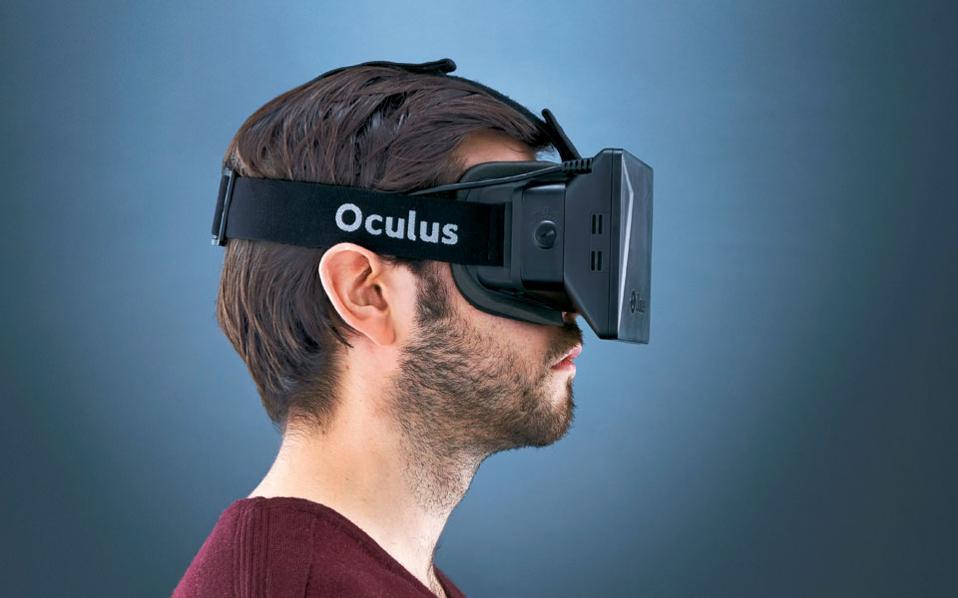
A year had passed. During that time, the Oculus Rift, which was being tested, reached the hands of a few thousand video game and technology application developers, and the company Oculus VR managed to raise $90 million from a series of investors so that the famous headset could finally be released on the market. Those who had tried to "wear" it were left speechless, the experience it offered was what for decades seemed like a lost bet: virtual reality in the world of games could exist. It was as if the Holy Grail had finally been found. And it had been found by a self-taught kid, who was experimenting with constructions in his parents' garage. Before he was even an adult, he bought every relevant gadget that was on the market with his pocket money and, according to him, he had come to own the world's largest collection of HMDs (head-mounted displays). But he found flaws in all of these devices. The idea to build something better was created so that he could, first of all, experience the ultimate gaming experience in a virtual reality environment. This, after all, was the secret to his success. He knew what was missing, he knew what needed to be fixed.
The Oculus Rift is now considered almost ready. What Oculus has managed to do is create a product that is both affordable (the demo version costs $300) and incomparably better than any similar device that has been built to date. Nate Mitchell, a software engineer who now works at Oculus, tried to describe how realistic your experience is when he spoke to Time magazine. For example, if you are on the edge of a cliff, you feel a real sense of vertigo. “You know you’re not going to fall off the cliff, but your brain is still saying, ‘Don’t take that step.’”.
And then, along came Facebook
“The amazing thing about this technology is that you feel like you’re really in another world, with other people,” said Mark Zuckerberg a few days ago, who tried the Oculus Rift, was impressed, and quickly bought Oculus VR. However, what initially sounded like an unlikely success story was seen by many as an act of betrayal. Hundreds of gamers expressed their disbelief at Facebook’s acquisition of the company and felt cheated out of their initial support for the campaign. “With this deal, Kickstarter may have lost its innocence,” commented the Guardian newspaper. Luckey responded that the sale of Oculus is the best possible development for the future of virtual reality and not for his wallet. He even assured people that the company would continue to operate independently, to achieve the goals it had set. All of this did not convince anyone and there were cases like Marcus Pearson, creator of the popular game Minecraft, who canceled his plans to create a compatible version of his game with the Oculus Rift.
Lucky, however, still has very strong allies. One of them is John Carmack, a legend in the world of gamers – he is considered one of the pioneers in the creation of 3D graphics about twenty years ago. Carmack, therefore, had devoted himself to virtual reality technology in recent years and, when he learned about the effort of the unknown kid from California, he was interested in trying out the “mask”. His enthusiastic comments are partly responsible for the explosion of popularity of the Oculus Rift in its early stages. In fact, Carmack believed so much in the future of this technology that he left his own company and now works as CTO at Oculus VR. His vision is for the Oculus Rift to evolve into an autonomous device with its own operating system, without the need, as it is now, to be connected to a computer.
But here’s an interesting question: What does Facebook have to do with all this? According to Time magazine’s Lev Grossman, Zuckerberg’s decision to invest in virtual reality, a technology that had been considered a failure for years, is surprising and constitutes “one of the biggest and strangest comebacks in history.” Here’s the thing. Zuckerberg saw something different. “After games, we’re going to evolve Oculus Rift into a platform for many other experiences,” he said. “Imagine watching a game from the front row, being in a classroom with students and teachers from all over the world, or consulting a doctor face-to-face—all by simply wearing the headset at home. This is truly a new communication platform.” Although some things still sound like science fiction scenarios, this first truly successful foray into the virtual reality universe could gradually lead to a new technological revolution – and not just a revolution for video games, as Palmer Luckey originally dreamed.
Was the acquisition by Facebook a "betrayal"?
Irinaios Filippidis, co-owner of groopio.com, the Greek self-financing platform, explained to us that there is nothing reprehensible in this move and that the specific legal framework used by Kickstarter (which does not provide shares to backers) “exonerates” Lucky and does not justify the public’s reactions. So why were there any? “People reacted and are hesitant because we are at the beginning of a new era,” Mr. Filippidis tells us. “But Facebook’s interest proves that the idea was good and that the crowdfunding model works. Anyway, in America right now many companies are choosing it not so much for the money, but for the promotion and advertising.”.
Let us add, however, in trying to justify the reactions of the world, that there was also a romanticism to this whole story. The fanatical gamers did not trust Lucky as a businessman, but as one of them. They would discuss for hours with him on the MTBS forum (originally the phrase “Meant To Be Seen”), a community for those who shared the vision of virtual reality. In fact, Lucky himself, signing as PalmerTech, had commented on the forum, when he announced his intention for the Kickstarter, that he needed the money for the cost of the work, that he did not intend to make a profit from this story and that, if he had ten dollars left, he would celebrate with a pizza and a beer!
