

Microsoft, however, is said to be considering making Windows Phone, the version of Windows for smartphones, available for installation at significantly lower prices to phone manufacturers.
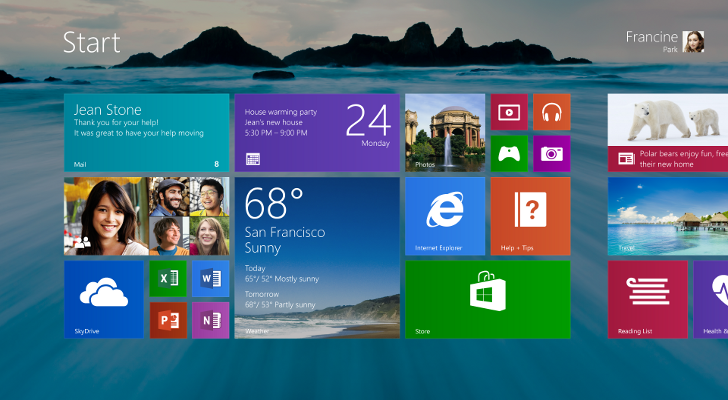
The same sounds like it for Windows 8.1, at least on low-cost computers and laptops (less than $250), where Google already has a proposal (ChromeOS on Chromebooks).
On the other hand, Apple has already thrown down the gauntlet to Microsoft. On October 22, 2013, on the occasion of the release of OS X Mavericks for Mac, Tim Cook announced in Redmond that “it is time to open a new chapter in the history of software, to move into a new era in which operating system upgrades will be free.” Since then, Apple has established that the upgrade will be available free of charge directly from OS X Snow Leopard, Lion or Mountain Lion.
However, such a decision, the first major decision of the new CEO, Satya Nadella, will be very difficult to make. The cloud market is clearly fragmented, with users having two or three accounts on each cloud service.
Gmail users are being asked to keep their files in sync on Google Drive and flock to Google+, abandoning Facebook, while also using automatic file transfer from their Android smartphone. Apps, music and movies are purchased from the Play Store.
Windows 8.1 users have their email on Outlook.com and files synced to OneDrive, while their photos are automatically uploaded with Camera Upload from their Windows smartphone. For apps, music and movies, they are referred to the Windows Store.
Finally, Apple product users have everything gathered in the company's cloud services, unless they go astray and dare to place the latest Samsung Galaxy S model next to their Mac mini or MacBook.
However, a common phenomenon is the dispersion of photos and contacts or even friends across different services from different devices, a fact that no longer guarantees that a free operating system could guarantee a similar increase in subscribers and users.
