

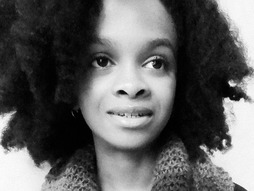
 Maya Penn started her first business when she was 8 years old, and she thinks a lot about being responsible to her customers and the planet. She shares her story — and some of her animated illustrations, and some of her drawings, and a little bit of contagious energy — in this captivating talk.
Translated into Greek by Chryssa Rapessi and edited by Elena Karaiskou for TED Talks.
Waiter: Can I help you, sir?
Customer: Let's see.
Waiter: We have fried registry errors sprinkled with the finest corrupted data, binary brioche, memory sandwiches, fried viruses and a script salad with or without polymorph sauce and a grilled code skewer.
Customer: I would like a memory sandwich and a glass of your best Code 39. Waiter: Would you like something sweet, sir? Our specialty is the tracking cookie. Customer: I would like some zombie tracking cookies, thank you.
Waiter: They're coming right up, sir. Your food will be served shortly. (Applause)
Maya Penn: I've been drawing since I could hold a crayon, and I've been making philoscopes since I was three years old. At that age, I learned what an animator was. It was a show on TV about jobs that most kids didn't know about. When I realized that an animator makes the cartoons that I saw on TV, I immediately said, "That's what I want to be." I don't know if I said it to myself or out loud, but it was a defining moment in my life. Cartoons and art have always been my first love. It was my love of technology that gave birth to the idea for "Malicious Dishes."
My computer had a virus, and I was trying to get rid of it, and suddenly I thought, what if viruses had their own little world inside the computer? Maybe a restaurant where they meet and do malicious things? And so "Malicious Dishes" was born. When I was four, my dad showed me how to take apart a computer and put it back together. That started my love of technology. I built my first website in HTML, and I'm learning JavaScript and Python. I'm also working on an animated series called "The Pollinators."
It's about bees and other pollinators in our environment and why they're so important. If plants weren't pollinated by pollinators, then all the creatures, including ourselves, that rely on those plants, would starve. So I decided to take these great creatures and make a team of superheroes. (Applause) (Heavy footsteps) (Music) (Growl)
Pollinator: The Apopsilosaurus! I should have known! I need to call out to the other Pollinators! (Music) Thank you. (Applause)
All of my animated illustrations start with ideas, but what are ideas? Ideas can be the spark for a movement. Ideas are the opportunities and the innovation. Ideas make the world go round. If it weren't for ideas, we wouldn't be where we are now with technology, medicine, art, culture, even how we live our lives. At the age of eight, I took my ideas and started my own business, called Maya Ideas, and my non-profit, Maya Ideas for the Planet. (Laughter)
I make eco-friendly clothing and accessories. I'm 13 now, and although I started my business in 2008, my artistic journey began much earlier. I've been deeply influenced by art, and I wanted to incorporate it into everything I did, including my business. I would find different fabrics around the house, and I would say, "This could be a scarf or a hat," and I had all these ideas for designs. I noticed that when I wore my creations, people would stop me and say, "Wow, that's really beautiful.
Where can I buy that?" And I thought, I can start my own business. I didn't have a business plan at the age of eight. I just knew that I wanted to make beautiful creations that were environmentally friendly and I wanted to give back. My mom taught me how to sew, and I would sit in the yard and make little bones out of ribbon, and I would write the names and the price for each item. I started making other things, like hats, scarves, and bags. Soon, my items were being sold all over the world, and I had customers from Denmark, Italy, Australia, Canada, and other places. I had a lot to learn about my business, like branding and marketing, staying in touch with my customers, and seeing what was selling the most and what was selling the least.
Soon, my business started doing well. And one day, Forbes magazine contacted me when I was 10 years old. (Laughter) They wanted to feature me and my company in their article. A lot of people ask me, why is your business environmentally friendly? I've been passionate about protecting the environment and its creatures since I was little. My parents taught me early on that I should give back and be a good steward of the environment. I heard that the dyes in some clothes or the process of making the items were harmful to people and the planet, so I started doing my own research, and I discovered that even after the dyeing is done, there's a waste issue that has a negative impact on the environment. For example, grinding materials, or dumping dry materials into dust. These actions can pollute the air, making it toxic to anyone or anything that breathes it in. So when I started my business, I knew two things: All of my products had to be environmentally friendly, and 10 to 20 percent of my profits would go to local and global charities and environmental organizations. (Applause) I feel like I'm part of a new wave of entrepreneurs who not only want to have a successful business, but also a sustainable future. I feel like I can meet the needs of my customers without compromising the ability of future generations to live in a greener tomorrow. We live in a big, diverse, and beautiful world, and that makes me even more passionate about saving it. But it's never enough to just understand what's going on in our world. It has to go to your heart, too, because when it goes to your heart, that's when movements start. That's when opportunities and innovation are created, and that's when ideas become reality.
Thank you, peace and blessings. (Applause) Thank you. (Applause) Pat Mitchell: So you heard Maya talk about the amazing parents behind this incredible woman. Where are they? Please, Mr. and Mrs. Penn. Can you — Ah! (Applause)
