

Landmines are a major nuisance in some parts of the world, both for military and civilian personnel. But even in times of war, they are an insidious and difficult-to-detect enemy. Lemur Studio Design , based in Bogota, decided it was time to do something about it.
The wars, especially civil wars worldwide, have caused roads and paths to become filled with mines targeting personnel as well as anti-armor, even near houses, without excluding hospitals, schools, etc. Not even national parks are safe. And that's not the only problem. Drug conspiracies use mines to protect farms that have been robbed, from invaders. So, as you can see, there is a significant likelihood that people get injured or killed by mines.
Lemur Studio Design is trying to help combat this threat in its own way. Giving your shoes the ability to detect mines. We're not talking about new pairs of shoes, but about boot soles that can be attached to any shoe.
It is called SaveOneLife (save a life). Lemur Studio Design submitted the idea to the World Design Prize Impact 2013-2014 competition. Their inventor is Ivan Perez, and he published his work under the project Lorena Cardenas.
SaveOneLife is not a solution to the problem, but it will at least reduce the risk from anti-personnel mines. It will take years to clear all the minefields in the world and perhaps endless conversations to prevent new ones from being created.
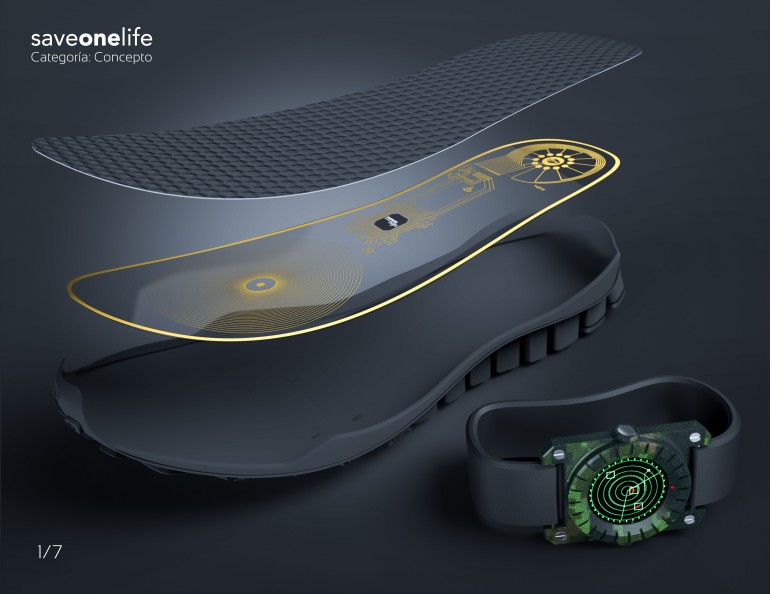
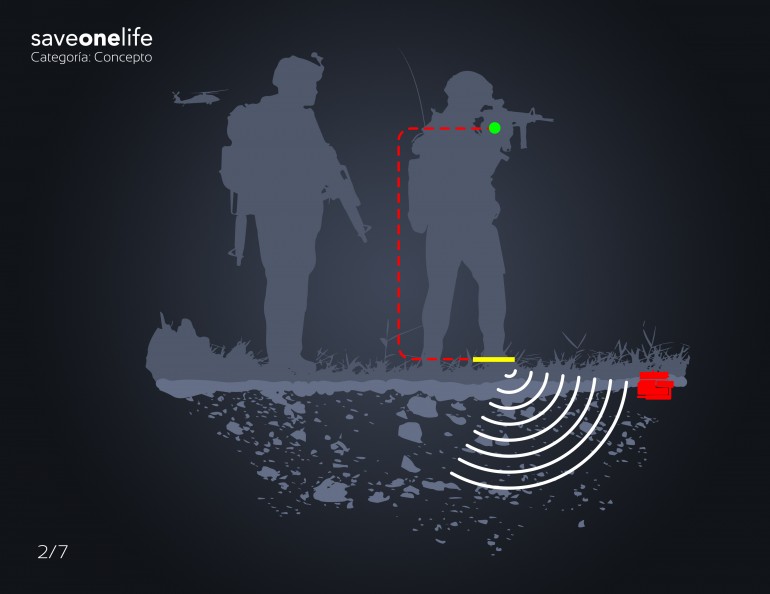
How does the insole work? It is made of a conductive material and has a flat coil printed on it, which produces an electromagnetic field. This field detects metal and will alert you to the presence of metal when you are within 2 meters (6.5 feet) of it. A embedded in the insole then uses a radio transmitter to send a message to a wristwatch, which in turn sounds an alert and displays the location of the metal on a small screen.
Agreed, the idea and this technology could very well have, if not already, a military application. Soldiers of the very near future may possibly have it in their equipment. However, if it is given to the unarmed inhabitants of a war zone, then the idea is characterized as humanitarian rather than military.
