

Anonymous has not been able to attack high-profile targets like they once did for some time now. It's a decline that can be directly attributed to the arrests of members from the group's core. At least that's what an FBI agent who reported it to the Huffington Post.
In late 2010, Anonymous attracted global attention through a series of attacks they launched against American businesses and government organizations, with several data thefts and website defacements.
But the arrests last year of five members of Lulz Security, a powerful hacker group, had a “huge deterrent effect” on Anonymous, creating “added distrust” in the group, according to Austin P. Berglas, assistant special agent in charge of cyberspace at the FBI’s New York division.
“All of these kids [arrested] were important players in the Anonymous,” Berglas said in an interview with HuffPost.
The 2012 arrests were aided by a key informant, Hector Monsegur, also known as “Sabu,” who was arrested and later cooperated with the FBI. The fear that one of their own was cooperating with the FBI made them suspicious, according to Berglas.

“The movement is still there, circulating on Twitter, posting various things, but there is no longer anyone to announce major breaches. This is exactly what is happening, due to the arrest of the big players.”
Gabriella Coleman, a professor at McGill University who studies Anonymous, said there is “no doubt” that the arrests dealt a significant blow to “a central hub of the group's activity” of the group. “But Anonymous are still alive”.
“They could easily appear again as a calculable force”, he said to HuffPost in an email message.
The arrests of Anonymous members last year came from the FBI's New York division. (The five core members of Lulz Security admitted their guilt.) In another case, the FBI in New York launched an investigation that led to the arrests of three individuals who are alleged to have distributed the Gozi virus, which has infected at least 1 million computers and stole millions of dollars from banks worldwide.
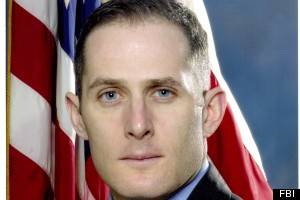 The former Army officer, Berglas, 41 years old, is the head of the FBI's New York department responsible for cyberspace, one of the busiest local FBI offices. His office has a view of the Manhattan skyline, the center of the financial world, which is also a frequent target of hackers.
The FBI New York office is divided into five teams of investigators. One unit is tasked with taking digital evidence from cell phones, cameras, computers and tablets. In this way, it supports a wide range of investigations into a wide range of cases, from organized crime to cyber-piracy to child pornography. Berglas said that the Computer Analysis Response Team have become experts at breaking the encryption methods used by suspects to hide the contents of their computers.
The other four groups work on cybercrime based on the country of origin of the hackers. Given that most attacks that occur in the US are carried out from computers abroad, the FBI often cooperates with the authorities of other countries, said Berglas.
The cybercriminals have many motives, but their methods are often the same. Most attacks on computer systems are carried out by deceiving their owners and leading them to click on malicious links that come with email messages and “trusted sources”, a technique known as “spear phishing,” Berglas continued.
“It is number one, the most common attack. Major financial companies spend millions and millions of dollars on security, and the only thing a hacker does is manage to obtain the credentials of an employee with a well‑crafted “spear phishing” site.
Cybercriminals have become experts at hiding their IP addresses – but ultimately, even the most skilled hackers make mistakes.
Hector Monsegur, aka “Sabu,” the FBI informant whose cooperation led to the arrests of the rest of LulzSec last year, left his IP address exposed. The bug allowed investigators to track him and locate him in an apartment on Manhattan’s Lower East Side.
“It is easy to sit behind a computer and think you are anonymous and do all these illegal activities, whether it is hacking a business or child pornography trade or buying and selling stolen identities and cards. But it is only a matter of time before criminals make mistakes that lead to their arrest”. “All I need is only once.”
