

The seven billion inhabitants of Earth did not notice anything, but last September the planet was "wrapped" for four weeks by a very strong radiation of charged particles. NASA research vessels revealed the transient existence around the Earth of a third Van Allen radiation belt, which scientists were completely unaware of. After the initial surprise, experts are eager to study further the phenomenon, which can be dangerous for satellites, manned space missions and ground-based electronic systems.
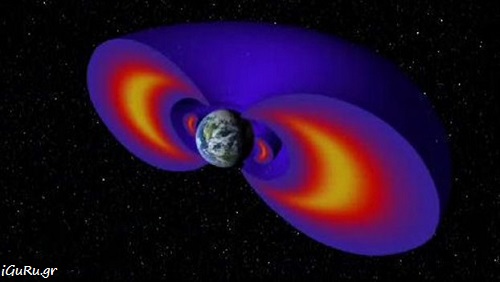
The Van Allen belts
The Van Allen radiation belts were discovered in 1958 by James Van Allen, after whom they are named. They are two rings formed by high-energy particles – “killer electrons,” as they are called – that are trapped in the Earth’s magnetic field.
The inner zone, which is closer to our planet, is relatively stable. The outer zone, which begins to extend from an altitude of 13,000 to 40,000 km from the Earth's surface, is extremely unstable and exhibits enormous fluctuations. Within a few hours, or even minutes, the electrons that make it up can reach the speed of light while its size can become a hundredfold.
Although their existence has been known for decades, scientists don't know much about these radiation belts, other than that they can cause damage to satellites and spacecraft, or even electronic systems here on Earth. On August 30, 2012, NASA launched the two Van Allen Probes with the aim of gathering more information about them.
The big surprise
On September 2, just a few days after their launch, the Van Allen radiation belts made a surprise discovery. Researchers at the University of Colorado at Boulder, which developed the instruments carried by the research vessels, saw a third radiation belt forming before their eyes in a process not predicted by any theory.
"It was so strange that I thought something was wrong with the instruments," Dan Baker , the project's lead researcher and lead author of the study published in the journal Science, said in a university press release . "But we saw identical data on the second spacecraft. We couldn't help but conclude that it was true . "
While the initial data showed the two Van Allen belts exactly as the theories suggested, on the second day of September the outer belt began to become very dense (forming a “storage ring” as the researchers called it) while a third, more sparse, ring of electrons formed on its outer side. The outer ring began to break up in the third week until finally, on October 1, a powerful interplanetary shock wave probably originating from the Sun completely disintegrated its remains and with it the “storage ring” within an hour. The two “expected” radiation belts then formed again, and remained for the following months. (Credit DN Baker et al)
Reexamining the theories
The discovery certainly leads experts to the conclusion that they should reconsider their theories, but for now many parameters are unknown, first and foremost the frequency of the appearance of the third zone. "We have no idea how often this happens," said Dr. Baker. "It may happen quite often, but we haven't had the right tools to see it.
Scientists also do not know where the electrons that form the "storage ring" come from or what causes the acceleration of the charged particles, although they believe that this must be related to solar activity and its interaction with the Earth's magnetic field.
The next Van Allen data are therefore awaited with great interest, not only by the research team, but also by theorists who deal with the Earth's magnetic field and space weather. "The discovery really confronts us with a very important question and many important puzzles," Yuri Sprits of the University of California, Los Angeles, who was not part of the research team but is preparing a study on the subject, told New Scientist magazine
As the expert reported, last September there were no malfunctions in satellites that could be linked to the phenomenon.
