

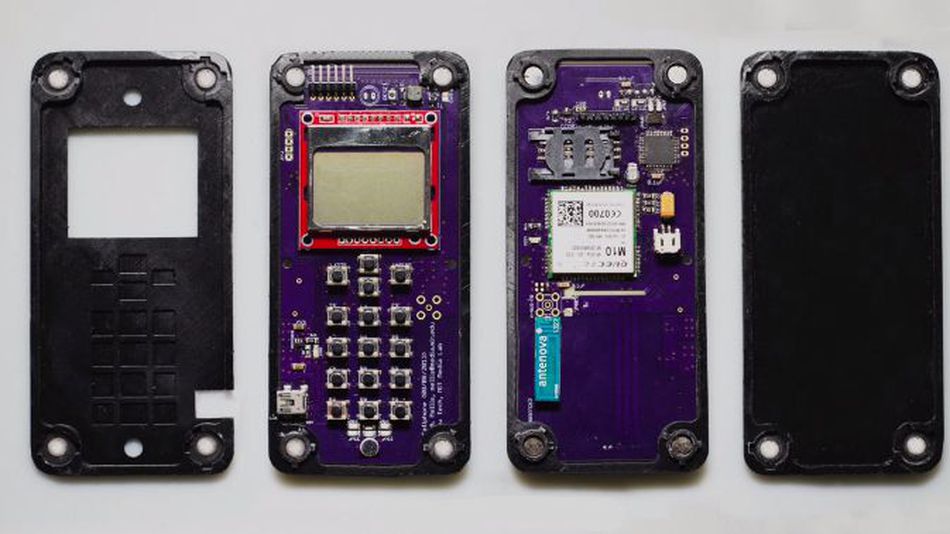
A team of scientists at MIT has created a self-assembling mobile phone. The prototype, developed by MIT's Assembly Lab, has the ability to assemble itself in less than a minute.
The idea behind the project, first reported by Fast Company, is surprisingly simple. Each phone is made from three pieces. Six of them are placed inside a tumbler that spins the pieces fast enough so that they can stick together (via magnets) to create a phone, but not fast enough to break or damage the pieces.
MIT has released a video showing the process. The total assembly time can range from a few minutes to less than a minute, according to the report.
This project is still an experiment, but MIT's Skylar Tibbits, who worked on the prototype, says the concept opens up a new realm of design possibilities, especially given the trend of modular smartphones that include multiple parts.
“Right now the phone is pre-configured, and we’re using this process so we can get the phone to come together,” Mr. Tibbits told Fast Company.
“But imagine having a circuit board that has different logical building blocks and those logical building blocks can be moved around – that way you can have different functions. Essentially the most important thing is [that] you can have complete design freedom.”
