

Tesla appears to be one step closer to its long-awaited public unveiling of Cybercab in Austin , Texas , with the launch possibly set for as early as August. According to a report by The Information , the company has briefed employees on its plans, with the internal goal reportedly being to launch the service by the end of the month , although a further delay is not ruled out.

The Cybercab is one of Tesla 's most ambitious projects , as it is a two-seater vehicle designed from the ground up for autonomous travel . It has no steering wheel or pedals , which means it cannot function as a conventional car with a human driver.
From employees to passengers
The initial plan calls for Cybercabs to be piloted on public roads in Austin, initially with Tesla employees . If all goes according to plan, the vehicles could join the company's Robotaxi service and carry passengers within a few days.
See also: Tesla's Cybercab begins production — is Musk putting the brakes on?
Tesla has already prepared the ground. Austin emergency response teams recently received training on how to move vehicles in the event of a breakdown or other incident, and testing has been underway on private roads near the company's facilities since July.
At the same time, the Robotaxi service account is already promoting a Cybercab presentation event, offering passengers the opportunity to participate in a raffle. The more trips they make, the greater their chances of participating.
The big bet is software
Despite the impressive design, the biggest challenge for the Cybercab lies not in the vehicle itself but in the software. A vehicle without a steering wheel and pedals must be able to perceive its environment, make decisions and react to unforeseen situations without human intervention.
Tesla claims that remote operators monitor the vehicles and can intervene in an emergency. However, this model requires a level of reliability that the company has yet to demonstrate on a large scale.

The available data shows the difference. As of July, Tesla reported about 380,000 miles of driverless autonomous driving at its Robotaxi operations centers . Waymo , by contrast, has logged more than 220 million miles of passenger-carrying autonomous driving. The gap between the two companies is therefore enormous.
Small fleet and limited geographical coverage
Another problem is scale. There are about 186 Model Ys for Robotaxi service in Austin, but only a small fraction of them appear to actually operate without safety supervisors.
See also: Tesla: Integrating Starlink antenna in Cybercab
The autonomous fleet is reportedly stuck at around 17 vehicles, down from around 25 in the spring. This raises questions about whether Tesla is ready to move from limited testing to truly mass service.
The Cybercab uses largely similar self-driving to the Model Y already being tested in Texas and Florida, so the new vehicle doesn't solve the system's reliability problems on its own.
Cybercab is not a car for private individuals
Despite Elon Musk's initial promises of a Cybercab priced under $30,000 , the scenario of it being purchased by private individuals soon seems extremely remote today.
The absence of a steering wheel and pedals drastically limits its usefulness outside of areas where the software has been approved and supported. Tesla has expanded testing to limited areas in Austin, Dallas, Houston, Miami, Tampa and Orlando, but outside of these the vehicle cannot be used like a conventional car.
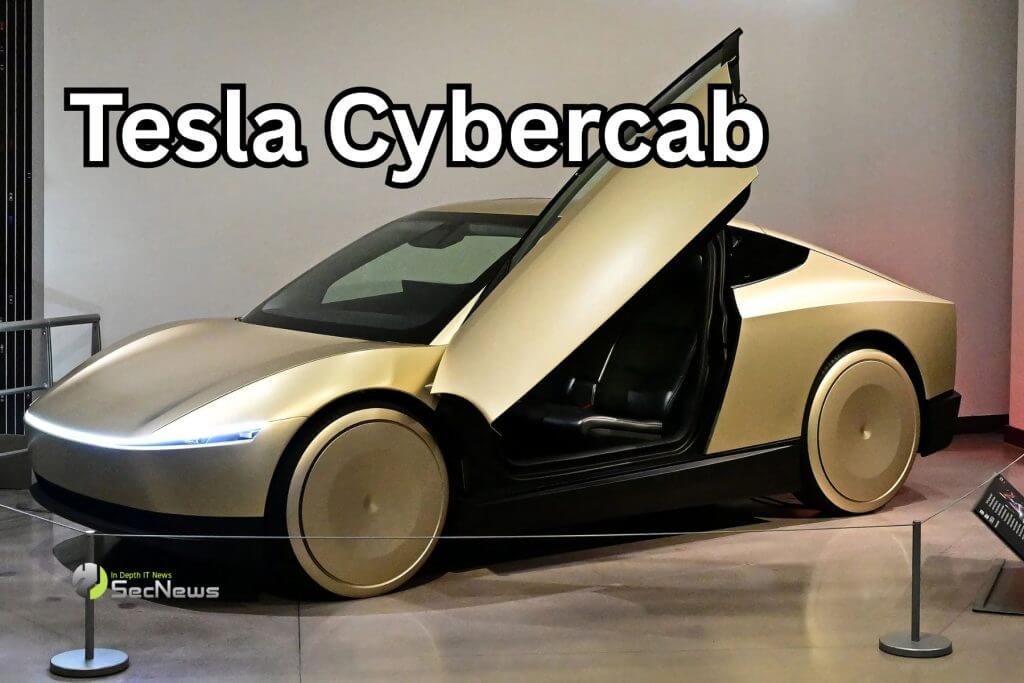
Production before full operation
Tesla has been building Cybercab at its Gigafactory Texas since February, with more than 100 units spotted on site by July. The company is therefore already investing in the production of a vehicle whose commercialization depends entirely on the progress of autonomous driving.
See also: Elon Musk: Tesla will start production of the Cybercab in April
Even the addition of a Starlink antenna to the Cybercab shows Tesla’s effort to strengthen the ecosystem around the vehicle. The real test, however, will not be production or presentation. It will be whether Tesla can prove that a driverless car can transport passengers safely, reliably, and consistently in everyday traffic.
