

The volume of personal information transferred daily via computers and smartphones continues to grow. Documents, photos, login details, payment data, private conversations and professional information are stored or transmitted across dozens of different services. As a result, digital security is no longer just a concern for businesses and IT professionals, but has become an integral part of everyday life.
The good news is that protecting personal data doesn’t necessarily require advanced technical knowledge. Many of the most common incidents can be mitigated with relatively simple precautions: using strong and different passwords, enabling multiple layers of authentication, regularly updating devices and programs, and developing the ability to recognize fraud attempts. CISA and ENISA include these very practices among the essential elements of good digital hygiene.

Different passwords to avoid chain problems
One of the most dangerous mistakes is using the same password across multiple services. This way, a breach on a single website can have much wider consequences, as the same data can automatically be tried on other accounts.
For this reason, it is preferable to use a different password for each important service. CISA recommends long, random and unique passwords, while ENISA explicitly advises against reusing them across different accounts.
However, memorizing dozens of different combinations is not realistic for most users. A practical solution is to use a password manager, a tool that can generate and store complex passwords in a protected file. This way, the user does not have to resort to predictable patterns or slight variations of the same password for each platform.
Password guidelines are also evolving. The latest NIST guidelines place a strong emphasis on password length and ensuring that passwords are not on lists of commonly used or compromised credentials, moving beyond the old belief that security depends solely on the mandatory use of capital letters, numbers, and symbols.
Multi-factor authentication adds a critical layer of protection
A strong password is the first line of defense, but it shouldn't be the only one. Multi-factor authentication, known as MFA or 2FA, requires an additional check beyond a simple username and password combination.
The logic is simple: even if a malicious user gets the password, they still have to overcome a second level of verification to get into the account. NIST considers MFA a significant security enhancement, while the FTC points out that the second factor can block access even when basic login details have been compromised.
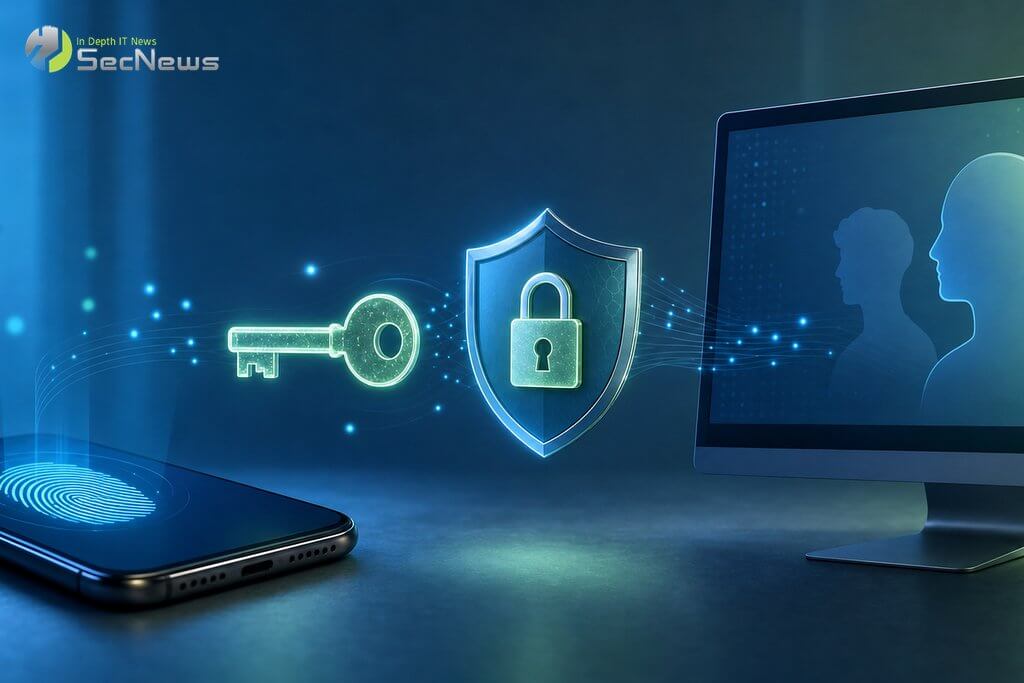
Where available, phishing-resistant systems based on cryptographic keys, such as passkeys, are of particular interest. These allow for authentication via a device that is associated with the user and can be unlocked, for example, via a PIN or biometric recognition. NIST emphasizes that this approach significantly reduces the likelihood of credential theft via a traditional phishing page.
Updating software and devices isn't just about new features
Notifications requesting updates to the operating system, browser, or applications are often put off because they are considered annoying. However, from a security perspective, many updates are necessary, as they fix vulnerabilities discovered after a program's initial release.
CISA points out that vulnerabilities in software could allow an attacker to gain access to accounts or files and, for this reason, recommends installing available updates immediately, preferably through automatic features when they are offered.
The same attention should be paid to smartphones, routers, browser extensions, and even apps that may seem secondary. A digital ecosystem is essentially only as secure as its weakest point: updating just the main computer isn't enough if other connected devices continue to use outdated software.
Phishing still primarily exploits human behavior
Not all breaches require particularly sophisticated techniques. Many attacks simply try to convince the user themselves to voluntarily hand over their information.
Phishing can appear in the form of an email, SMS, instant message, or website designed to mimic a legitimate service. The goal may be to steal credentials, trick the user into opening a malicious attachment, or collect personal information.
Special attention should be paid to messages that create a sense of urgency. Notifications about alleged account blocking, payments that need to be confirmed immediately, unexpected prizes, or sudden verification requests can lead the user to click before they have time to check what is really happening.
A simple strategy is to avoid accessing a service via a link contained in a suspicious message. It is usually preferable to open the known website or application directly and check from there whether there is a real notification. Before entering passwords or financial data, it is also useful to carefully check the domain, sender and general context of the request.
Security of online services: the platform itself matters
Protection does not depend solely on user behavior. Just as important is the careful selection of services to which we entrust our data.
This principle applies to online banking, markets, cloud, professional platforms and environments where identity and payment methods are managed simultaneously. Even in the online gaming space, for example, platforms such as NetBet.gr involve the use of personal accounts and information, which makes it important to control access procedures and available protection measures.
Before creating an account on any service, it is therefore useful to check what security tools are offered: additional authentication, notifications for new connections, the ability to control active sessions, clear account recovery procedures and systems for quickly changing credentials.
It is equally important to consider how much data is actually necessary to share. Reducing the amount of personal information available online also limits the extent of potential exposure in the event of a service breach.
Encryption and locking of devices also protect against physical hazards
A comprehensive strategy cannot focus solely on cyberattacks. Smartphones and computers can be lost, stolen, or temporarily left unattended.
Locking the screen with a strong PIN, password or biometrics is therefore a fundamental barrier. Where available, device encryption adds an additional layer of protection, as it makes it much more difficult to directly read stored data without the correct access details. The Greek Personal Data Protection Authority also provides useful guidance on the security of personal data, highlighting the importance of implementing appropriate protection measures when processing and storing information.
Special care is also required on shared computers and public devices. Automatically saving passwords, leaving a session open, or downloading documents containing confidential information can pose a risk even without an actual cyberattack.
Backups remain essential against data loss and ransomware
Protecting information not only means preventing access by unauthorized individuals, but also avoiding its permanent loss.
For this reason, backups remain one of the key pillars of digital security. ENISA recommends regularly creating copies of the most important information and highlights the usefulness of keeping copies separated from the main environment, as well as periodically checking that they are working properly. This precaution is particularly important against ransomware attacks, but is equally useful in cases of damage, accidental deletion or loss of a device.
A backup that has never been tested offers, in reality, only theoretical security. Backup should therefore be part of a consistent routine, especially when it comes to business files, photos, personal files or documents that are difficult to recover.
The best security is based on multiple layers of protection
There is no single setting that can make digital life completely secure. The most effective strategy is based on the combined use of many different layers of protection.
A unique password for each service limits the consequences of another account being compromised. Multi-factor authentication makes it harder to gain access even if a password is stolen. Updates reduce exposure to known vulnerabilities. Being careful with emails and messages helps combat phishing. Locking and encrypting devices protects information in the event of physical loss, while backups allow for recovery when something goes wrong.
It is precisely this combination that transforms security from a single precaution to a comprehensive approach. In a digital environment where personal information is constantly shared across different devices and platforms, the goal is not to completely eliminate every potential risk, which is difficult to achieve, but to make it significantly more difficult to exploit.
Data protection therefore comes down to consistent habits. Small procedures that are systematically repeated can have a greater impact than complex tools that are only used occasionally. And in an environment where an increasing part of personal and professional life passes through the internet, these habits become an essential form of personal protection.
21+ | COMPETENT REGULATOR EEEP | RISK OF ADDICTION & LOSS OF PROPERTY | KETHEA HELPLINE: 210 9237777 | PLAY RESPONSIBLY
