

Artificial intelligence has already conquered chess and complex video games like StarCraft II, but the next big bet is no longer just in the digital world. It is in the real world , where uncertainty, speed and physical interaction create conditions far more demanding than any virtual environment. It is in this field that Ace , a new robot Sony AI table tennis that has managed to surpass top athletes in real-world competitions, is making a splash
The impressive system was recently presented in a scientific publication in Nature and is already considered one of the most important steps in the evolution of robotics and embodied AI — that is, artificial intelligence that operates within the natural world.
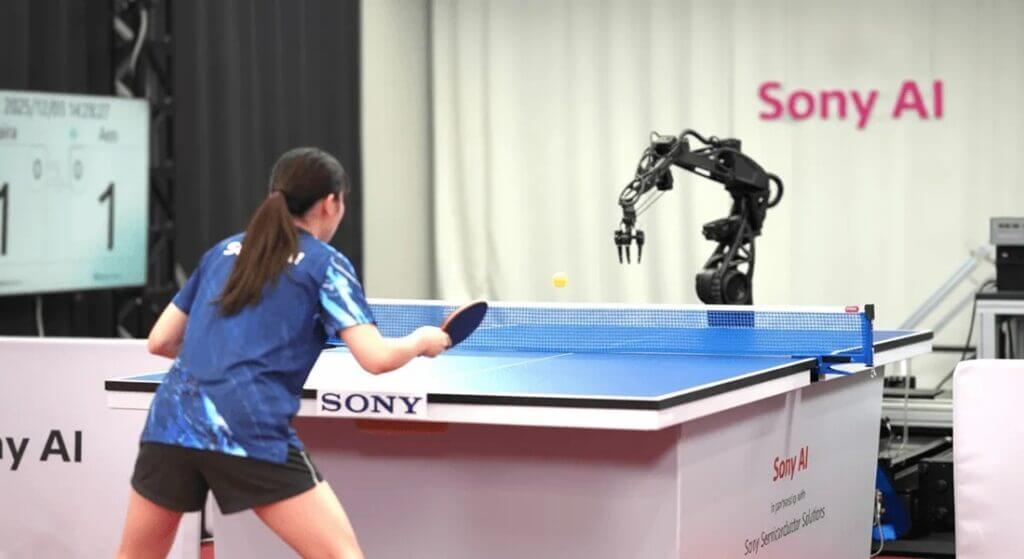
In testing, Ace managed to win three out of five matches against elite players with years of experience and intensive training. Although it was defeated by two professional athletes from Japanese championships, it managed to win against one, something that until a few years ago would have been considered almost impossible for an autonomous robotic system.
Why ping pong is a nightmare for artificial intelligence
At first glance, ping pong might seem like an odd benchmark for AI, but in reality, it's considered one of the most challenging environments a robot can face.
See also: China: Robot beats humans in half-marathon
The ball can travel at speeds exceeding 20 meters per second, leaving less than half a second to react. In addition, spin dramatically alters the trajectory of the ball, causing unpredictable curves and bounces.
For humans, reading rotation is done almost intuitively through experience and reflexes. For robots, however, understanding these subtle physical changes is a perennial technological hurdle.
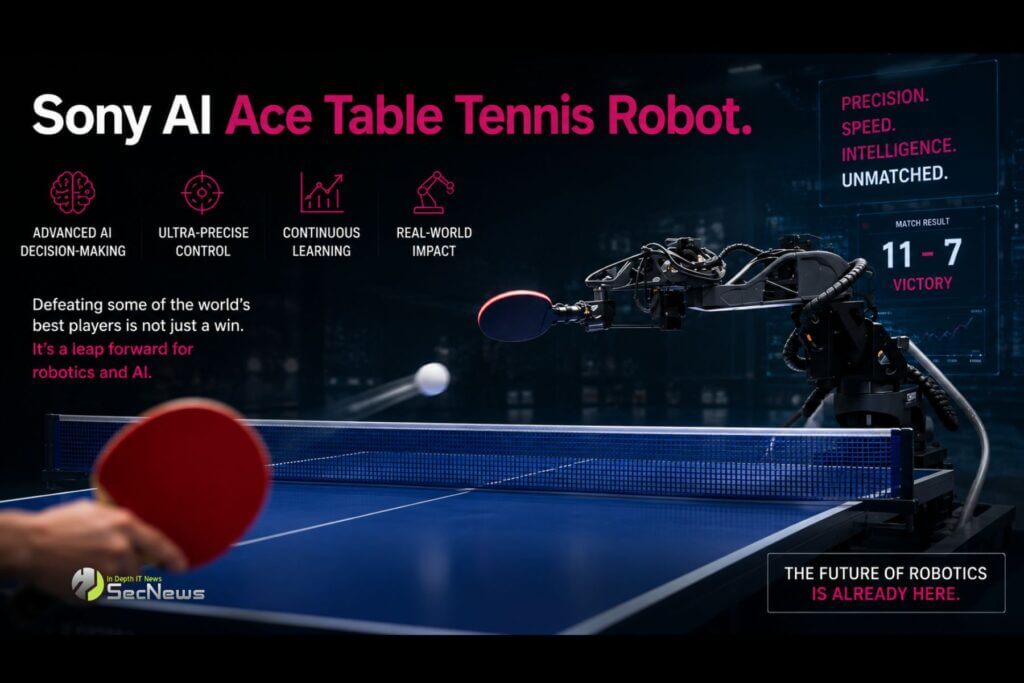
Previous projects, such as Forpheus , relied on tightly controlled environments, limiting movement or using predictable balls. Ace does the exact opposite: compete on a regular table, with complete freedom of movement and against people using the full range of techniques and strokes.
The technology behind the Ace robot
Ace's greatest technological achievement lies in the way it "sees" and perceives the world around it.
Instead of conventional cameras, it uses three event-based vision sensors, which record light changes instead of full image frames. This approach allows for much faster response and extremely low latency.
At the same time, nine high-speed continuously monitor the ball, the opponent and his racket. The system can analyze the ball's spin in real time, even when it is approaching 9,000 revolutions per minute.
The second big element is the decision-making. Ace uses deep reinforcement learning, having been trained through millions of virtual rallies and self-play simulations.
See also: Familiar: A furry AI robot for home companionship
The algorithm continuously calculates new trajectories for the robotic arm, recalculating its movements every few milliseconds. At the same time, it avoids collisions with the table or its mechanism itself.
The robot's mechanical construction itself is also extremely advanced. The arm features eight high-precision joints that allow for rapid lateral movements and precise strikes, approaching the capabilities of elite athletes.
The big leap from simulation to reality
What makes Ace truly special is not just its victories against humans, but its ability to operate reliably in uncertain real-world conditions.
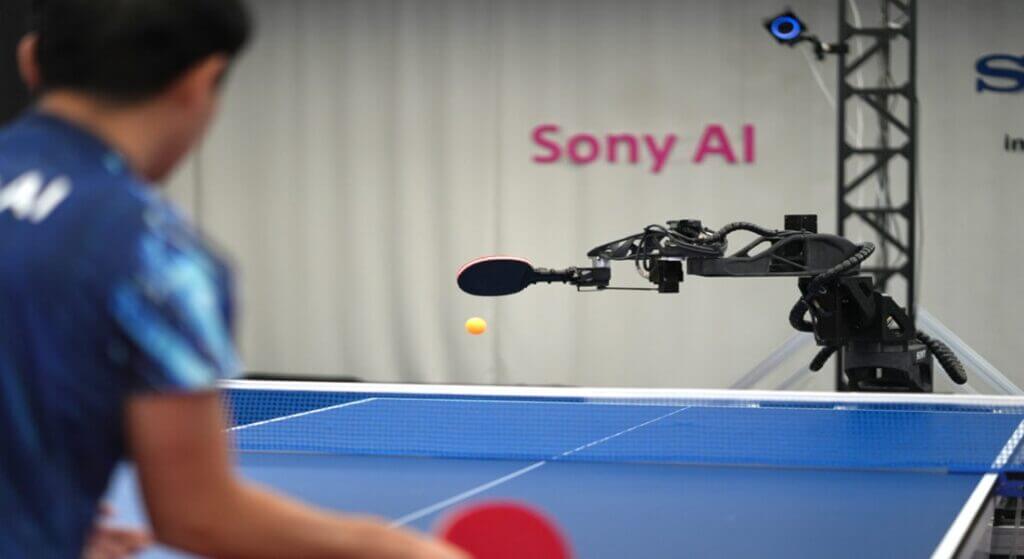
Many AI systems perform impressively in simulations, but fail when confronted with noise, unpredictable movements, and physical imperfections.
Ace shows that the so-called “sim-to-real gap” — the gap between simulation and reality — is now starting to narrow significantly. In one of the most impressive moments of the tests, the ball unexpectedly hit the net and changed course. The robot reacted almost instantly, returned the hit and ultimately won the point.
This kind of adaptability is considered extremely difficult even for advanced robotic systems.
Why this technology is changing much more than sports
Ace's capabilities go far beyond ping pong. The same technology could revolutionize industrial robotics, automation, and human-machine collaboration.
Today, most industrial robots operate in tightly controlled environments behind protective barriers. They struggle to react quickly and safely to unpredictable human movements.
See also: New DroneDog robot takes on construction site security
Ace operates almost at the limits of human reaction time, paving the way for new robots that can collaborate alongside humans in factories, hospitals, or even homes.
The same prediction and adaptability technologies could be used in surgical robots, logistics, autonomous rescue systems , or advanced humanoids.
People still remain ahead in critical areas
Despite Ace's impressive performance, professional athletes still managed to exploit weaknesses in the system, mainly in range, movement speed, and dealing with extremely deceptive strikes.
This is a reminder that human intelligence is not only based on prediction, but also on physical integration, strategic thinking, and movement creativity.
However, Ace proves that the new generation of AI is no longer limited to solving abstract problems inside servers and data centers. Artificial intelligence is now starting to gain a real physical presence in the world around us — and this may be the most important technological leap of the next decade.
