

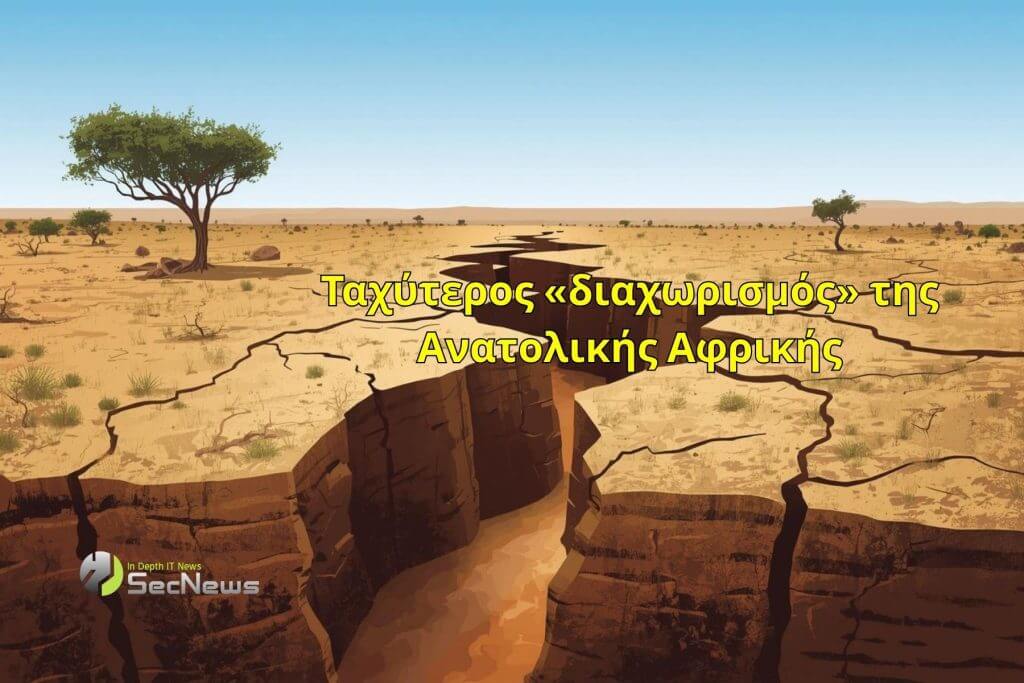
East Africa has been getting drier over the past 5,000 years. According to new research, this climate change may be accelerating the process by which the African continent is breaking apart.
See also: Mars: Light-colored rocks suggest there was once a tropical oasis
A study published in November in the journal Scientific Reports shows that faults in the East African Rift Zone have become more active since the levels of the region's great lakes dropped.
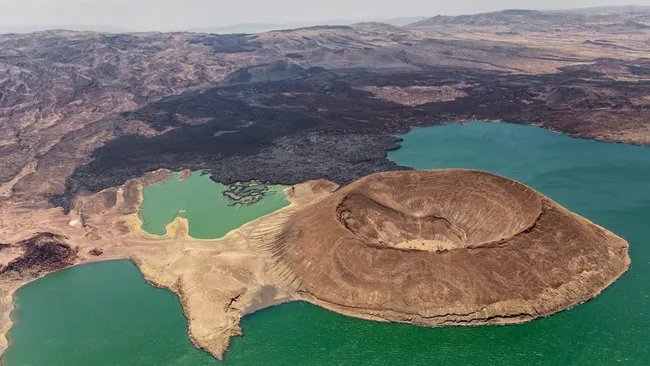
The findings highlight the close, two-way relationship between climate and plate tectonics, explains study leader Christopher Scholz, a geologist, physicist, and professor emeritus at Columbia University. He and his research team conducted their studies in Lake Turkana in Kenya, which is about 250 kilometers long, 30 kilometers wide, and up to 120 meters deep.
Scientists analyzed sediments from the lake bottom to determine ancient water levels and sediment flows into Lake Turkana. During the research, they identified numerous small faults, as well as traces of ancient earthquakes imprinted in the sediments.
The tectonic plate on which Africa lies is gradually moving away from the eastern side of the continent and, in the distant future, may split into two separate plates, with an ocean forming between them. The deep and narrow lakes in the region — such as Lake Turkana and neighboring bodies of water, such as Lake Malawi in Tanzania and Mozambique — are a result of this rifting process, which creates an extensive and deep valley in the area.
See also: Scientists "awaken" ancient microbes from permafrost
Scholz and his team wanted to investigate whether changes in the lakes themselves affect the process of tectonic rupture. Water plays an important role in tectonics: when, for example, glaciers retreat, the removal of their weight causes the ground beneath to rise, like rising dough — a phenomenon known as isostatic rebound. Similarly, large amounts of water exert pressure on the Earth's crust, which can influence processes such as earthquakes.
The researchers found that after the end of the African Wet Period, the faults in Lake Turkana began to move faster, with an average additional displacement of about 0.17 millimeters per year. Overall, the African continent is moving apart tectonically at a rate of about 6.35 millimeters per year.
Using computer simulations, scientists have concluded that this acceleration in seismic activity is likely due to two factors. The first is that as the pressure exerted by water on the crust decreases, the faults have more “freedom” to move — like when a vice that holds two pieces of wood is loosened. The second factor is more indirect: on an island in the southern part of Lake Turkana lies a volcano with an active magma chamber. The removal of the water of the Hydrothermal Period causes decompression of the mantle beneath the volcano, leading to increased melting. The molten material then moves into the magma chamber, swelling it and intensifying tectonic activity in neighboring faults.
See also: Himalayas: What's happening beneath the world's largest mountain range

Researchers are now working on a new project in Lake Malawi, where they are studying water level changes stretching back as far as 1.4 million years. Their goal is to better understand how climate affects the process of continental drift.
