

A new class of space objects, dubbed "flatfoot galaxies," seems to defy any easy scientific explanation.
See also: James Webb: Galaxies in the early universe were chaotic
These nine strange cosmic bodies, identified in archival data from the James Webb Space Telescope, cannot be clearly described by the known characteristics of galaxies. They are small and compact, but they do not appear to host active supermassive black holes or belong to the category of quasars — extremely luminous black holes that shine as brightly as entire galaxies — according to a recent study.
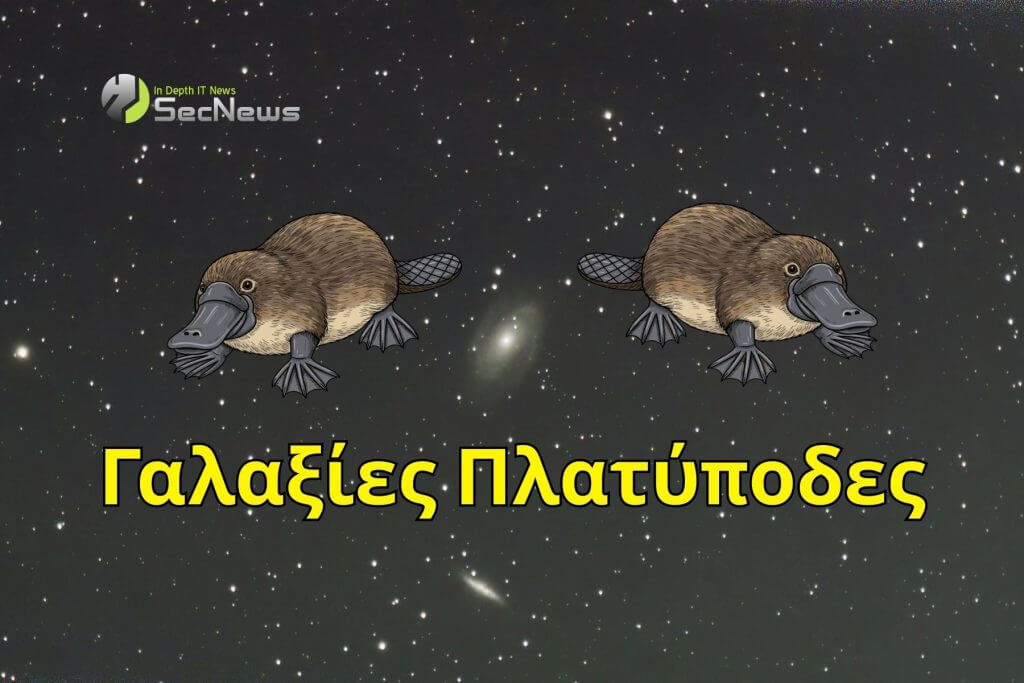
The researchers called them “platypus galaxies” because, like the platypus — a rare mammal that lays eggs — they are difficult to classify. As Haojing Yan, an astronomer at the University of Missouri and the lead author of the study, said during a presentation of the findings at the 247th meeting of the American Astronomical Society in Phoenix, their combination of features is reminiscent of the platypus: “You think these elements shouldn’t exist together, and yet they’re right there in front of you and you can’t deny them.”
See also: Stunning images of a galactic union from space telescopes

For example, typical quasars — extremely bright and energetic objects — display hill-like emission lines in their spectra, while data show that gas moves at high speed around a supermassive black hole at their center.
In contrast, the nine new galaxies have narrow and sharp spectra, an indication that the gas is moving more slowly. Although some galaxies with similar spectral characteristics have supermassive black holes at their cores, these do not appear as bright "points" in the images, which distinguishes them from that category.
So if these mysterious objects aren't quasars and don't host supermassive black holes, what are they? One possibility is that they are a newly discovered type of star-forming galaxy that existed in the early universe, which JWST is specifically designed to observe.
See also: Sunflower Galaxy: Mesmerizing image of the galaxy by an amateur astrophotographer

But even that assumption puzzles the team, Bangzheng Sun, a graduate student at the University of Missouri and co-researcher, said in the same statement. If that’s true, JWST might be observing a type of galaxy that’s even older than any ever recorded. If that’s what JWST is seeing, Yan said, there may be more to learn about how galaxies evolved. The team stressed that more samples of galaxies are needed to advance their research.
