

Elon Musk announced yesterday that Tesla plans to “roughly double” its robotaxi fleet in Austin next month. While the pilot expansion sounds positive, a look at the actual numbers reveals that Tesla is missing its year-end goal.
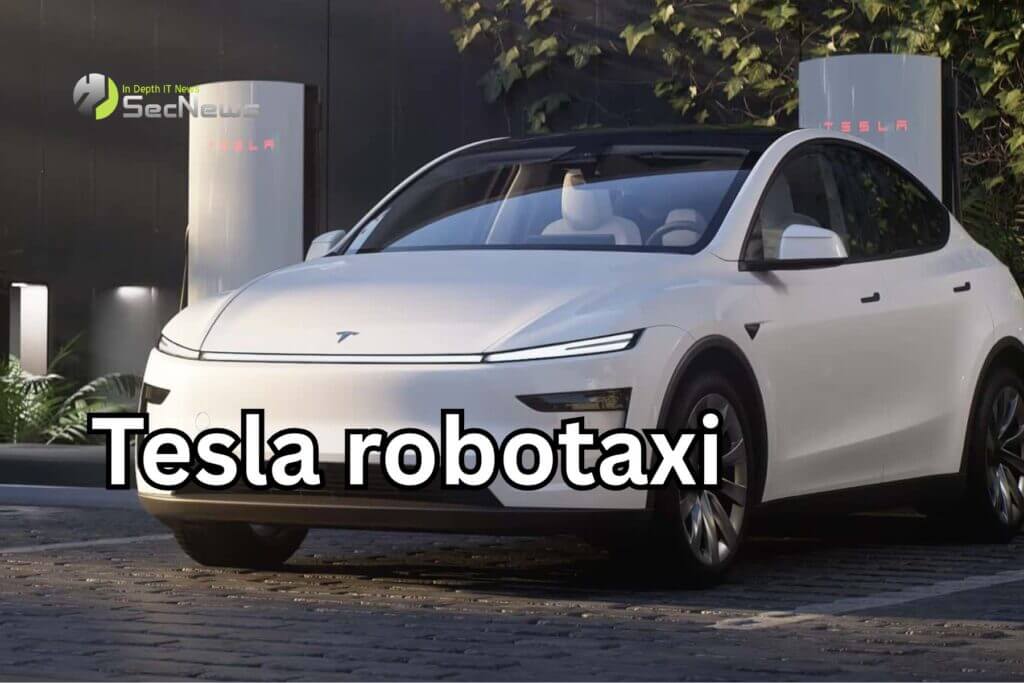
Just last month, Musk explicitly stated that Tesla was aiming to have 500 Robotaxi in Austin by the end of the year. The “doubling” of the current estimated fleet suggests the actual number will be closer to 60.
See also: Arizona: Tesla receives license to operate robotaxi service
Tesla Robotaxi: Pilot program
The “Tesla Robotaxi” pilot program in Austin began in June using Model Y vehicles. Unlike the “Cybercab” introduced in October, these vehicles are standard Model Ys equipped with Hardware 4 and, most importantly, are not driverless. They are part of a “supervised” pilot program, meaning a Tesla employee sits in the passenger seat (or the driver’s seat for highway trips) to monitor the system with their finger on a switch ready to stop the car.
The service has faced availability issues. Users in Austin are frequently encountering “High Service Demand” messages, with wait times often exceeding 40 minutes. This is not necessarily because there is truly “high demand,” but because Tesla’s Robotaxi fleet remains small.
See also: Baidu: Robotaxi trials in Switzerland from December

In response to related complaints, Elon Musk told X (formerly Twitter): “The Tesla Robotaxi fleet in Austin will roughly double in the next month.”
For those frustrated by wait times, more cars are certainly welcome. But for investors and analysts watching Tesla's promises of self-driving cars, this announcement serves as confirmation of a significant missed deadline.
Tesla is missing its target
To understand why “doubling” is actually disappointing, we need to look at what Musk promised just a few weeks ago. During his appearance on the All-In Podcast, Musk was asked explicitly about the scale of the fleet. His answer was clear: “We’re increasing the number of cars … we’ll probably have a thousand cars or more in the Bay Area by the end of the year, probably 500 or more in the greater Austin area.”
See also: Waymo robotaxis under investigation after school bus incident
Based on feedback from the Austin community and tracking vehicle VINs and license plate, the current Tesla Robotaxi fleet in Austin is estimated to be around 30 vehicles. In fact, 29 different Robotaxi license plates have been spotted in Austin. If Tesla “roughly doubles” that fleet by December, they’ll have around 60 vehicles on the road. That’s a far cry from the 500 Musk predicted just a few weeks ago.

This massive miss on growth targets is especially ironic given Musk’s recent comments about competitors. When Waymo announced earlier this month that it had reached 2,500 active robotaxis across the U.S. (with about 200 in Austin alone), Musk scoffed, calling them “rookie numbers.” However, data shows that Waymo currently operates a fleet in Austin that is about 3x to 4x larger than what Tesla hopes to have after its expansion next month. Unlike Tesla’s pilot program, Waymo’s Austin fleet operates entirely driverless, with no attendants in the front seat.
