

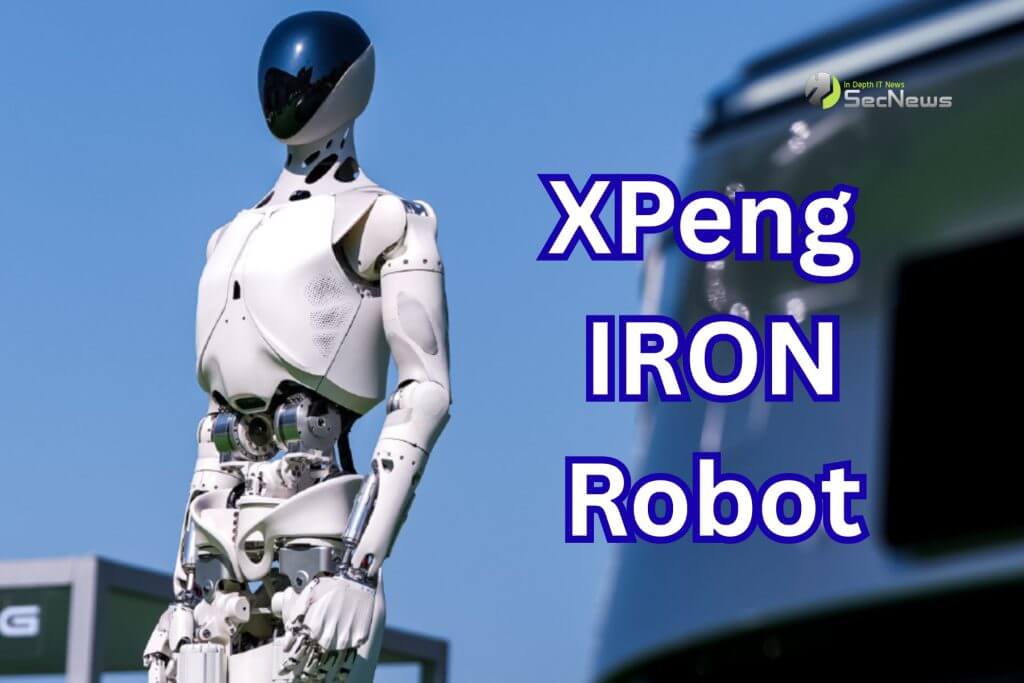
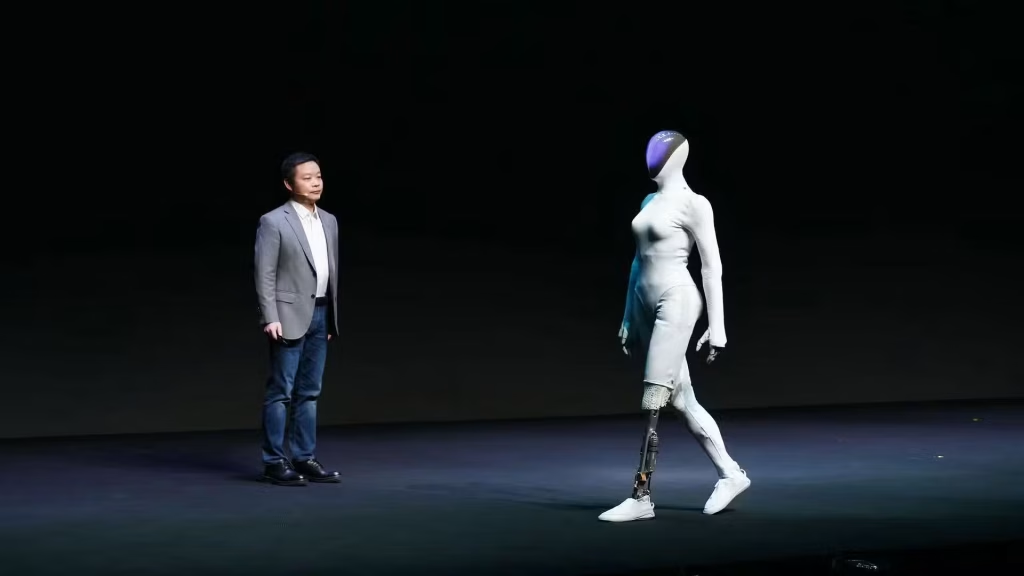
When China’s XPeng unveiled its new humanoid robot IRON, no one expected such an online uproar. The robot appeared on stage with human-like grace and model-like movement, sparking a storm of comments on social media. Many users on Weibo refused to believe it was a machine — insisting that behind the “robot” was a woman dressed in a metal suit.
This theory was a hit, until XPeng CEO He Xiaopengdecided to respond in a spectacular way.
The video that shut the mouths of skeptics
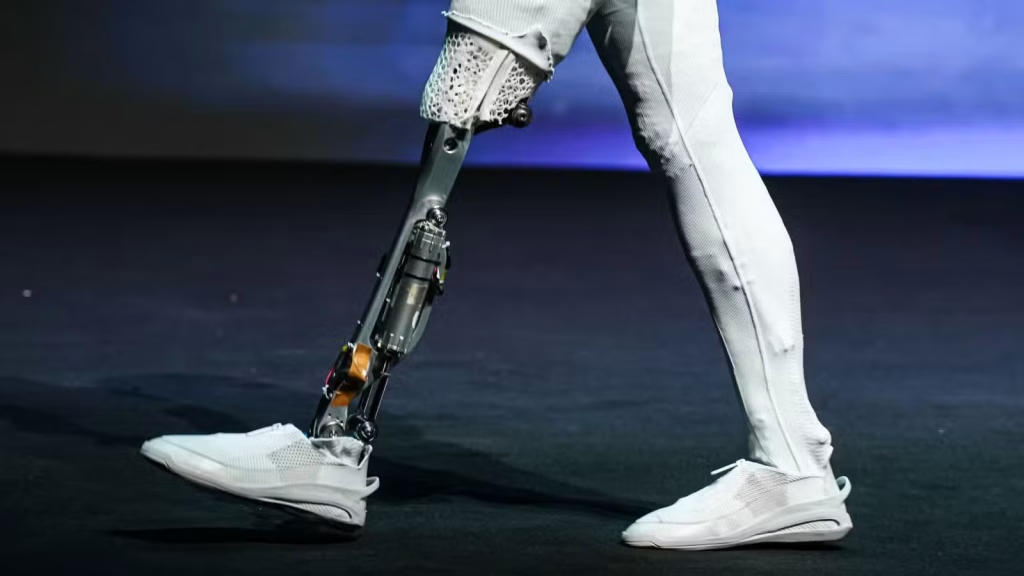
The next morning, Xiaopeng posted a behind-the-scenes video , revealing the “anatomy” of IRON: artificial muscles in a mesh-like form, metal shoulder attachments, harmonic joints , and a microphone array embedded in the head .
"Some people thought there was a human inside him," he wrote. "This just shows how quickly the world around us is changing."
See also: NEO humanoid robot takes on housework
That evening, during a new live presentation, XPeng did the unexpected: it cut through IRON’s “skin” on stage, revealing its mechanical parts while the robot was active. He Xiaopeng, visibly moved, said he hoped it would be “the last time we have to prove it’s real.”
The result? XPeng shares on the Hong Kong jumped nearly 9%, reaching HK$89.4 (about US$11.5), with a market valuation of about HK$170 billion.
The technology behind IRON
IRON is now considered the final pre-production version before mass production. Standing 1.7 meters, the robot incorporates a solid-state battery – a technology that promises greater safety and energy efficiency – while being powered by three Turing chips and a large-scale physical world model for motion and environment understanding.
In practice, it is a humanoid with spatial self-awareness, capable of perceiving, analyzing, and reacting to its environment in a realistic way, which brings robotics one step closer to everyday use.
See also: The new Figure 03 robot does all the housework!
From electric vehicles to “human-like” robots
XPeng, known primarily for its electric cars, sees robotics as its next big bet. He Xiaopeng told The Paper that while the global auto market is valued at around $10 trillion, robotics could reach $ 20 trillion.
"It may take 10 or 20 years, but then there will be hundreds of millions of humanoid robots," he predicted.
The company is already designing an automated plant manufacturing, with precision and safety specifications comparable to the automotive industry. At the same time, it is developing an SDK (Software Development Kit) that will allow developers worldwide to create applications and new features for IRON.
The philosophy: Robots that collaborate, do not replace
Contrary to fears that humanoid robots will replace humans, XPeng is promoting a more collaborative philosophy. According to company engineers, the goal is to create assistive robots that will coexist with humans in industrial, domestic and medical environments.
IRON, as they note, will be able to operate autonomously in factories, provide support to the elderly, or be used in research and rescue.
Beyond IRON: Flying vehicles and autonomous taxis
XPeng didn't stop at the robot. At the same event, it unveiled its Vision-Language-Action , an artificial intelligence system for autonomous vehicles, as well as a Robotaxi expected to launch in 2026.
See also: Chinese company created incredibly realistic robotic head
At the same time, the company's subsidiary, Aero HT, unveiled two flying vehicles, with the first already rolling off the production line on November 3.
With these moves, XPeng shows that it is not just an electric car company, but a technological innovation platform that aims to unite transportation, robotics, and artificial intelligence.
The future: From puzzlement to acceptance
The IRON incident reveals something deeper: the world is starting to have a hard time distinguishing between the human and the mechanical. When a robot can convince you it's human, the conversation is no longer science fiction — it's technological reality.
If IRON is the present, then the future of robots doesn't just seem close. Perhaps it is already beside us — and smiling.
