

Scott Elder is the superintendent of Albuquerque Public Schools in New Mexico. A call from his district's IT department informed him that they had detected a form of malware in students' files, indicating how vulnerable schools are to cyberattacks.
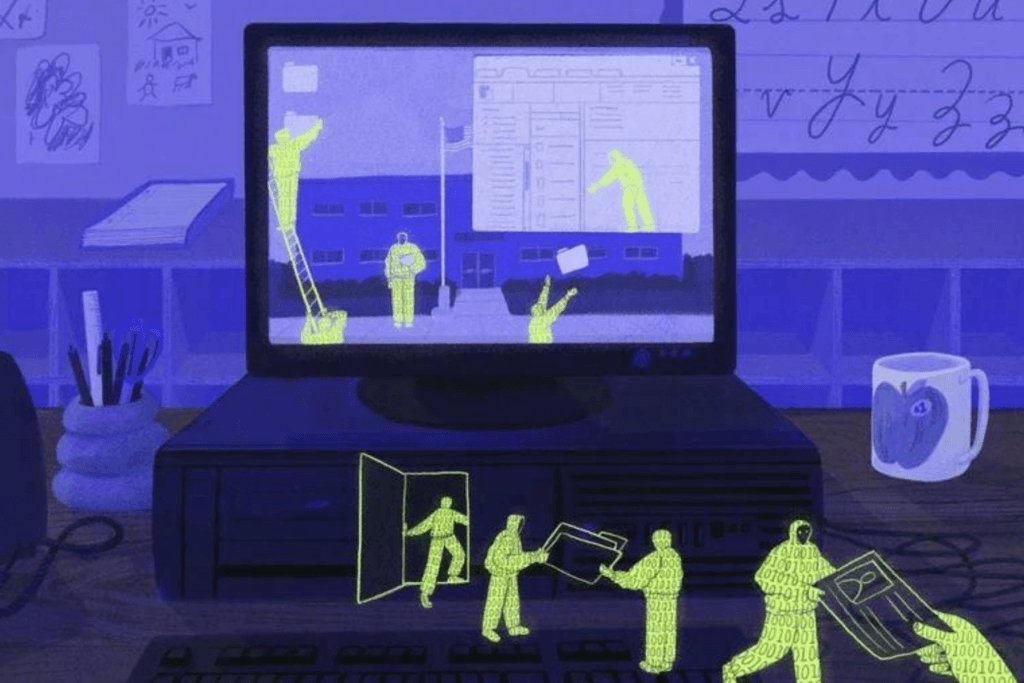
As a result, Elder’s IT staff shut down that network. But that meant teachers would not have access to key information about the nearly 70,000 students enrolled in New Mexico’s largest school district. Teachers didn’t know the children’s bus schedules and were locked out of grading systems.
Scott Elder immediately thought, “They’ll fix the bug and be done with it, right?”
Read also: Google: Officially creates cybersecurity center in Japan
Meanwhile, IT was anxiously trying to determine whether the virus had spread to their health records, security system, and payroll.
Elder began to realize the grand scale of the situation, understanding that this was not a temporary situation, but a real problem.
Currently, the Federal Communications Commission (FCC) is conducting a public consultation on a proposal to fund up to $200 million to strengthen cybersecurity in schools and libraries.
“We are using our resources for training, bringing in supervisors and educating them on the threats,” says Anne Neuberger, deputy assistant to the president and deputy national security adviser for cybersecurity and emerging technology.
The White House does not have the authority to require minimum cybersecurity protocols for schools, as it does for railroads and airports.
"So we're doing what we can't demand, which we just don't have the authority to do at this time.".
One reason for the increase in cyberattacks in schools
One reason for the increase in attacks is hackers recognizing that school systems are vulnerable. They often use old computer systems, rely heavily on technology, and, as Callow points out, don't necessarily have dedicated cybersecurity experts on staff.
Furthermore, schools are essential services, and thus, inspectors are under high pressure to address these issues effectively and promptly.
Noelle Ellerson Ng of the Association of School Superintendents, which represents 9,000 district leaders across the country, highlights their critical role as the largest employers in the community, and says school systems collect a wealth of data.
Doug Levin, director of the K12 Security Information eXchange, a national nonprofit that supports protecting K-12 school districts from cyberattacks, argues that the federal efforts are positive, but they are not sufficient, especially with the increasing scale and severity of attacks.
🔒 Protect your privacy with Proton VPN
Swiss VPN from the creators of Proton Mail — strict no-logs policy, strong encryption, and built-in NetShield that blocks ads, trackers, & malware.
- ✔ No-logs, based in Switzerland (except 14-Eyes)
- ✔ NetShield: blocks ads, trackers & malicious domains
- ✔ Covers all devices — free version available
The link is an affiliate link — SecNews may receive a commission at no additional cost to you. It does not affect the independence of our article writing.
See also: Google & BSSN collaborate to increase cybersecurity in Indonesia
“We need to move faster and with greater determination. We recognize that a more intensive effort is required from the government to make progress on this issue,” he says. “Tomorrow will be too late.”
In Albuquerque, Scott Elder's district has beefed up security protocols. There is ongoing training for all staff, including tests where the IT department sends fake phishing emails to see if staff click on them.
But some are so realistic, that even Elder failed one of these phishing tests.
In recent years, he says, he has become a bit “skeptical.” He was invited to attend a White House cybersecurity summit, but he was unsure about the authenticity of the email.
When he received the email and I said, he remembers thinking skeptically and so he reported the email to his IT department as a phishing attempt.
“Luckily, they came back quickly and told me, ‘No, this is real.’ And so, yes, I have to go!”
See also: IBM: Industry is more vulnerable to cyberattacks
Scott Elder attempts to create a sense of urgency around cybersecurity and argues that even if you've been hacked once, it doesn't mean it can't happen again.
