

On August 23, India achieved a huge success by successfully landing a spacecraft on the lunar surface as part of the Chandrayaan-3 mission. It became the fourth nation to reach the Moon and the first nation to land on the Moon's south pole. Following this success, India wants to continue its exploration, collect samples from the lunar south polar region (Chandrayaan-4) and return them to Earth.
It is said that the Indian Space Research Organization (ISRO) is planning a new lunar, Chandrayaan-4, to collect samples. Four modules will be sent to the moon in two launches.
See also: Chandrayaan-3: India measures temperature at the moon's south pole for the first time
Initially, a lander and anascenderto the lunar surface to collect samples. This will likely happen near the Chandrayaan-3 spacecraft's landing site, near the lunar south pole. This area is of great interest to scientists because it is believed to contain abundant water ice.
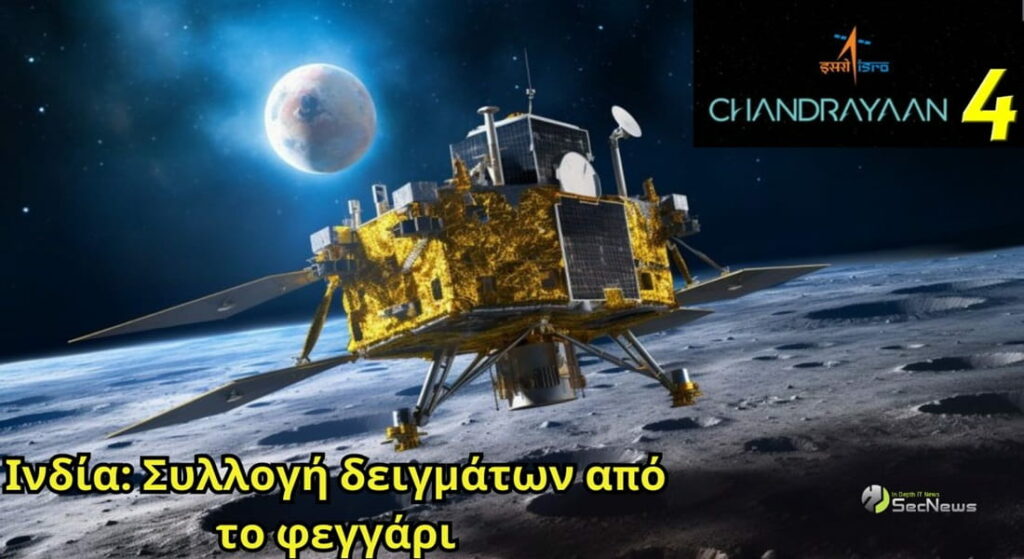
The remaining two pieces of the Chandrayaan-4 mission, a transport module and a reentry module, are said to be sent later via a second rocket, but will remain parked in lunar orbit.
Although the specific mission plan is not yet clear, it appears that the lander and ascender will touch down on the rim of an unspecified crater near the south pole. The ascender will then transfer the samples to the reentry module. The transfer and reentry modules will head back to Earth, bringing with them the samples from the moon.
" It's a very ambitious mission ," said Nilesh Desai , director of the Space Application Center in Ahmedabad, which was part of the historic Chandrayaan-3 mission . " Hopefully, in the next five to seven years, we will be able to meet this challenge ."
See also: Chandrayaan-3 moon: Scientists examine the data collected
Importance of missions to the moon
Missions to collect samples from the moon are very important. Studying samples can provide us with new scientific knowledge. One of the areas that can be explored is the geology of the moon. The samples can give us information about the composition of the moon, the age of the rocks and the geological processes that have taken place there.

Additionally, studying the samples can reveal information about the history of solar system. Moon rocks may contain traces of the primitive birthplace of our solar system and help us understand the process of planet formation.
See also: India will send astronauts to the moon by 2040
The samples could also help us understand whether there is, after all, water on the moon. Detecting water could indicate the presence of hydrological processes in the past and open up new perspectives for lunar exploration.
Finally, studying lunar samples can reveal interesting information about the creation of the Earth.
Source: www.space.com
