

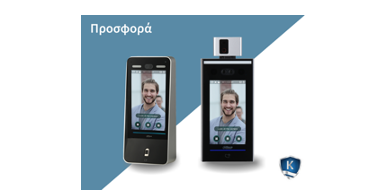
Biometric access control refers to the use of unique physiological or behavioral characteristics to authenticate individuals and grant them access to businesses or residences. It is now about digitizing the process of locking and unlocking the entrance with data entered by the programmer. Biometric access systems have multiple advantages but can also present some disadvantages, which are important to consider when implementing such systems.

Advantages
Biometric access systems: What are the advantages?
1. Increased level of security: Biometrics provide a high level of security because each person's biometric characteristics are unique, making it difficult for unauthorized individuals to gain access.
2. Difficulty of forgery, or copying of access methods: Unlike passwords or access cards, biometric features cannot be easily shared, transferred or copied, reducing the risk of unauthorized access.
3. Eliminate the need for cards, passwords , etc.: With biometric identification methods, there is no need to use a specific card or remote control or a code, etc. This eliminates the risk of losing our access in the event of losing a card or in the event of losing a code.
4. Fast and efficient access: Biometric authentication is fast and efficient, allowing authorized individuals to access the system or premises quickly.

Disadvantages
Biometric Access Systems: What are the Disadvantages?
1. Increased Installation Cost: Biometric access control systems can be expensive to implement and maintain, especially for large-scale installations. The advanced technologies used to recognize a person's characteristics have a high cost that will begin to decrease in the future as technology .
2. Vulnerabilities of the installed system: Like any technology, biometric systems can be vulnerable to hacking and other cyberattacks, where attackers attempt to mimic biometric characteristics to gain unauthorized access. Additionally, depending on the system you have purchased, there is the possibility that databases may also be compromised, resulting in a leak of personal data.
3. Changes in human characteristics: Biometric characteristics can change over time due to factors such as aging or changes in weight or injury, leading to difficulties in recognition. However, the information can be re-enrolled, as long as there is a suitable technician to re-program it for you.
4. Challenges of integration into existing systems: Integrating biometric systems into existing security systems can often be quite a difficult task, mainly due to compatibility with old technologies and hardware. And in this case, you will need the specialized services of an expert for its programming.
In conclusion, biometric access control offers a powerful blend of enhanced security and convenience. By leveraging unique physiological or behavioral characteristics, these systems prevent unauthorized access and enhance the sense of security of individuals. However, there are also some disadvantages, which are mainly due to the difficulty of integrating biometric control systems into existing structures, but also to some vulnerabilities that they may present, which are of course limited and exist in all categories of systems. For their installation, it is advisable to contact experts so that they can answer all your questions about this type of system and conduct a study for their installation.
