

A new phishing campaign on WhatsApp is deceiving people who want to work in the UK.
See also: AstraLocker ransomware: Terminates its operation and releases decryption tools
As documented by Malwarebytes, hackers are sending messages claiming to be from the UK government, offering free visas and other benefits to people looking to move to the country.
The scam begins with messages sent to numbers via the mobile messaging platform WhatsApp. Recipients are told that the UK needs over 132,000 extra workers in 2022, and so the government is running a recruitment drive, with more than 186,000 job vacancies available.
While these visa-related messages are red flags in themselves, the phishing doesn't stop there. The scam says:
“THE PROGRAM COVERS: Travel expenses. Housing. Accommodation. Medical facilities. Candidate must be 16 years of age or older. Can speak basic English.
PROGRAM BENEFITS: Immediate work permit. Visa application assistance. All nationalities can apply. Open to all individuals and students who want to work and study. Apply here.”
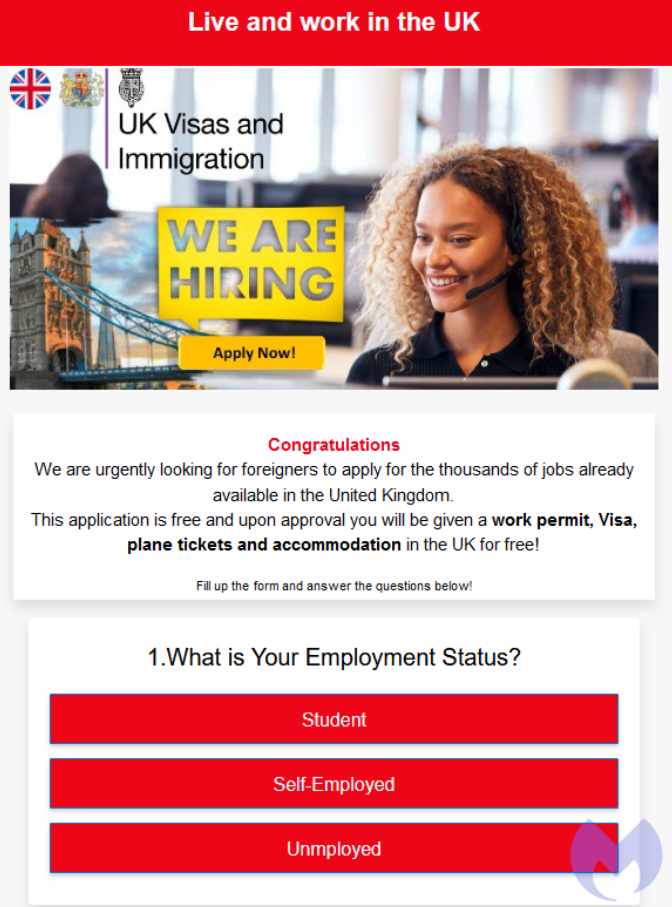
If a victim clicks, a fraudulent domain appears, disguised as a UK visa and immigration website. Foreigners are invited to “apply for thousands of jobs currently available in the UK.”
See also: HackerOne employee gained illegal access to bug reports
The website aims to collect visitors ' personal data , including their names, email addresses , phone numbers , marital status , and employment status .
Regardless of what a user submits, the free application form is automatically “approved” and they are informed that they will “be given a work permit, visa, airfare and accommodation in the UK for free.”.
As you can see, none of this is true.
As with many phishing scams, their operators will then try to obtain even more information and will often try to generate revenue from the victims.
Visa applicants are told that the next form will be available once they invite either 15 friends or five WhatsApp groups to tell others about the program. In the final step of the scam, users are sent to other websites, including those selling drones and quiz sites that ask for personal information, including phone numbers.
See also: British Army: Its Twitter and YouTube accounts were hacked
Visa phishing scams are a common theme in the cyberattack landscape. A similar scam was circulating several months ago, attempting to lure people who wanted to work or study in the UK.
Information source: zdnet.com
