

NASA's Ingenuity helicopter has successfully completed its third flight to the Red Planet
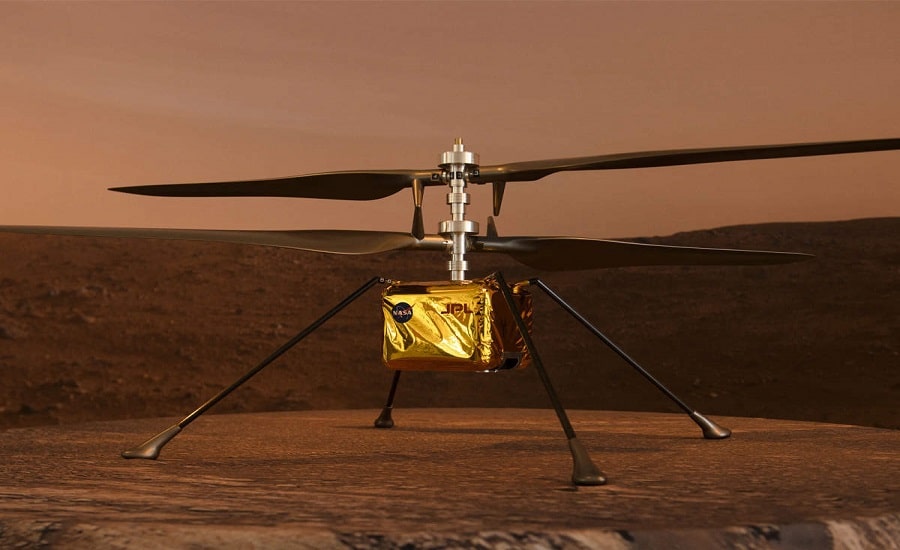
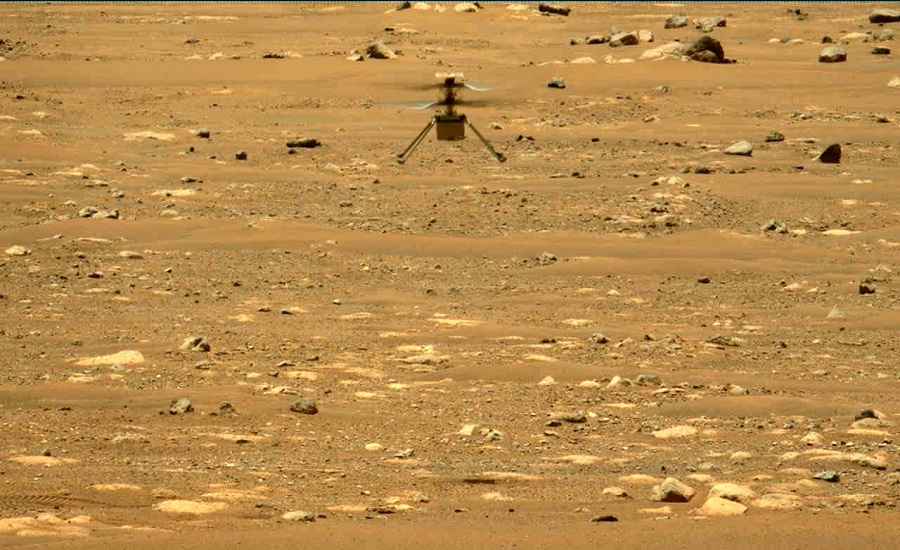
On Sunday, the small helicopter climbed to a height of 5m and then moved at speed sideways for 50 meters.
See also: Second successful flight for NASA's helicopter to Mars
Ingenuity then returned to the takeoff point, with a total flight time of 80 seconds.
Sunday's flight was the most ambitious yet, but engineers say they plan to push the technology.
They want to push the helicopter to its limits, even if it means it might crash in the process.
The two previous flights took place on Monday and Thursday. Monday's historic flight marked the first controlled flight by an aircraft to another planet.
Ingenuity was transported to Mars by NASA's Perseverance Rover, which arrived at Jezero Crater in mid-February.
See also: NASA surprises again with the creation of oxygen on Mars
The 1.8-kilogram aircraft is considered a technology demonstration aimed at demonstrating the usefulness of aerial mobility in the planet.
In the future, helicopters could be used to scout the way for astronauts and to explore areas like cliffs that are otherwise impossible to reach.
Ingenuity's engineering team will have the option for two more flights before Perseverance is ordered to continue with its primary mission, searching for life on Jezero.
For the past week, the robot has been acting as the helicopter's radio station and photographer. Perseverance has been taking photos and short videos from a distance of 65 meters from the drone's "airport."
Ingenuity also took photos while in the air. These black-and-white images, looking straight down, track the rocks and help with navigation. The drone also has a color camera that looks horizontally.
See also: NASA: It does not expect humans to be able to fly to Mars
Some sample photos have reached the space agency, but we may have to wait a few days for all the photos, including full-length videos shot by Perseverance.
The greatest difficulty in flying is the very thin atmosphere, which has only 1% of the density of Earth.
The Nasa helicopter was therefore built extremely light and was given the power to spin its propellers extremely fast, at over 2,500 revolutions per minute, to be able to take off.
As the distance to Mars is currently 295 million kilometers, which means that radio signals take 16 and a half minutes to cross interstellar space, the helicopter's movement must be automatic.
