

Over the past two days, PayPal users have received emails about alleged charges to their accounts, which at first glance looks like a phishing attempt .
Specifically, Twitter was flooded with users, who expressed their concerns about what might have happened and tweeted their emails.
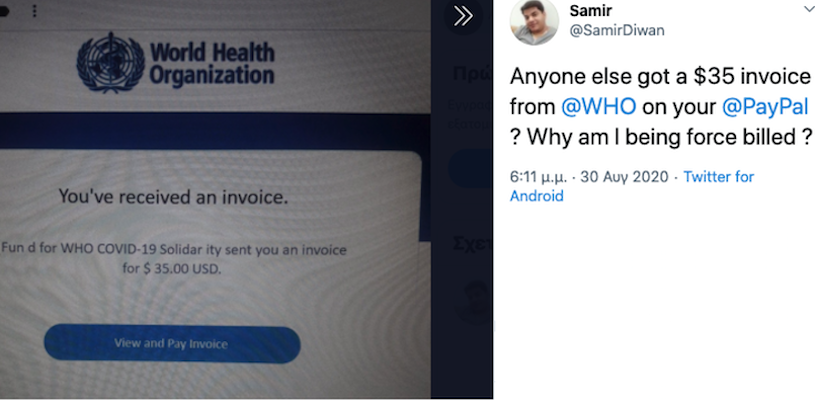
The PayPal email from a user, who also shared it on Twitter asking if anyone else has received a similar message, reads:
"You have received a charge. The WHO COVID-19 organization has sent you a charge for $35.00 USD."
A simple search on Twitter and user forums will show that he is not the only user and that this scam is not new. The organization is not always the WHO, but the rest of the message text remains the same.
In fact, the email is from PayPal, “service@paypal.com,” and there is actually a account waiting for you in your PayPal dashboard . The transfer is already pending, even if you never clicked on the message or the button to pay the account.
In a statement to Engadget, a PayPal spokesperson acknowledged the scams.
“We are aware of this and believe it is a common scheme that exploits a commercial brand. We take any case of potential fraud, have worked to eliminate incorrect charges, and ensure that our customers’ information is secure. In addition to employing a range of sophisticated proactive detection and mitigation methods, should a problem, we will take immediate action to protect our customers’ accounts.”
The spokeswoman declined to elaborate on what PayPal's email fraud detection tools include. She also did not respond to questions about the safeguards that prevent someone from sending a billing statement.

So the best move you can make in such a case is to “dispute the transaction.” It’s worth remembering that PayPal, a company with a market cap of $239.5 billion, doesn’t have 24/7 customer service. The Help Center isn’t available on the mobile app — only on the browser dashboard — and you have to wait for the transaction to go from pending to completed before you can report it.
PayPal certainly has a fraud problem. But until the company improves its detection tools, it's up to customers.
