

Do you know the history of WordPress? The platform is currently used by 31% of all websites on the internet. Below we will look at the history of WordPress and how it has evolved over time.
The history of WordPress
WordPress started when the development of the blogging software b2/cafelog by its main developers. In 2003, two b2/cafelog users, Matt Mullenweg and Mike Little, decided to create a new platform on top of the b2/cafelog platform.
It's very likely that when they started the new project, they didn't know that they were going to create a platform that would be used by millions of users around the world, would create thousands of jobs, and would keep an entire industry of programmers, designers, bloggers, and online publishers busy.
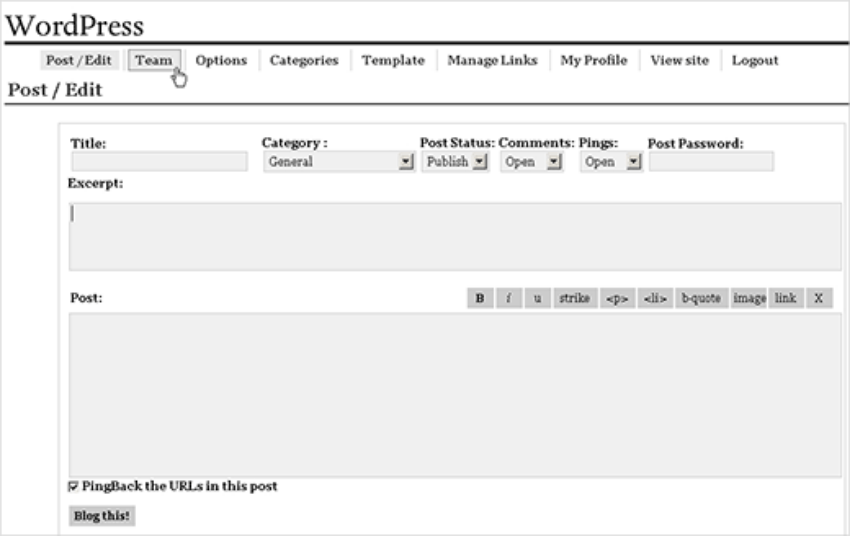
On May 27, 2003, Matt announced the availability of the first version of WordPress. It was based on b2 Cafelog but had significant improvements. The first version of WordPress included a new administration interface, and new templates compliant with the XHTML 1.1 standard. The publishing panel is shown below:
In May 2004, WordPress version 1.2 was released, introducing the plugin architecture for the first time. This allowed users and developers to extend WordPress' functionality by writing their own plugins and sharing them with the rest of the community.
WordPress was opening up to the community, which was completely contrary to what was happening in the blogging industry at the time.
The market leader in blogging tools at the time was Moveable Type. They were using new licensing terms that were not very popular with the platform's users. This forced many to look for a new blogging platform.
WordPress 1.2 was presented as an ambitious project that offered users a mature, stable, easy-to-use, and flexible platform with features that rivaled the competition. The rate of WordPress adoption skyrocketed with this release.
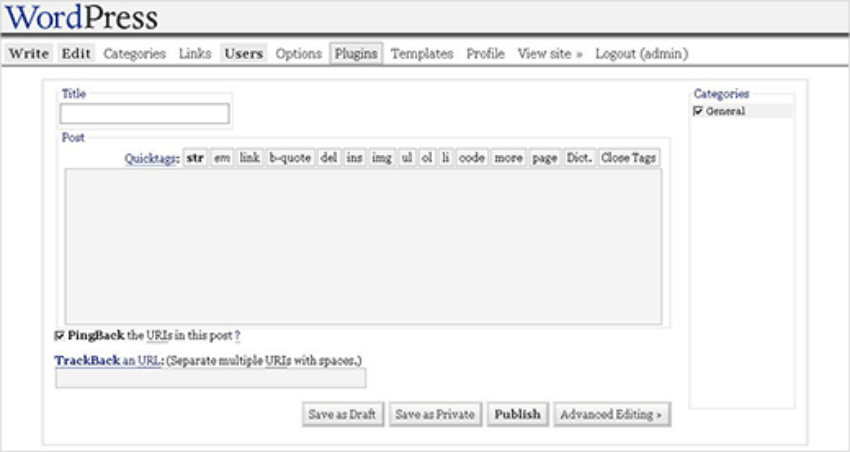
With the increase in the number of users of the platform, WordPress began to improve with the help and interest of the community.
In February 2005, WordPress 1.5 Version 1.5 (Strayhorn). It introduced Pages, comment management tools, a new default theme (Kubrick), and a completely new theme editing system. 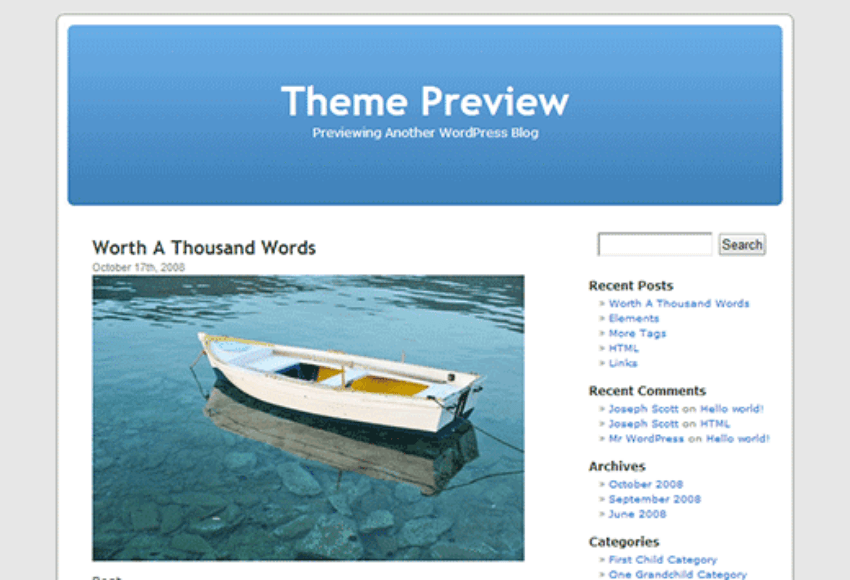
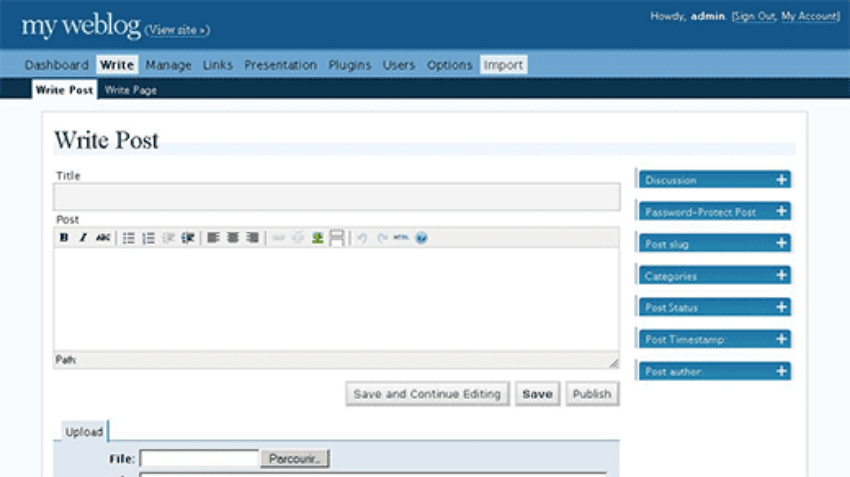
In December 2005, WordPress 2.0 was released with a new admin dashboard. The new admin area was a complete overhaul of WordPress administration.
It used JavaScript and DHTML to create a better user interface, where users didn't have to open another page to perform some simple tasks. With the new admin panel, they could add categories and tags to their posts without leaving the editor or delete comments without having to reopen the comments page.
Version 2 also introduced the anti-spam plugin Akismet. A plugin for backing up the WordPress database (wp-db-backup) was also released. Another innovation of the version was the addition of the functions.php file to the Theme System.
On March 1, 2006, Automattic, a company founded by WordPress co-founder Matt Mullenweg, registered the WordPress trademark and trademarked the logos.
In 2008, a web design company called Happy Cog joined the WordPress project to help design a new WordPress administration interface. A usability study was conducted to design the UI for administrators.
Throughout the year, new features were added to WordPress, such as shortcodes, one-click updates, and the built-in plugin installer.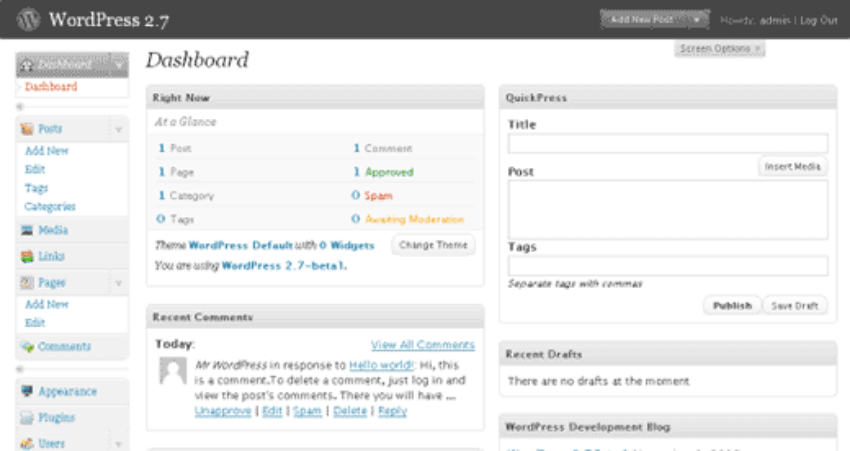
In June 2010, Automattic transferred ownership of the WordPress trademark and logo to the WordPress Foundation. It was a significant moment in WordPress history because it ensured that WordPress would continue to grow because it was no longer dependent on a single company or group of developers.
WordPress 3.0 was released on June 17, 2010. It was a major step forward as it brought many different features, such as custom post types, better custom taxonomies, custom backgrounds, headers, menus, contextual help on admin pages, etc. The WordPress MU program was merged into the WordPress core to create Multisite networks.
The new version came with the Twenty Ten theme, which began the tradition of a new default theme for each year.
In 2012, the theme customizer, theme previews, and a new media manager were added. These features helped new users immensely in creating image galleries and previewing themes before switching themes.
In 2013, WordPress 3.7 was released. It brought the new automatic updates feature. Yes, WordPress could now automatically update its software to minor versions.
WordPress 3.8 was released in December 2013, bringing MP6, the new WordPress admin interface. The new interface was responsive and aimed to provide a better user experience on any device or screen size.
On April 16, 2014, WordPress 3.9 was released. The release improved WordPress' visual post editor. Users can now edit images directly from within the editor and see previews of their posts within the editor. WordPress 3.9 also brought live widget previews, audio playlists, and various other improvements.
But more improvements were made to the WordPress core throughout the year for the subsequent versions WordPress 4.0 and WordPress 4.1.
2014 was also the first year in which non-English versions of WordPress surpassed English versions in downloads.
In 2015, WordPress versions 4.2, 4.3, and 4.4 were released. These releases focused on improving localization, emoji support, theme customization, and building infrastructure for the WordPress REST API.
That same year, WooCommerce, WordPress' most popular e-commerce plugin, was acquired by Automattic.
In 2016, WordPress versions 4.5, 4.6, and 4.7 were released. Each version brought new features and improvements. The most significant changes during the year were improved plugin and theme updates, content retrieval using browser storage, and custom CSS within the customizer.
In 2017, WordPress 4.8 and 4.9 were released with many new default widgets for adding audio, video, images, galleries, text, and HTML. These releases also laid the foundation for Project Gutenberg, a new and modern WordPress publishing experience.

Gutenberg development continues in 2018.
WordPress What's next?
WordPress is constantly evolving to meet the needs of millions of websites around the world. The direction of WordPress seems to depend directly on the needs of its users.
