

Since iPhone X sales weren't what Apple expected, it makes sense that the iPhone 8 and iPhone 8 Plus are at the top of the company's sales.
According to statistics, iPhone X sales have fallen significantly in recent months, even though Apple has managed to address all the production issues that had arisen during the launch period of the anniversary model.
On the other hand, the iPhone 8 and 8 Plus represent Apple's largest market share, with 44%. This means that the 2017 model recorded a three-fold success rate compared to the anniversary model, which proves that the iPhone X's high price was a major disadvantage.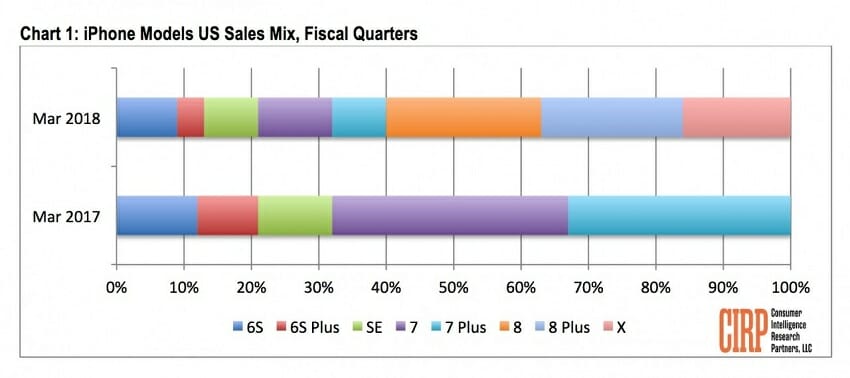
The iPhone 7 and iPhone 6 are seeing an uptick in sales, thanks to the company's discounts. It seems that consumers prefer older iPhone models as they are more affordable compared to the new models.
The iPhone 7 and 7 Plus accounted for nearly a fifth of sales, while the iPhone 6S and 6S Plus accounted for 13 percent of sales. Even the SE took an 8 percent share, down slightly from 11 percent in the previous quarter. Of the eight models available, with the newest models costing close to $1,000, consumers seem to prefer more affordable devices that share many of the same features as the latest versions.
Apple is preparing to introduce the second-generation iPhone SE in the coming months, a model that meets many of the demands of consumers but is also available at a fairly low price.
