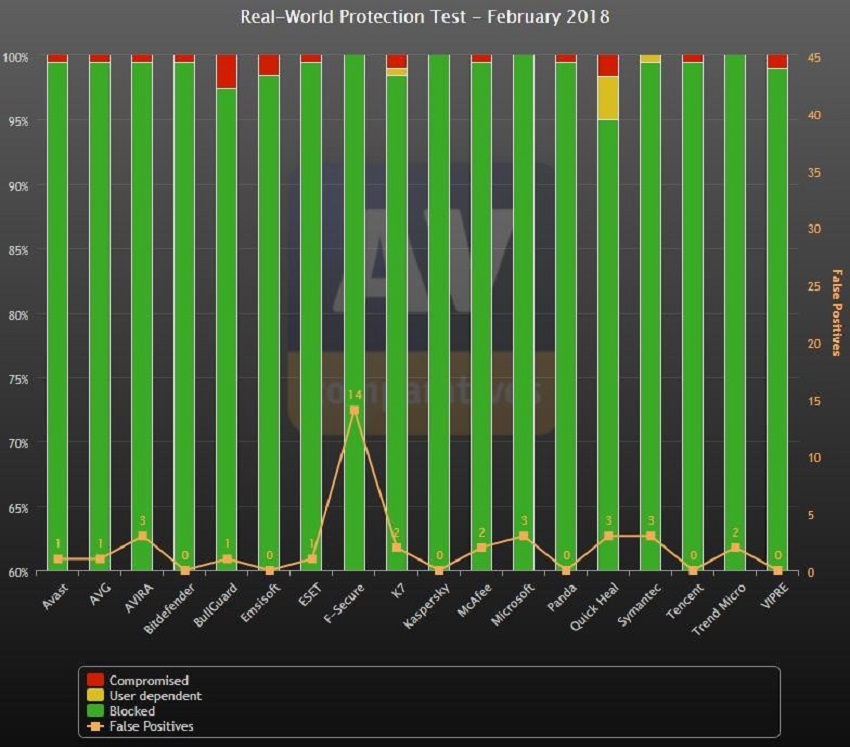
Windows Defender, Kaspersky Internet Security, F-Secure Safe, and Trend Micro Internet Security are the four antiviruses that received the maximum score in the latest AV-Comparatives tests.
All four blocked 100% of malware, although F-Secure also recorded the highest number of false positives, with 14 samples incorrectly labeled as infected. Windows Defender received only 3 false positives, while Kaspersky delivered flawless performance with zero dangerous items and top-notch protection.
BullGuard Internet Security and Quick Heal Total Security scored the lowest. In BullGuard's case, 2.5% of malware managed to get past the antivirus, while Quick Heal missed 1.6% of malware, while 3.4% of infections were flagged as user-dependent.
Particularly notable, however, is the top-notch performance of Windows Defender. Combined with Windows 10, Windows Defender has evolved significantly with the latest versions of Windows 10 and now offers antivirus features typically available in third-party security products, such as real-time protection and daily definition updates.
Additionally, the antivirus has been reimagined to become Windows Defender Security Center in the Windows 10 Fall Creators Update, so it now groups together all the security features available in the operating system. This means the same app provides quick access to other security tools, such as firewall settings and parental controls, making everything much easier on Windows 10.
The latest AV-Comparatives security tests were performed on a system running Windows 10 Fall Creators Update with up-to-date software such as Adobe Flash, Java , and Acrobat Reader.