

Edge browser: Microsoft launched its new Edge browser with a bang, describing it as an alternative to Google Chrome and Mozilla Firefox. The company has repeatedly published benchmarks showing that the successor to Internet Explorer offers better battery life and security.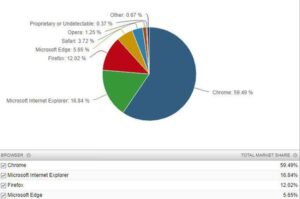
From the point of view of the adoption of the new browser, however, Microsoft Edge now has almost zero chance of catching up or even coming close to Google Chrome, as the data provided by NetMarketShare for June confirms that Microsoft has a huge problem.
Last month, Google Chrome was clearly the top browser on desktops with a share reaching 59.49%, while Internet Explorer, which is rapidly losing ground due to the lack of new updates and new features, was at 16.84%. Firefox was third on the charts with a share of 12.2%.
Microsoft Edge, across all versions of the browser, grabbed 5.65%, up just 0.02 percentage points from the previous month. In May, the Edge browser adoption rate improved by just 0.01 percentage points from April's rate.
Google Chrome adoption also appears to be slowing, largely because it already runs on the majority of computers. Since last month, Chrome's adoption rate has improved from 59.36% to 59.49%.
The adoption rate of Microsoft Edge browser is certainly much lower than the company's expectations, considering that we are in the era when Microsoft is preparing the Windows 10 Creators Update, which is considered the most advanced and most secure version of the operating system. The new update will bring a long list of improvements to the Edge browser, such as new usability and security tools, as well as new extensions.
But apparently, users aren't too impressed and most prefer Google's solution for now.
