

"Safer Internet Day 2016" is celebrated worldwide on Tuesday, February 9, with the slogan "Take action, for a better Internet!".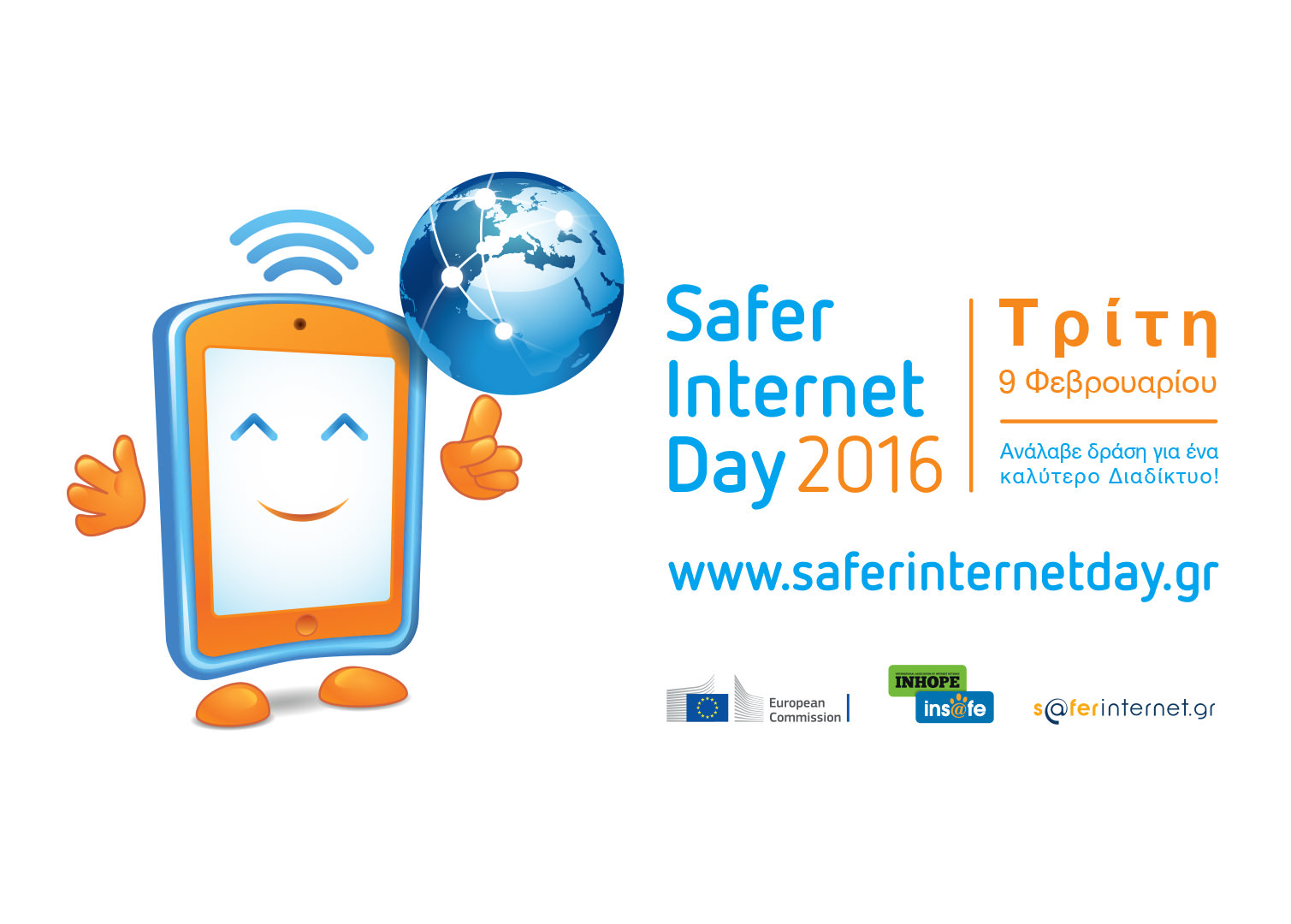
Coordinated in Greece by the Advisory Board of the Hellenic Safer Internet Center, the 2016 celebration also encourages hundreds of organizations to participate to help promote the safe, responsible and positive use of digital technology for children and young people.
Globally, Safer Internet Day (SID) is organized with the support of the European Commission every February with the aim of promoting safer and more responsible use of online technologies and mobile devices, especially among youth.
The online safety landscape has evolved in recent years from an emphasis on creating a “safer” internet to creating a “better” internet. Whether we are children and young people, parents and carers, educators or social care workers or politicians, we all have a role to play.
By championing a better internet, the Day aims to encourage people to play a positive role in seizing the opportunities offered by the internet, while providing them with the skills, knowledge and support they need to deal with any of the online risks they may encounter.
There are ways we can all contribute:
- Children and young people can help create a better internet by being kind and respectful to others when online, protecting their (and others’) online reputations, and seeking out positive opportunities and experiences online. They can help counter negative behaviours by being “helpful peers”: supporting others when they are facing issues online, taking a stand against cyberbullying, and reporting any inappropriate or illegal content they come across. Above all, children and young people should be encouraged to take a stand as digital citizens of the future – participating in discussions about the future of the internet, and making their voices heard.
- Parents and guardians can help create a better internet by maintaining an open and honest dialogue with their children about their online lives. By supporting them in their personal development online and helping them to deal with any problems or issues. By looking for positive opportunities to engage with their children online, and by helping their children to find and use good quality digital material. They can help address negative behaviour by engaging with their child’s online activity (appropriate to their age), and acting as a role model for positive online behaviour, and also by reporting any inappropriate or illegal content they find.
- Teachers by equipping children and young people with the digital skills they need for today’s world, giving them opportunities to use – and create – positive online content. They can help tackle negative behaviours by supporting young people if they are experiencing problems online, giving them the resilience, confidence and skills they need to navigate the internet safely.
- The Internet industry has a role to play in creating and promoting positive content and safe online services, and in protecting users to respond to any issues, providing them with clear security advice, easy-to-use security tools, and quick access to support if things go wrong.
- Policymakers and policymakers need to provide the culture in which all of the above can operate and thrive – for example, by ensuring that there are opportunities in the curriculum for children to learn, and for teachers to teach, about online safety, ensuring that parents and guardians have access to appropriate information and support resources, and that the Internet industry regulates its content and services. It should also take a leading role in governance and legislation, and, ultimately, ensure the safety and well-being of children and young people through effective strategies to protect them online.
Learn more about what is happening in Greece, Europe and around the world for Safer Internet Day at the links below:
www.saferinternet.gr/index.php
www.saferinternet.org.uk/safer-internet-day
https://bitdefender.gr/blog/blog-safer-internet-day-2016
