It was a sad day for this particular motherboard (Motherboard)! The bad weather of the days and a voltage surge were enough to mourn it! But before we throw it away and get into the process of replacing it, we thought of doing an “anatomy” lesson!
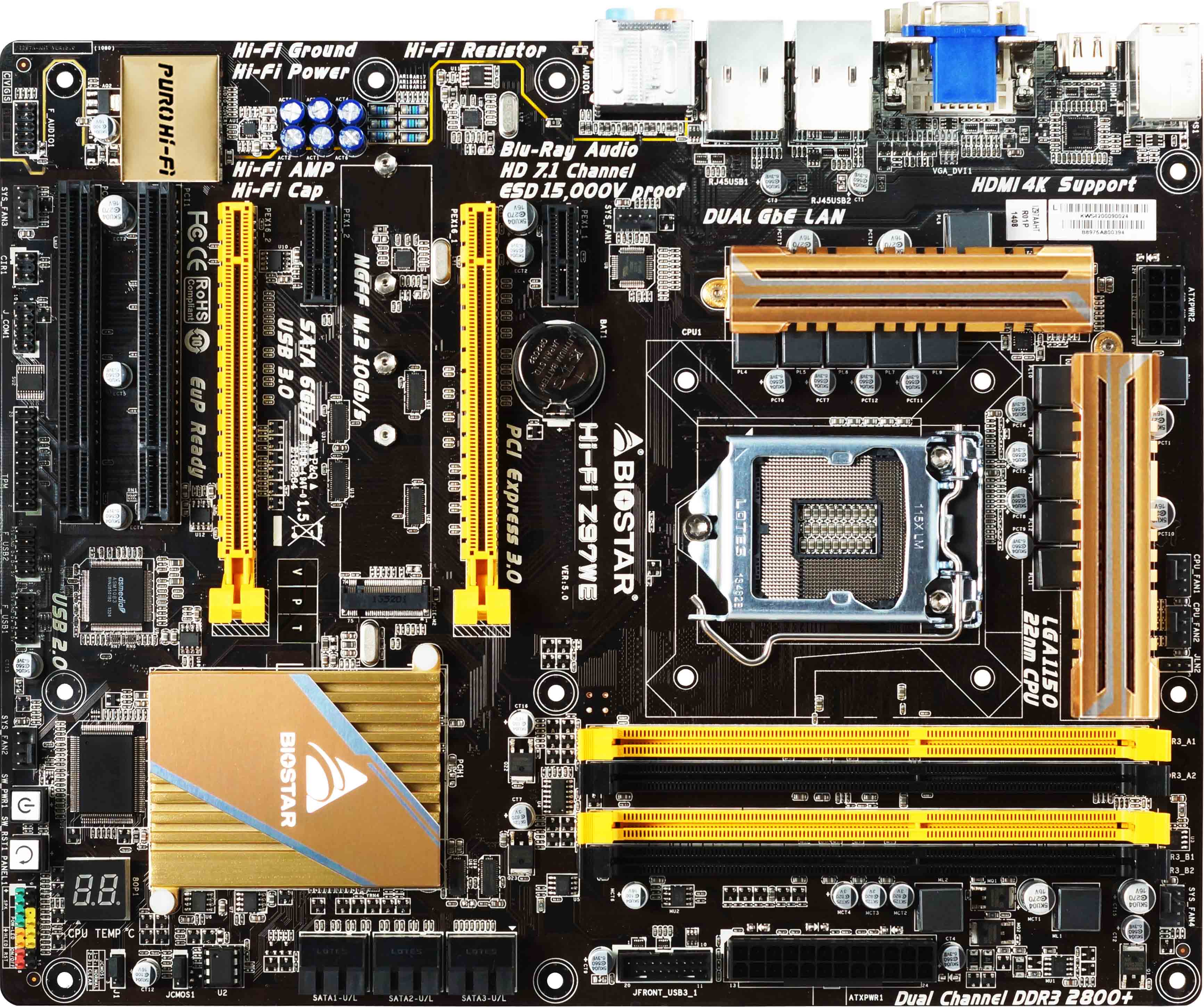
First of all, everyone who uses an electrical device uses a motherboard! This particular motherboard is part of a desktop computer, the difference from a laptop is the size and perhaps some additional functions.
What is the function of a motherboard or Motherboard?
It is a relatively large printed circuit on which integrated circuits are mounted that implement the various units of the computer. Also, on the motherboard (Motherboard) the expansion slots are installed for connecting other peripheral units that cause all these peripheral units (hardware) to communicate with each other.
The processor base.
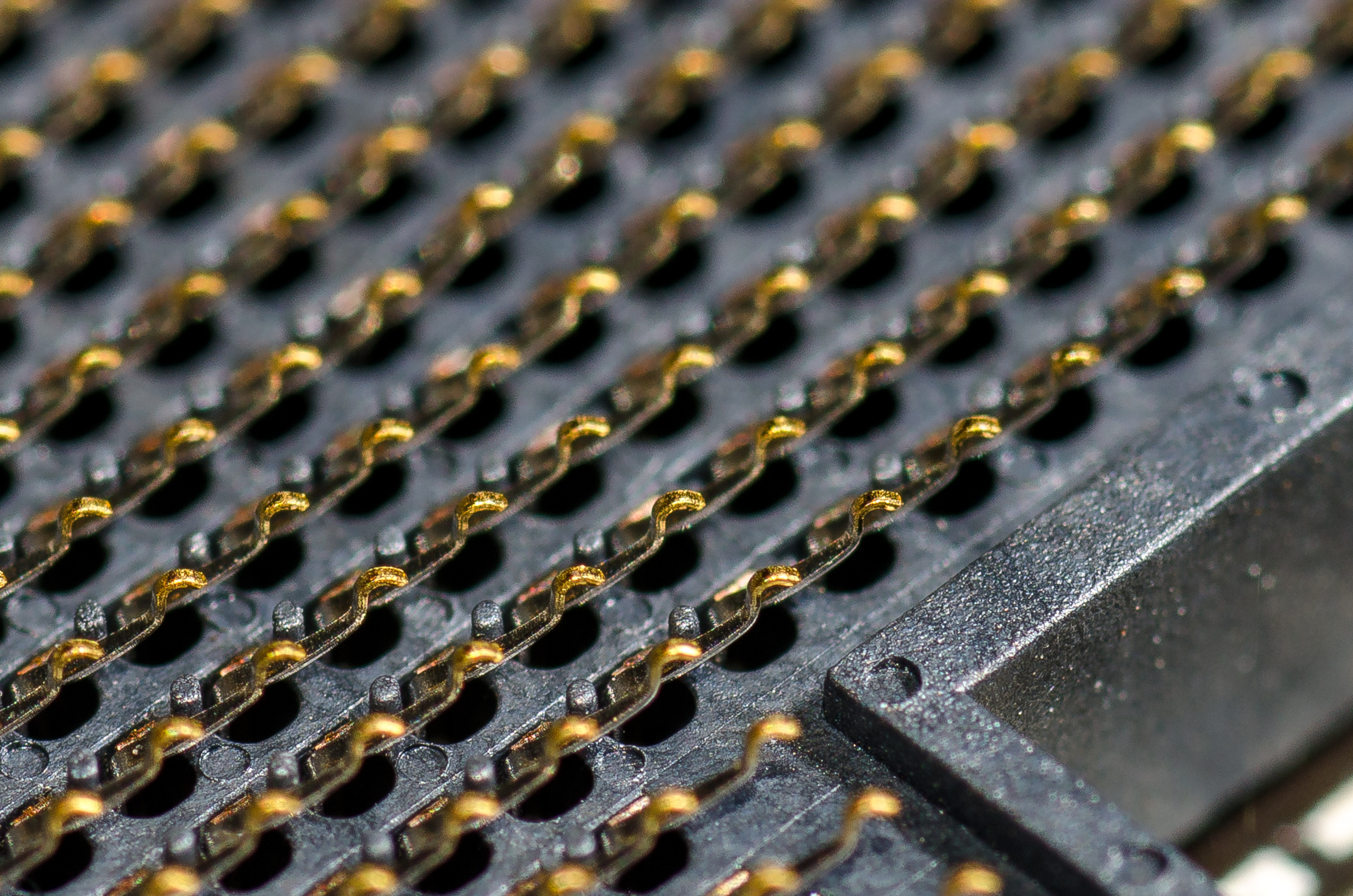
On every motherboard there is a base attached, on which the processor is placed. Given that there are many processors that can be placed on the same base, the assembler has the opportunity to choose the one they want, provided that the motherboard is designed to support that specific processor.
RAM memory slots.
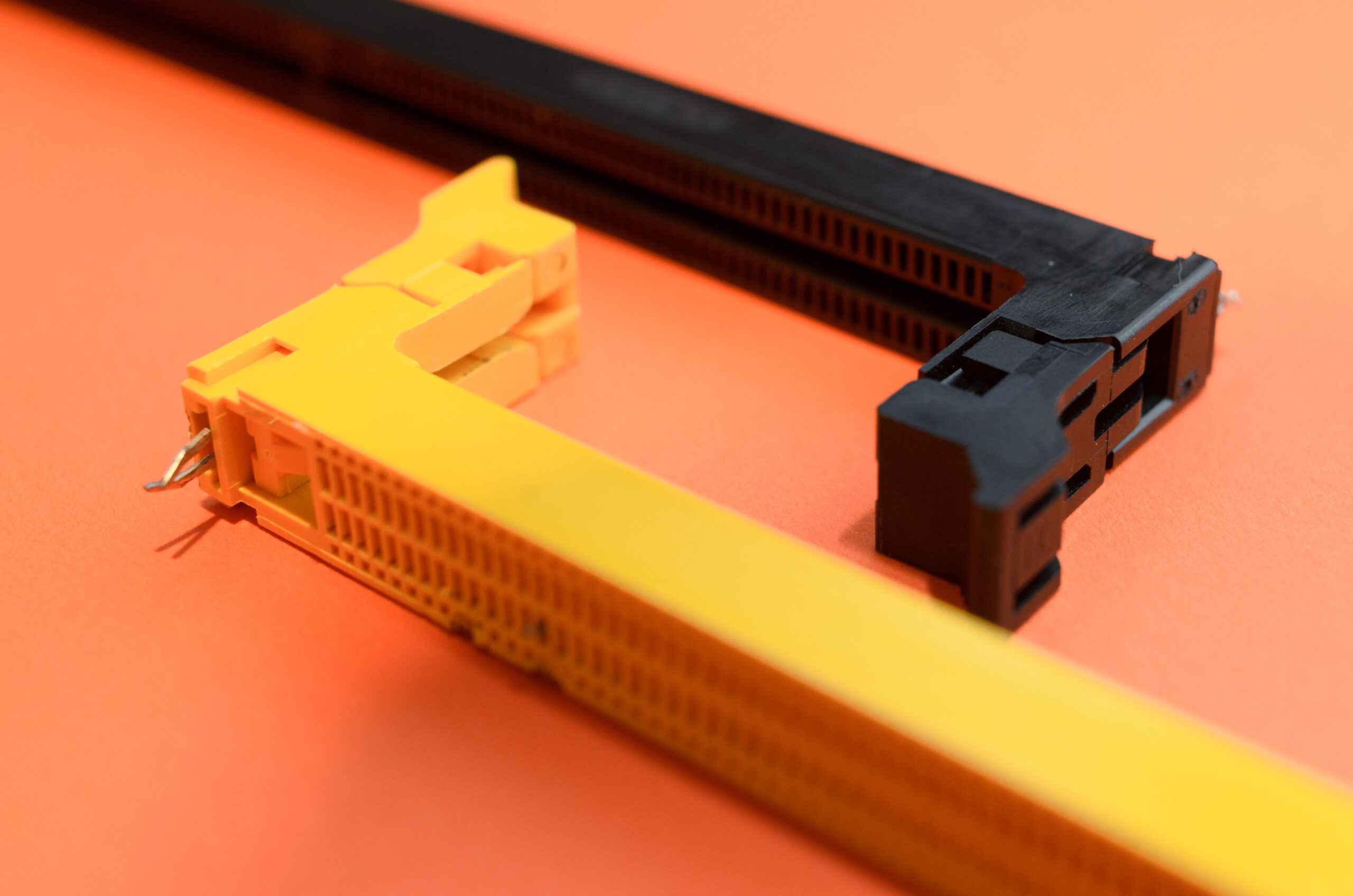
Just like the processor, the integrated memory circuits in personal computers are always placed on sockets. This gives us the ability to easily add memory to a system or replace the existing memory with one of larger capacity.
PCI-E.
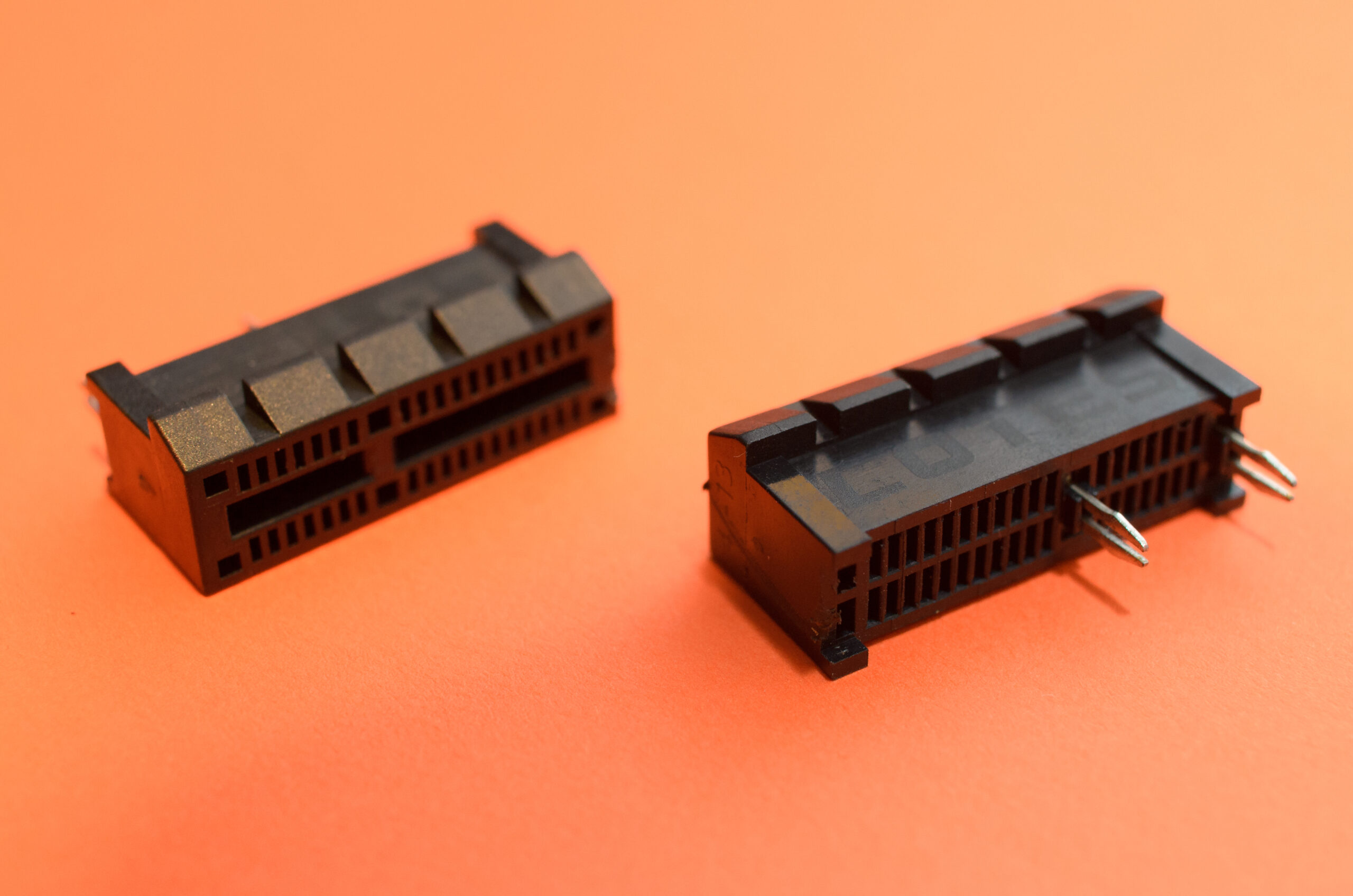
In these slots, old graphics cards and memory slots are installed.
BIOS.
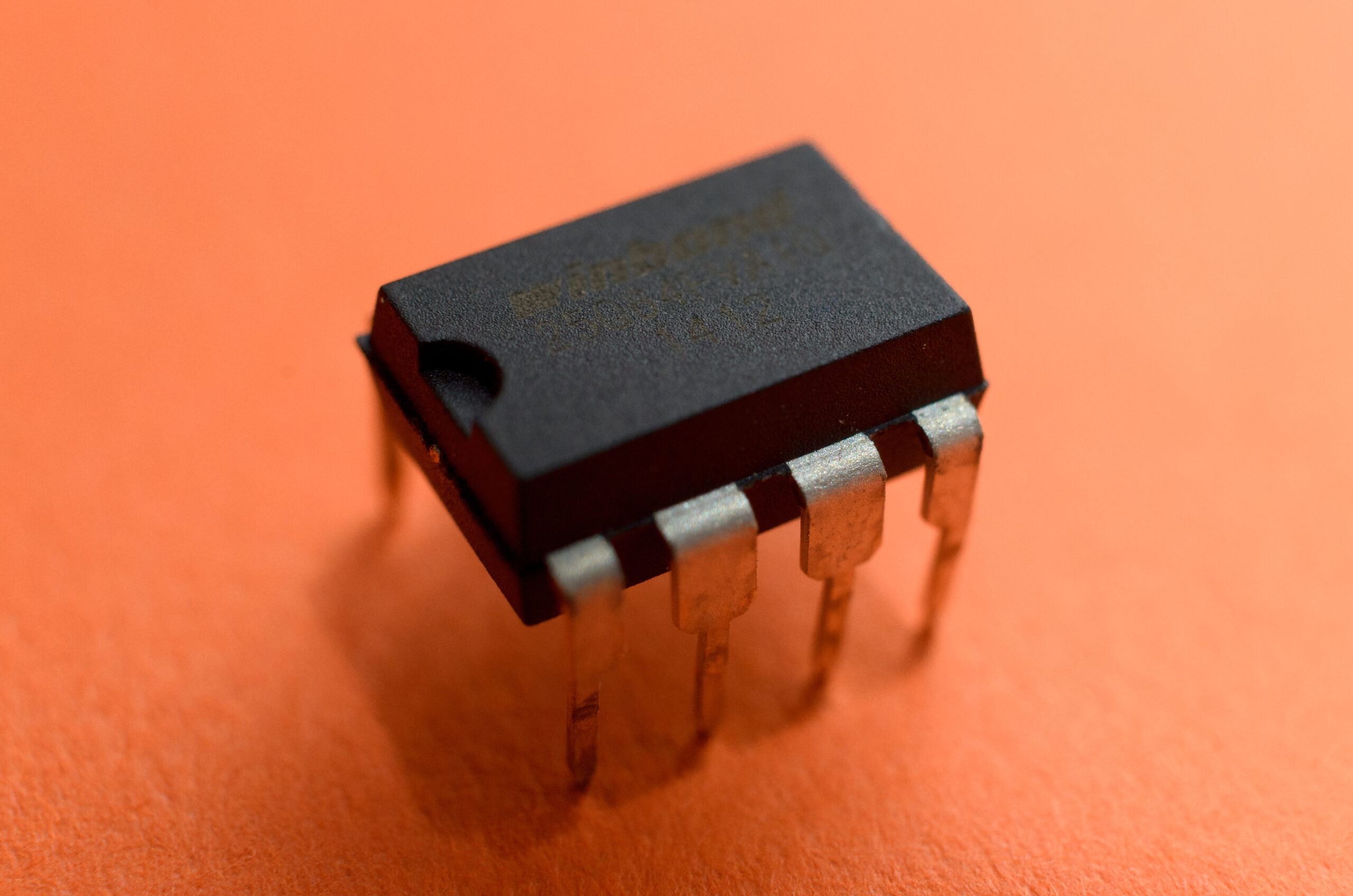
On the motherboard there is also the integrated memory circuit that contains the BIOS (Basic Input-Output System – Basic input-output system). The BIOS is a program that is stored in a ROM memory. This program is needed for the personal computer to start its operation and be able to communicate with the basic peripheral units. The BIOS also contains a POST program (Power-On Self Test – Self-diagnostic program that runs at startup) which, during the computer's boot, performs diagnostic checks on the peripheral units to detect possible failures. Additionally, within the BIOS there is a program for setting the basic system parameters (CMOS setup). Finally, the BIOS is what starts the execution of the personal computer's operating system.
VRMs.
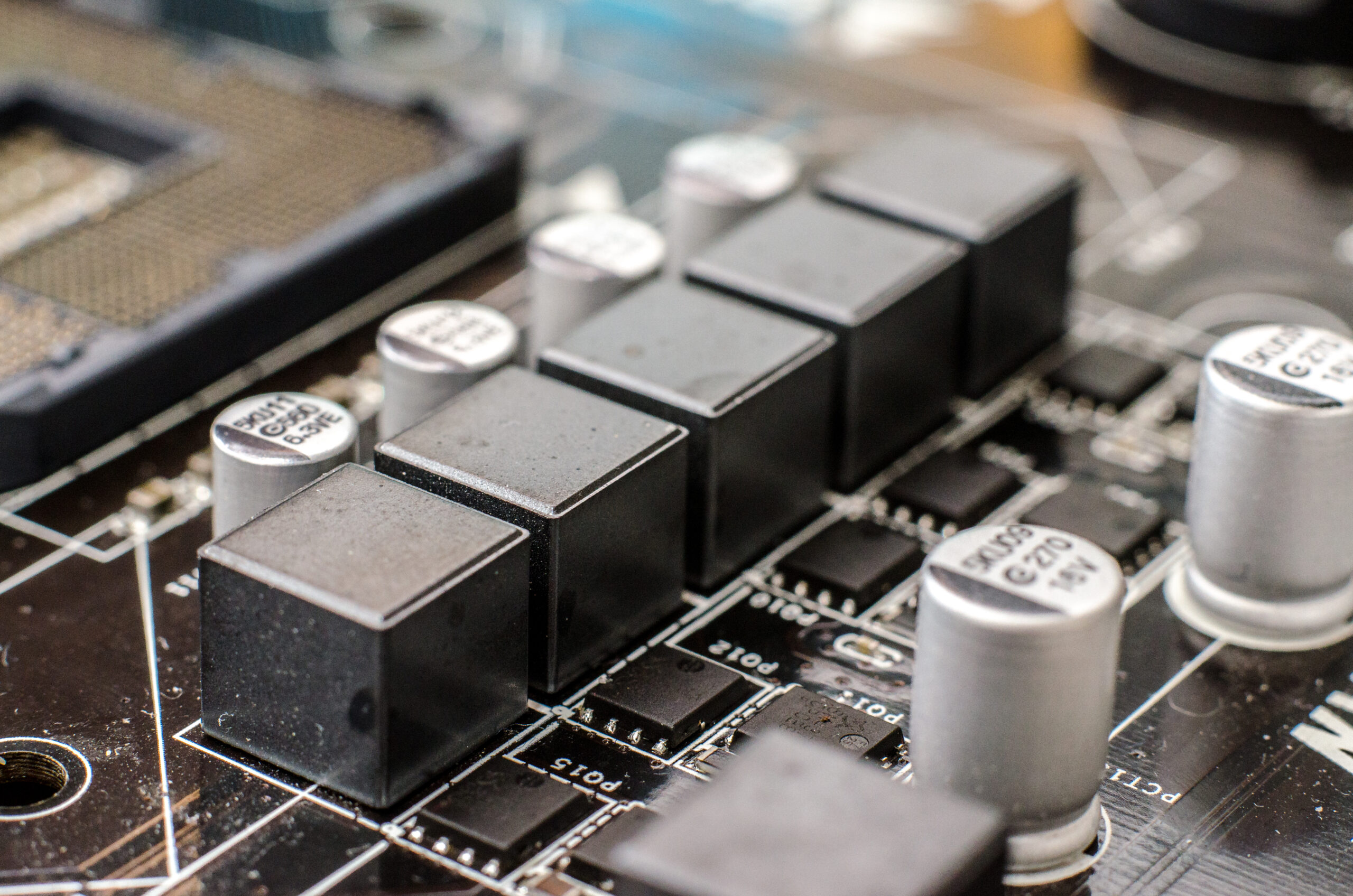
VRMs are the voltage regulators of the power supply of the motherboard. The job of these capacitors is to ensure that the processor (CPU) always has enough power to deliver maximum performance.
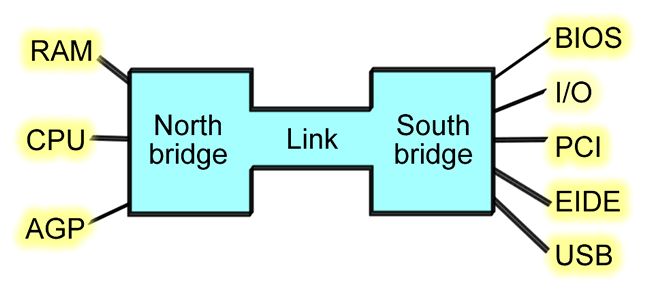
I/O Controller H – Southbridge.
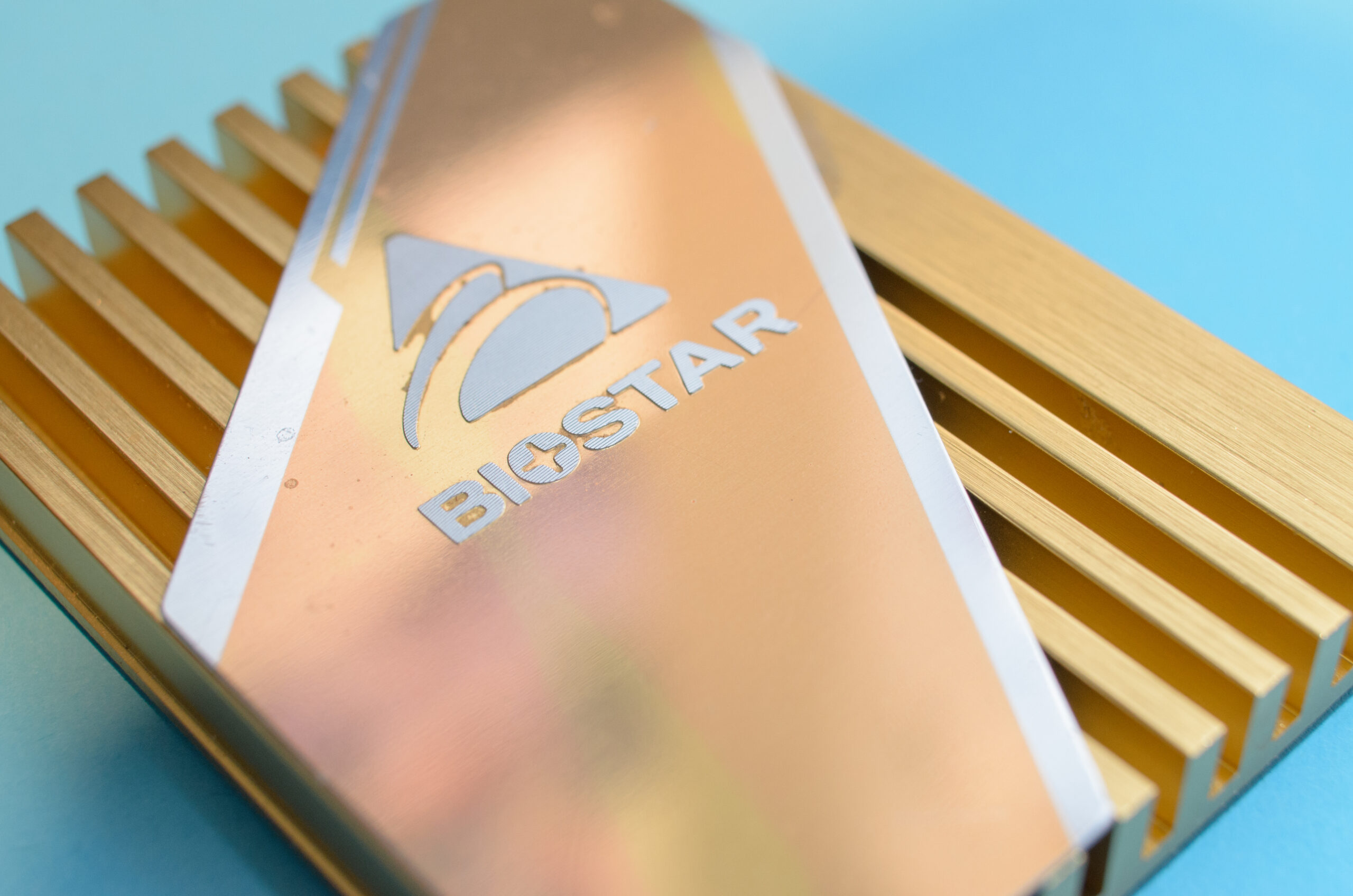
The Central Input/Output Controller is the chip that implements the “slower” functions of the motherboard (in computer architectures based on northbridge/southbridge chipsets).
The southbridge is usually not directly connected to the CPU. It can also connect signals from input/output devices directly to the processor, via an integrated bus control circuit, for accessing and controlling data.