

Kaspersky Lab's report on the spamand phishing threat landscape in the second quarter of 2015 reveals that messages based on real events dominated this period.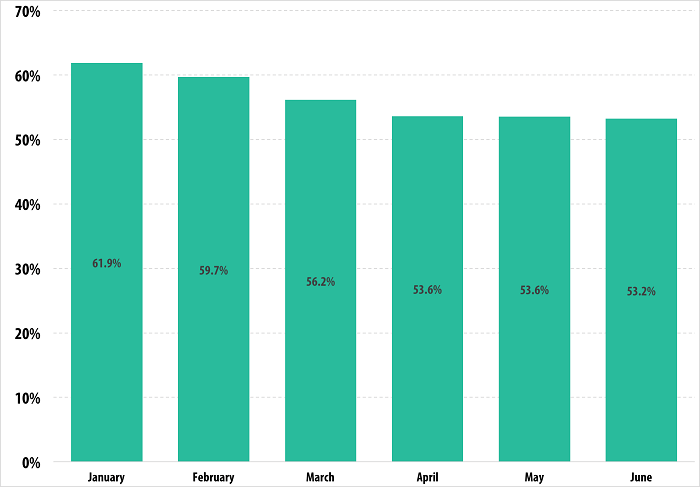
More specifically, in financial scams of the “Nigerian scam” type, spam messages were observed that exploited topics such as the earthquake in Nepal, the presidential elections in Nigeria, and the Olympic Games in Rio de Janeiro. In this way, attackers tried to extract personal data and convince Internet users to make voluntary donations.
Although the percentage of spam as a percentage of total email volume decreased by 5.8 percentage points compared to the previous quarter (from 59.2% to 53.4%), the second quarter of 2015 saw a significant increase in the use of world events in spam messages.
Among other things, fake messages appeared asking recipients to make a donation to help the victims of the earthquake in Nepal. In other malicious mass mailings, scammers tried to lure recipients with the sum of $2,000,000, which the newly elected president of Nigeria was supposedly ready to send to the user as compensation.
In addition, there were also fraudulent notifications for raffles that supposedly gave away tickets to the 2016 Olympic Games in Brazil, in an attempt to convince recipients to send the scammers their personal data in order to receive their "gift".
Tatyana Shcherbakova, Antispam Analyst at Kaspersky Lab, said: “In the second quarter of 2015, we noticed that spammers used tragic events to trick users. It’s a tactic that scammers have used in the past, but with events like the Nepal earthquake receiving so much media coverage worldwide, these messages are likely to evoke sympathy from recipients. To protect themselves, users should not open emails from unknown senders and remember not to follow links in emails and not to open attachments. With many scammers trying to make the sender’s name and address look more legitimate, this is more important than ever.”
Kaspersky Lab The countries targeted by malicious email
In the second quarter of 2015, there were significant changes in the list of countries most frequently targeted by malicious emails. Germany (19.59%), which was in fourth place in the first quarter, came out on top. The United Kingdom, which was in first place in the first quarter, fell to second place (6.31%) and Brazil came in third (6.04%).
The US (5.03%), traditionally the country most frequently targeted by malicious emails, was in fourth place. In addition, Russia (4.74%), which was only in tenth place the previous quarter, rose to fifth place.
Kaspersky Lab The sources of spam
The US (14.59%) and Russia (7.82%) remained the largest sources of spam. China came in third on the list with 7.14% of global spam, compared to 3.23% in the previous quarter. It was followed by Vietnam (5.04% compared to 4.82% in the first quarter), Germany (4.13% compared to 4.39% in the first quarter) and Ukraine (3.90% compared to 5.56% in the first quarter).
Kaspersky Lab Phishing
In the second quarter of 2015, Kaspersky Lab's anti-phishing system was activated 30,807,071 times on the computers of consumers using the company's security solutions. 509,905 phishing URLs were added to Kaspersky Lab's databases during this period.
The percentage of spam out of the total volume of emails
There has been a global decline in the percentage of spam messages in total email traffic since the beginning of the year, but this decline has now almost stopped. In the second quarter of 2015, the relative percentage stabilized and fluctuated between 53.5% in April and 53.23% in June.
Kaspersky Lab Malicious email attachments
Trojan-Spy.HTML.Fraud.gen topped the list of malicious programs sent via email. This program is a fake HTML page, which is sent via email and looks like an important notification from a large commercial bank, an online store, a software developer, etc. This threat appears as a phishing HTML website, where the user must enter their personal data, which is then forwarded to cybercriminals.
For the full report “Spam and Phishing in Q2 2015”, you can visit the Securelist.com.
