

Kaspersky Lab announces its support for the work of the Archaeological Society of Athens to restore the frescoes discovered during excavations in the settlement of Akrotiri, Santorini, also known as the “Pompeii of Greece”.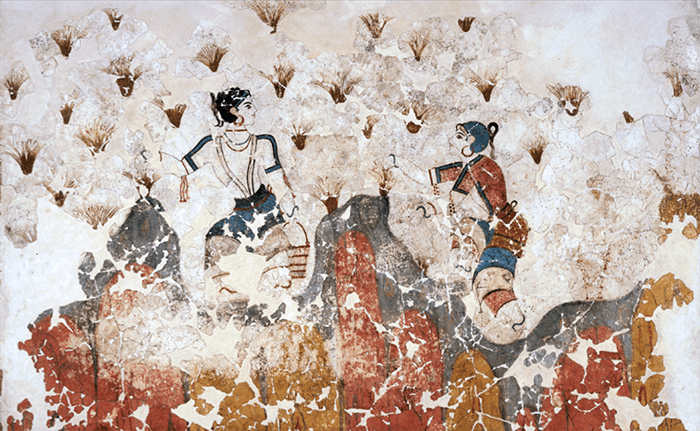
The Archaeological Society of Athens is the oldest scientific organization in Greece and the second oldest in Europe for the research and study of Greek civilization. The excavations at Akrotiri of Santorini began in 1967 by the late Professor Spyridon Marinatos, with exceptional success. Since then, the Archaeological Society of Athens has published 12 volumes of studies on the excavation and its findings, which has significantly contributed to informing the scientific community about this unique archaeological site.
Akrotiri is a Cycladic settlement founded around the middle of the 5thcentury BC (Neolithic period) on the volcanic Greek island of Santorini. It quickly developed into a cosmopolitan city that was destroyed in the great eruption of the island's volcano 3,000 years ago and buried under volcanic ash. Thus, the remains of exquisite frescoes and works of art were preserved, which, however, still remain vulnerable to the passage of time. The advanced and refined architecture of this ancient city, as well as its famous frescoes, make it unique and particularly important for research.

Eugene Kaspersky, President and CEO of Kaspersky Lab, said: “I have visited Santorini many times and am truly amazed by its beauty and culture – it is truly the cradle of European civilization. Understanding the importance of research and restoration of its cultural elements, I am particularly happy that we can contribute to bringing to light the treasures that are part of such a unique ancient civilization.”
The company's donation and the efforts to promote this specific study aim to reveal the unique treasures of European cultural heritage, and in particular the frescoes of Akrotiri.
Kaspersky Lab, known for its technological innovations, recognizes the importance of preserving the cultural heritage of humanity. Akrotiri is a valuable cultural artifact that may be lost if it is not properly explored and if its findings are not preserved and preserved. With the support of Kaspersky Lab, a large part of the frescoes of the building Xestes 4 will be reconstructed and restored.
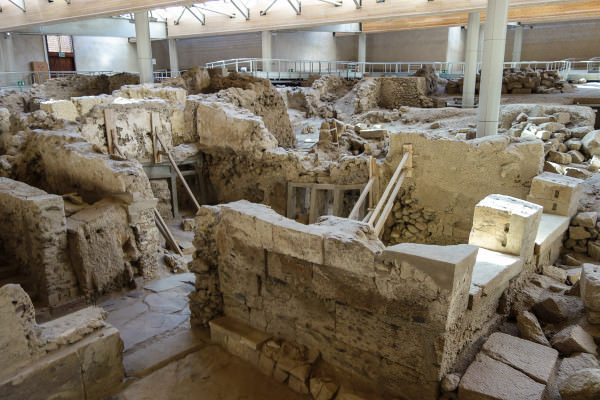
“The frescoes are usually recovered in a very fragmentary state and their conservation is particularly delicate and time-consuming,” commented Dr. Dora Vassiliko, Member of the Board of Directors of the Archaeological Society of Athens. “I hope that one day, the frescoes of Akrotiri can be presented more widely in a museum and seen by hundreds of thousands of visitors from all over the world. It is wonderful to see the interest and support for our work, especially in these difficult times for the country,” she added.
Christos Doumas, Director of the Akrotiri Excavation, added: “Akrotiri is a unique place. The art and culture here were ahead of the times, in many ways. Since the beginning of our archaeological excavations, about 50 years ago, we have uncovered many unique examples of ancient art and culture, but there is still much work to be done. We are grateful to Kaspersky Lab for its contribution to the preservation of cultural heritage. This collaboration is particularly valuable to us, and we are also in discussions regarding our joint plans for our cooperation in the future.”.
Kaspersky Lab’s efforts to promote the study are not limited to the restoration of the frescoes. For example, the company supported the translation and publication of a book about the city and its history, entitled “Akrotiri, Thera and the East Mediterranean” (note: Greek title: “Akrotiri Santorini: The Biography of a Lost City”), by Professor Nanno Marinatou, a Greek archaeologist and expert on Minoan religion and iconography.
