

The Large Hadron Collider (LHC) at CERN was restarted. The LHC began operating again today, the first time since 2013 when the protons started circulating in the 27‑kilometer tunnel.
After being offline for two years, the world's largest particle accelerator is back in operation. The process was carried out by activating the two proton beams that travel in opposite directions within the 27-kilometer tunnel. Initially, the energy is low, but CERN scientists hope that within the coming months the particle accelerator will reach its maximum capabilities.
The actual collisions won't start for at least a month, but when they do they will produce twice the energy the LHC reached in its first run, according to the BBC.
Rolf Heuer, the director general of CERN, which operates the LHC, told engineers and scientists at the lab: "Congratulations. Thank you very much to everyone... Now the hard work begins with the start of work."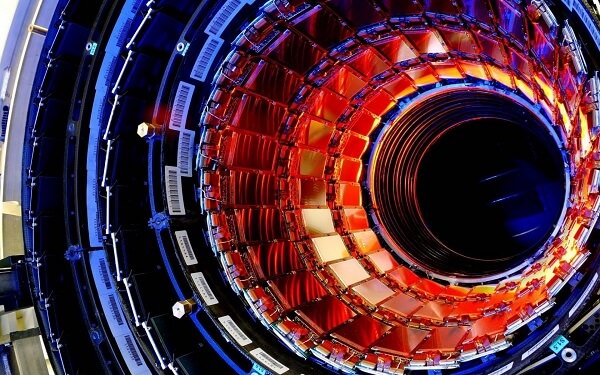
CERN accelerator director Frédérick Bordry said: “After two years of effort, the LHC is in excellent condition. But the most important step is yet to come. We will see the binding energy increase to new record levels.”
CERN is broadcasting live information about the progress of the process, which so far does not appear to be presenting any problems.
The protons, as mentioned earlier, are injected at a relatively low energy. However, over the coming months, scientists hope to gradually increase the energy to 13 trillion electronvolts, which is double what it was during the first operation of the LHC.
From 8:30 GMT today, scientists began passing the proton beam through each section of the huge tunnel.
The Large Hadron Collider is very close to identifying the Higgs boson, which has not been observed until now. Confirmation of the existence of the Higgs boson will explain how elementary particles acquire mass according to the Higgs model.
