

Facebook is currently worth over $200 billion, according to figures revealed by the company in late 2014. Statistics published on Facebook's official information page show that the social network has more than 1,390 million active users each month, of which 1,190,000,000 use their mobile phones to post messages, photos, play games, or chat with their friends.
Needless to say, Zuckerberg, like any other proper billionaire, is constantly looking for new ways to expand his business.
So from time to time Zuckerberg has invested in a series of complementary projects related to Facebook or not. Whether his investments were successful or unsuccessful, no one can say for sure yet. What is certain is that he keeps trying.
A Facebook phone is nothing new, and the social network tried to take this project to another level.
Facebook managed to develop the HTC First, a device that turned out to be something like Microsoft's Windows Vista: a complete failure that stopped just a few months after its launch.
The HTC First, also known as the Facebook phone, was released in America in April 2013, but later that year, AT&T decided to offer the device completely free, due to the fact that no one was asking for it.
Below are the key technical specifications of the Facebook phone, which undoubtedly indicate a low-end device considering the size of Facebook:
| Operating system | Android 4.1 Jelly Bean |
| Screen | 4.3 inches, 720 x 1280 pixels |
| Processor | Qualcomm MSM8930 Snapdragon 400 |
| RAM | 1GB |
| Storage | 16GB |
| Cameras | Rear: 5MP; Front: 1.6MP |
| Battery | 2000mAh |
However, Facebook seems to have what it takes to enter mobile with something that could change the world.
WhatsApp voice and video calls
WhatsApp is a mobile messaging service with over 700 million monthly active users and is owned by Facebook. It recently added voice messaging support, so you can now call your contacts using an internet connection, without using your carrier. This feature is obviously a huge blow to carriers around the world. But their nightmare probably won't end there.
Video calling will be the next addition to WhatsApp. Sooner or later, Facebook is showing that it could become the most powerful competitor in the mobile phone industry, wiping them off the map. WhatsApp seems to be able to do what Facebook's mobile app couldn't.
But let's see how the technologies that have already been announced by Facebook could change our lives.
We all know that there are three different things that are crucial to a Facebook phone: WhatsApp, Facebook integration, and Wi-Fi.
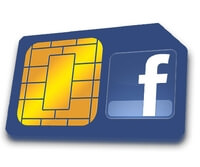 First and foremost, the WhatsApp application seems to be constantly developing. The next step beyond voice calls will be video calls. WhatsApp could allow Facebook to have a phone without even needing a device and without the need for a SIM card. This is where the future begins: without SIM cards, you will not need a contract, which you will have to pay for and you will be able to talk on your phone as much as you want at any time.
Obviously, to do this, you'll need an internet connection, but that requirement is closely related to the other two. A SIM card with a phone number is mandatory for anyone using the WhatsApp app, right? But an integration of WhatsApp with Facebook seems to be all that's needed to avoid SIM cards altogether.
[signoff icon=”quote-circled”]”A Facebook phone can work without a SIM card, but you can also have one. Calls and Internet will be completely free thanks to your friends.”[/signoff]
By integrating Facebook into a phone, or to put it another way, Facebook together with WhatsApp will allow you to call and chat with your contacts, at any time, without paying a single cent to any carrier. Without the need for a SIM card.
The more friends you have on Facebook, the more people you'll see on WhatsApp. More friends, more contacts, more ways to talk for free.
But to use WhatsApp and your Facebook contacts without a SIM card, you obviously need a wireless network with Internet access. This is where free Wi-Fi comes in.
Facebook is already trying to provide free internet in some poor countries around the world, but the SIM-free phone plan will likely expand the area where free Wi-Fi is distributed.
[signoff icon=”quote-circled”]Have you ever wondered what would happen if Facebook could allow its users to share their Internet connection with their friends?[/signoff]
The profit from a Facebook phone, an integrated WhatsApp with Facebook accounts and a shared free Wi-Fi will be huge for the social network and probably disastrous for the phone companies who will have to look for other resources to survive.
A Facebook phone should be very annoying for today's mobile carriers. Even if Facebook loses money by marketing free internet from drones, with this project, it actually wins. How? More and more people will join the social network to have free phone calls and get free internet.
The plan could convince as many users as possible to join Facebook. Just imagine that you want to travel to another country, and you will be able to make free calls through Facebook with free internet that you can use all the time. The more friends you have on Facebook, the greater the chances of connecting to a free Wi-Fi. This is all in Zuckerberg's vision. A connected world could become a reality.
The only big issue Facebook will have to deal with is disgruntled carriers and antitrust laws. Facebook could easily become a target for antitrust investigators as complaints from carriers and telecom companies begin to pour in as they see their profits plummet.
