

Mobile device chips introduced by Intel give the user the ability to "wake up" their laptop or tablet simply with a single phrase .
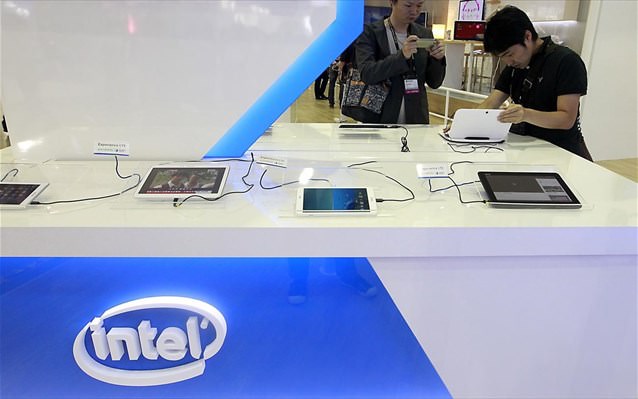
As reported in a relevant article by MIT Technology Review, when the computer has "awakened" (simply through a phrase like "Hello, computer"), it can be used as a voice-controlled virtual assistant, with the user giving it commands.
Tablets and lightweight laptops based on the Core M series of chips will go on sale later this year. They are capable of continuous "listening" thanks to a digital signal processorcore that specializes in processing audio with high efficiency and minimal power consumption.
“No matter what state the system is in, it will be able to ‘listen’ all the time,” says Ed Gamsaragan, an Intel. “You can work on it or have it on standby.”
A user can create a two- or three-word phrase to “wake up” a Core M-chip computer, and the system can be “trained” to respond to a specific one. While voice-print isn’t secure enough to replace a password, it can prevent the system from accidentally waking up, Gamsaragan said. However, he added that in combination with other biometric features, such as a webcam with facial recognition, a voice command could act as a security mechanism.
It is noted that the entire voice wake-up feature is compatible with every operating system.
Within the broader context of establishing "natural", alternative ways of controlling electronic devices, the SideSwipe system by Matthew Reynolds and colleagues at the University of Washington is also included, which allows a mobile phone to be operated with gestures, utilizing its signal: radio waves are reflected back to the device, allowing the gestures to be recognized.
As reported in a related article by New Scientist, an algorithm is used that recognizes the unique reflections that occur when the user's fingers interrupt the "flow" of radio waves through which the mobile communicates with the mobile phone antenna. In tests, the program was able to recognize a series of movements with an accuracy of around 87%. Its most notable feature is that it can also be used with non-smart phones, which means that SideSwipe seems capable of bringing gesture recognition to countries in the developing world, where smartphones have not yet become widespread.
An extensive presentation of SideSwipe will be held at a conference in Hawaii in October.
Source: naftemporiki.gr
