

Hackers McKenzie enable new things to enter the world. They are not always great things or good things, but new things. In art, science, philosophy, and culture, in every process of knowledge where data is gathered, from which information can be drawn, from which new possibilities for the world can be produced, there are hackers who hack the new into the old.
Wark, A Hacker Manifesto
Hacking is based on orientation and disorientation. It is about exploring an alien system in order to pave the way for its navigation; and it is also about introducing a conscious disorientation and new orientations into that system.
From the unknown depths of the Deep Web and the complex instructions on specialized forums, hacking has recently emerged on the front pages and television screens. The escalating interest in Wikileaks and the Pirate Bay trial, and the events that followed, made an unexpected revelation to the public:
Having been taught by Beuys that “every person is an artist” and Warhol that “everyone can become famous”, now Anonymous and their forums were proving that:
Anyone can become a hacker.
How? First of all, you need to hide your computer's IP address. Then, you just follow the simple instructions.
Why? To protect the ideal of freedom on the Internet, because “this is our new homeland and it is the only territory that makes sense to defend and protect.”.[1].
Initially, the Internet was presented as the land of the Gospel for free speech, a place where anyone could access any information. Some believed that for non-democratic countries it was a gateway to freedom; paradoxically, it was George Bush who exclaimed “Imagine if the Internet took control in China. Imagine how freedom would spread,” in 1999.
That same year, Napster was founded and the demand for information control became a hot topic, resulting in lawsuits, website shutdowns and protests worldwide. A decade later, The Pirate Bay was convicted of copyright infringement in Sweden, the Hadopi was passed in France and a significant number of countries sought to restrict access to certain websites, under the pretext of protecting copyright laws and protecting children from inappropriate content.
However, after the publication of the secret documents of the American embassies, it has now become clear that the restriction of access to certain pages was of a political nature. I will not go into further details about the content of the diplomatic documents, the absurdity of the Assange case and the attempt of large companies and social networks to weaken Wikileaks. Besides, Wikileaks simply brought to the surface wars and policies that we already knew; certainly the atrocities of war are shocking, but unfortunately no soldier has stopped killing without conscience - as in a video game - since the documents were leaked.
What mainly interests me here is how these cases - from Napster to Wikileaks - have contributed to the politicization of online groups, how hacking has become an everyday practice for a large number of people, and how these changes are reflected in specific artistic and cultural practices found offline.
From Napster to the Pirate Bay, a vast amount of copyrighted material has been “cracked” and “converted” to make it easily and cost-free for anyone to access. If you’ve downloaded a program illegally, you’ve probably followed the instructions in the attached .txt file to install it—an introduction to hacking. And it’s quite possible that you’ve used a file converter to open or share a file.
In any online P2P file sharing community, users communicate and exchange views with one purpose: to share information.
When the Pirate Bay was convicted of copyright infringement in 2009, the visibility of the Pirate Party - founded in Sweden in 2006 to demand a new approach to issues concerning the Information Society - escalated; after the founding of the Pirate Party International, it quickly gained support and votes in many countries worldwide. The Pirate Party is not associated with pre-existing ideologies of the right and left; it supports the reform of laws regarding intellectual property and the individual's personal life, both on the Internet and in everyday life. Furthermore, it proposes directness and transparency in state administration, setting an example with the ideology and policy of the party, which is often shaped by online votes and forum posts by members. So,
Is this the future of democracy or is it just another utopia?
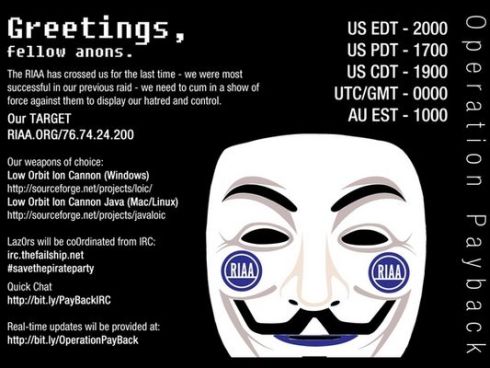
It may be too early to tell. For now, we can only speculate about this online battle as we watch the aftermath of the Wikileaks affair unfold. In response to the attack on Wikileaks and its founder, Julian Assange, Anonymous – a “cultural phenomenon that emerged from Internet message boards” with no connection to Wikileaks or the Pirate Party – decided to launch attacks on some of Wikileaks’ “enemies”, such as MasterCard and PayPal. “#OperationPayback”, as it was dubbed on Twitter, consisted mainly of “DoS attacks” (attacks during which they cause so much traffic to the target page that the page crashes for a period of time).
We can reasonably assume that the x-activists are aware of the fact that this operation could not be a serious blow to a multinational giant; just as MasterCard and Paypal demonstrate their power by refusing their services to Wikileaks, so too do hackers demonstrate their power by taking down their opponents' pages.
What is interesting here is how Anonymous used social media, such as Facebook and Twitter, to coordinate attacks and introduce a wider audience to hacking. Anyone who was curious enough to click on the links on Twitter could find easy-to-follow instructions that explained step-by-step how to hide their IP address and then participate in the DoS attack. At the same time, participants became members of an online community with common goals in terms of protecting freedom on the Internet:
A revolution whose manifesto was shared on social networks and the "weapons" were provided by download.
Of course, in order to be part of this revolution and become one of the hackers, one had to be on the Internet.
However, hacking is no longer limited to the digital world; artists are extending the boundaries of hacking into the real world, reaching a different audience, not necessarily associated with the Internet world and its ideals.
If we consider a hacker as “someone who can break a code, “whether it is a technical, social or spiritual code” and as a “player” and “warrior”, who installs himself “like a parasite” in existing games of (image and) language and produces noise with his interventions, bringing new codes into circulation”[2], then we could find several “hackers” in the visual field. From Duchamp’s ready-mades to Warhol’s cans, there are many examples of Cultural Hacking, where a visual code associated with an object is broken and transformed into another code – visual or linguistic.
https://www.youtube.com/watch?v=jkZoC6dwRqE
The appropriation of images and the intervention in existing spaces and relationships are elements present in contemporary art. In the case of street art, we can see it as a kind of hacking outside the Internet space: the laws that prohibit it, the growing interest of the public and the artists who appropriate and intervene in already existing forms – changing or transforming them. Even in the vocabulary of street artists we can detect a somewhat “militant” spirit: street artists “bomb” or “raid” a space, Shepard Fairey spreads his “propaganda” – appropriating well-known images from pop culture or art history – and Space Invader “invades” a city. An even more intense political tone characterizes Banksy; the illegal installation of an inflatable doll representing a Guantanamo prisoner at Disneyland has much in common with the practice of hacktivists of altering the content of the page they attack. It is like hacking into a three-dimensional space.
 Highlighting this form of hacking, the exhibition “Hacking the city”, curated by Sabine Maria Schmidt in Essen, presented interventions in public space around the city, which dealt with “strategies of Adbusting and Faking (or plagiarism), adding and subtracting (appropriation), moments of irritation and pause, forms of Hacktivism, flash mob actions, representations, performances, sculpture in public space, covert investigations, covert actions, events directed via the Internet or mobile phones […]. These strategies follow the logic of hackers: they enter other systems, orient themselves and then introduce applications that change or extend the limits of this system and its usefulness”[3]. Therefore, the term hacking can be extended to include any kind of appropriation and use of a system, as well as subversive actions in public space and the Internet.
The exhibition “Open_Source_Hack_Art”, hosted at the Museum of Contemporary Art in New York in 2002, featured artists influenced by the Open Source movement and Hack Art. Among them, the work “Minds of Concern: Breaking News” by Knowbotic Research, which consisted of an installation and a web interface. Through the project, the visitor could choose between pages of groups, movements and non-governmental organizations and click on a name. This set in motion a set of procedures that investigated the security conditions of the page’s server, looking for security gaps. The work was withdrawn after a few days because it was accused of violating the use policy.
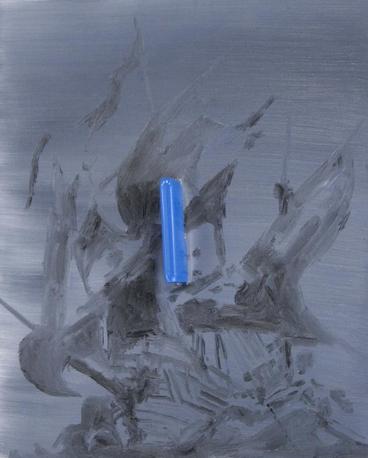
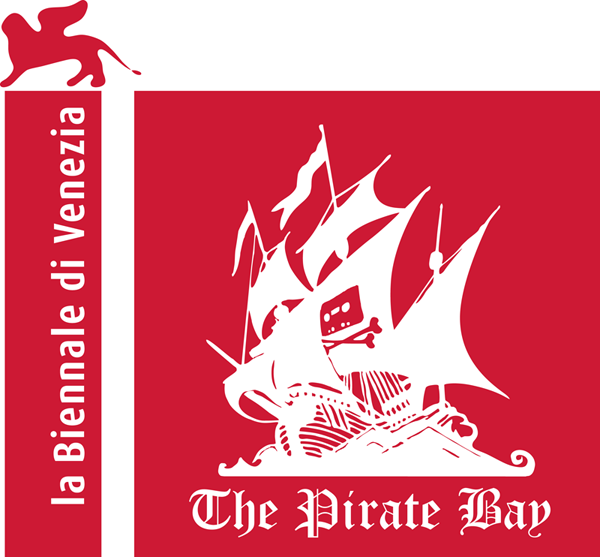 On an even larger scale, in 2009 the Italian police raided SALE, one of the side projects of the Venice Biennale, because it was hosting the Pirate Bay. The first Internet Pavilion, curated by Milto Manetta, included the Pirate Bay among the artists and groups, thus creating fertile ground for the cultivation of new practices and ideas related to the Internet, culture and politics. The case of Manetta is of particular interest here; in addition to his works that move within the framework of Internet Art, his open support for groups that are in favor of freedom on the Internet, as well as his visual works that echo the Pirate logos (“Pirate Paintings”) and their slogans (“I am gonna copy”). as well as his texts, such as the Piracy Manifesto, in a way summarize all the above issues regarding freedom on the Internet and the birth of a new political consciousness.
This new political consciousness requires the adaptation of society, laws, art and mentality to the new conditions resulting from the widespread use of the Internet.
From music and movie torrents to the most arcane secrets of global diplomacy, it seems that the shortest path to culture and politics is hacking.
[1] Miltos Manetas, “Internet Pirates Unite!”, Interartive #18, February 2010. https://interartive.org/index.php/2010/02/piracy-manifesto/
[2] Torsten Meyer "Postironischer Realismus. Zum Bildungspotential von Cultural Hacking", https://culturalhacking.files.wordpress.com/2010/10/comcom-katalog_meyer.pdf
[3] https://www.hacking-the-city.org/about
Hacker: A new political and artistic practice
Article by Christina Grammatikopoulou
Republished from https://interartive.org/2010/12/hack-art/
