

Petya ransomware: Uses disk-level encryption &
holds your pc hostage!
Encryption is used to secure our personal communications from malicious users, keeping our banking data safe, and a plethora of other data. However’ it is also the key to a highly common form of malware, the so‑called ransomware.
When a computer is 'hit' by ransomware, the user's files are encrypted, and only after you pay the demanded 'ransom' in Bitcoin will you be given the key to unlock them. There is a new type of ransomware circulating out there, which instead of encrypting some of your files, encrypts the entire hard drive… the reason for Petya.
https://www.secnews.gr/102390/wifi-slax/See also: WiFi Slax: A Linux Made for Wireless Hacking
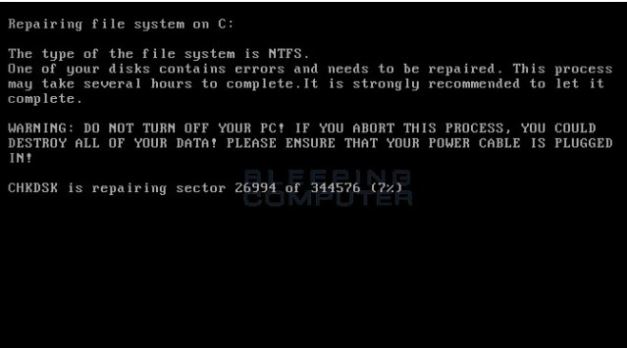
Petya is very clever regarding the way it locks your computer. Once installed, your system will reboot. Instead of booting normally, the computer loads what appears as system CHKDSK. This image, as expected, makes it clear that if you shut down your computer in the middle of this process it would be a very bad idea. In reality, however, Petya uses disk-level encryption to lock your system. The master boot record of the computer has already been exposed at this point, so shutting down will not help anywhere.
When the process completes, the user receives the classic ransomware sales pitch: Your files are encrypted – pay if you want to see your data again. In this case the hard drive (including the OS) is not accessible until you enter the correct decryption key.
https://www.secnews.gr/102239/debian-linux/btn-large” variation=”btn-success”]Read more: Debian Linux: Understanding the Universal Operating System!
A significant number of German companies have already fallen victim to Petya, but the ransom demanded is extremely low, only 0.9 Bitcoins (approximately $380). The amount must be paid to a Tor hidden service, from which you will then receive the necessary decryption key.
You can see the related video below:
[su_youtube url=”https://www.youtube.com/watch?v=3Ixtt8LVpTk” width=”640″ height=”380″]https://www.youtube.com/watch?v=B7o0qA4L4So[/su_youtube]
