


Miraculous innovations that act as Trojan Horses in our lives!
It is an undeniable fact that modern technology has become a bit more personal and intrusive in our personal lives.
It's all these smart devices that frame our daily lives and poke their noses everywhere, familiarizing us with the violation of personal data, which we largely allow.
And while things are already quite intrusive, scientists have set out to make the situation even more pressing, with the new generation of smart devices invading our lives even more shamelessly, and of course we watching in amazement..
Smart glasses that translate texts from foreign languages
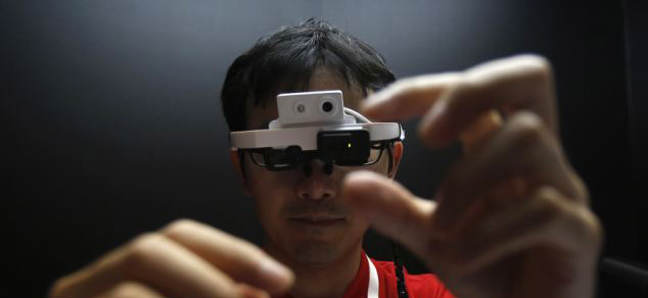 Japan's largest telecommunications provider, NTT Docomo, recently unveiled a pair of glasses that are different from the others: and that's because they can translate texts written in other languages into Japanese in just 5 seconds! The function that allows the magic, however, applies recognition technologies, at the same time as it can call on the spot those who are nearby and have electronic data with their contact details, which makes the glasses very scary! NTT Docomo's Intelligent Glasses are another modern Trojan Horse that completely violates our personal data...
The contact lenses that control blood markers
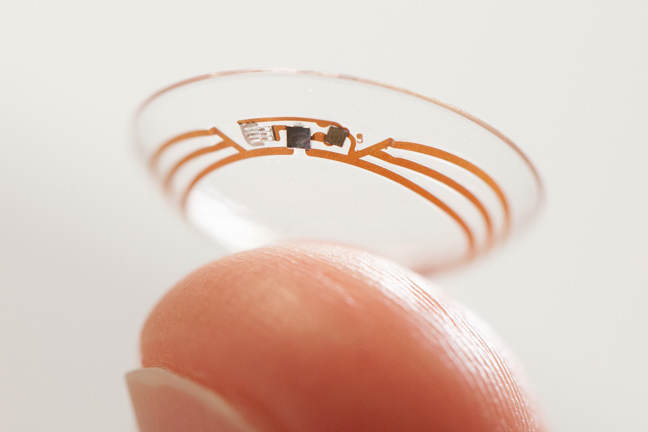 While Google Glass is constantly gaining ground in terms of bad reputation, a new product from the electronic giant is set to make it conquer the real world. Diabetic contact lenses make blood sugar measurements a thing of the past, as they are able to take the corresponding measurements from the patient's tear while wearing them! According to the sugar levels, they change color, thus informing the owner of a possible risk to their health. Let's hope that soon there will be no advertisements served directly in the owner's eyes...
The wristband that increases and decreases body temperature
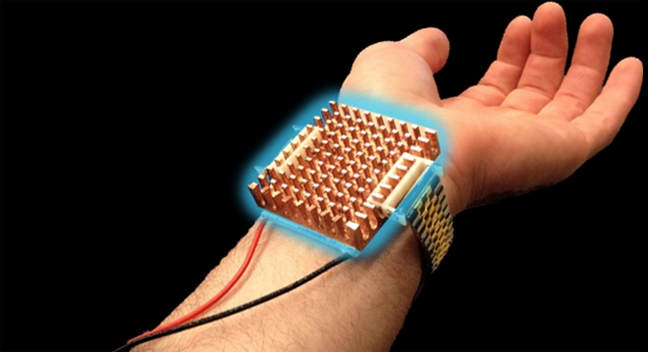 It's called Wristify and it's the joint effort of three MIT students to keep our bodies at the desired temperature despite external conditions. Through pulses, the wristband constantly monitors both the ambient temperature and the wearer's internal temperature, adjusting it accordingly. According to the manufacturers, the device constantly deceives the body regarding the external temperature, making it change its internal heat…
The bra that sends "beeps"
 If this isn't the most social bra, then what is? Simplifying the difficult process of uploading tweets on the popular social network Twitter, a specially made bra "tweets" every time the lady takes it off! A joint effort by Nestle Fitness and Twitter, in an effort to raise awareness among Greek women about breast cancer, the bra for a good cause was launched by Maria Bakodimou in 2013..
https://youtu.be/N1hSNg37K38
The skin "tattoo" that takes body temperature
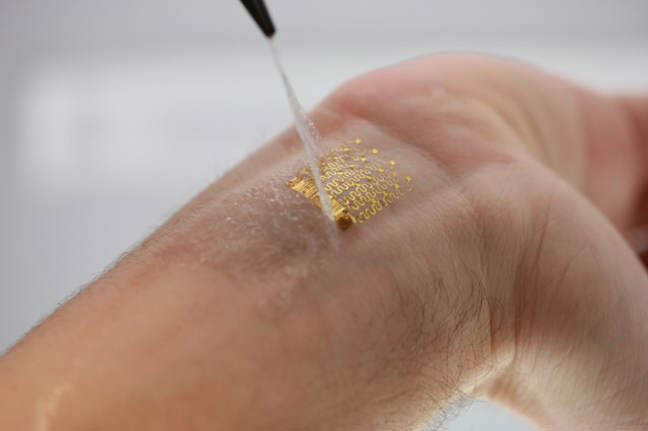
This tattoo is different from the others! A team of researchers from China, Singapore and the USA have created an extremely thin electronic circuit that adheres to the skin like a temporary tattoo. The chip measures vital signs of the body, such as temperature, heart and brain function and many other indicators, making the doctor optional. And if it still works with an external battery, the next generation is already being prepared that will work with bioenergy…
Human-to-human brain control
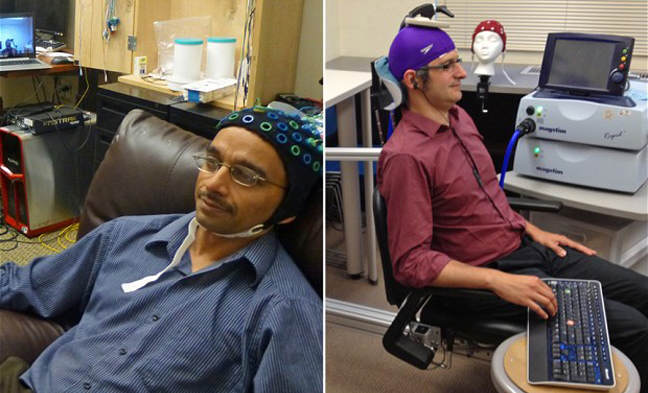
No, it's not a mistake, you read that wrong! And that's because there is at least one successful example of brain-to-brain control via thought (okay, and some electrodes!). In the experimental setup that took place at the University of Washington, Professor Rajesh Rao managed to control the reactions of his colleague Andrea Stocco, who was on the other side of the building! With the help of electroencephalography devices, Rao played an electronic game in his imagination and imagined that he was moving his right hand by shooting. The device caught the signal and sent it to Stocco, whose right hand began to move in a similar way. The messages of thought teleportation were so encouraging that researchers are now talking about even more complex movements in the future..
Fake memories implanted in mice
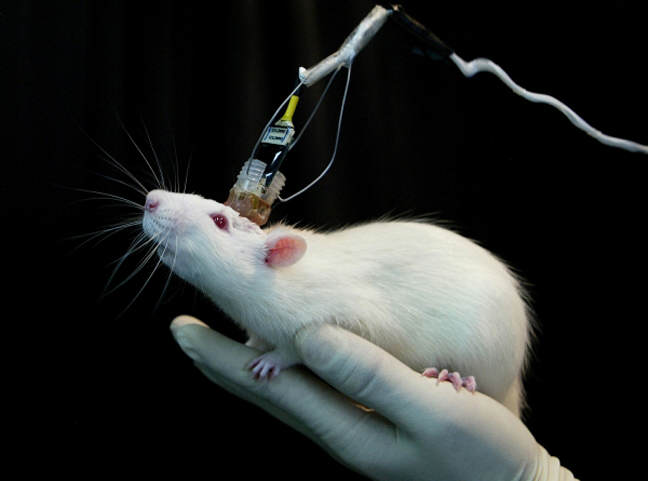 Using fiber optics, a team of researchers managed to make mice believe that a harmless area was threatening by implanting bad memories of the place in them! The mice began to show signs of fear, and this is because their brains connected the area with the false memories, which the scientists fed through experimental manipulation. The similar biology of the human brain to that of rodents makes the manipulation ideal for human use, as at some point we will be able to uproot bad memories and plant new ones. It follows, of course, that any technological innovation that plays with our minds is too dangerous…
The implants that give us our drugs
 For people who are forced to take daily medication, the medical news is good. A joint effort by Harvard University and the corresponding Toronto institution has borne fruit: implants made of friendly polymers, compatible with body tissues, react to light and can provide medication to patients! These implants, when exposed to blue light, were able to release a synthetic protein that resembles insulin. The test was done on mice and their transfer to humans is now pending…
Ads that trigger emotions
 Have you ever felt that the advertisements you see on your screens are becoming increasingly targeted? Advertisements for tissues, say, as soon as a tear runs down your eye or commercials for cereal as soon as you confess your constipation problem to your best friend? New technologies, synchronized with computer cameras, scan users' faces, through facial recognition software, to discern their psychological mood, arranging accordingly (and quite creepy, it is true) what advertisements will be served on their screen. Large companies have already bought the program, which they use to manipulate our purchasing choices. As one of the brands involved in the process, Affectiva, puts it best, people are controlled by their emotions, so gaining access to them is key to selling your products to them..
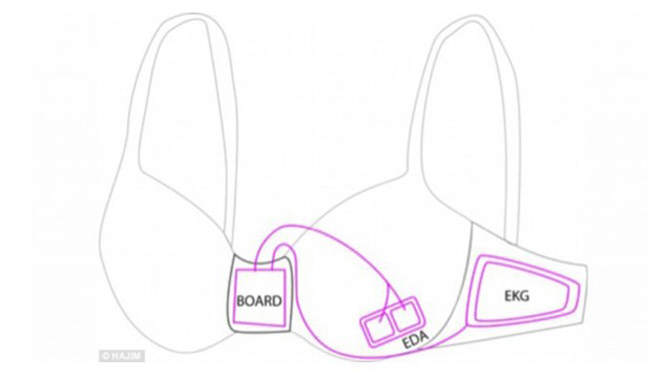
The bra that defines diet
Source: newsbeast.gr
