

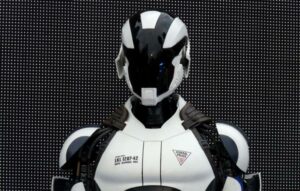
It is an invisible force that goes by many names and terms: automation, artificial intelligence, technology, innovation… and get ready for the best, the most beloved of all… the robots!
Whatever term or word you choose, you have certainly heard it used to describe the erosion of progress and the loss of jobs in almost all professional fields, for centuries. And this situation does not seem to be stopping. According to a new study recently published in The Economist and signed by Benedikt Frey and Michael A. Osborne, in «one to two decades, almost half of the jobs in the US will have been automated». The question that arises is the following: which are these «half»? Or in other words, in which sectors are machines better than humans?
The tractors, for example, are certainly stronger than the farmers. The robotic arms are certainly more powerful and tireless than the workers on a factory's production and assembly line. Over the last roughly 30 years, however, the various software that have been developed thanks to technological advancement have resulted in robots and machines surpassing and outpacing a specific employment sector: that which employs medium-skilled workers with average wages, mainly in the manufacturing or administrative sector in some office or service. To be precise, as Frey and Osborne argue, the next «wave of progress» in computers will continue to «cripple» human labor, where it already does: namely in construction, administrative support, retail trade and transportation.
«The majority of the remaining jobs in factories are very likely to disappear in the coming decades» they write in their study. Cashiers, bank tellers, librarians, telemarketers, etc. are still at risk. On the opposite shore, the professions that do not seem to be threatened as much by automation include workers in the health sector (doctors of various specialties, nurses, therapists, etc.), firefighters and those involved in civil protection, as well as those holding managerial positions in various services. What follows The prediction of the future is nothing more than an extension of the past. Often, however, it fails to predict major discoveries.
However, these unpredictable discoveries in IT are the ones that may have the greatest impact on the workforce. Just imagine how mobile phones started and what level of technology they have reached today. Historically, computers were good at performing routine tasks, but they could not communicate with people and make decisions, something that was left to the discretion of management executives. (Perhaps for ’ this some appreciate that these jobs are not at risk from artificial intelligence).
However, what Hans Moravec once said (that is, machines may be capable of performing endless mathematical operations at incredible speeds, but they cannot answer a simple question, or climb a ladder), which in a sense «protected» many middle- and low-level jobs in the past, may have reached its turning point. As Erik Brynjolfsson and Andrew McAfee write in their book «Race Against the Machine», robots and machines have reached the point where they move and think like humans. Amazon has placed robots in its warehouses, users of smart mobile phones can now tell their device «I'm lost, help!» and it will show them the way home! Not to mention the cars that move without… a driver!
A decade ago, something like this was considered impossible, now it has reached the point of being considered even… boring, comments Derek Thompson in The Atlantic! What does humanity excel at In the 19th century, the new production technology replaced what had until then been done by specialized personnel. In the second half of the 20th century, advanced software systems took the place of middle-income workers (something that economists, such as David Autor, call «the downgrading of the middle class of the labor force»).
The first «wave» showed that machines were better at assembling objects. The second, that machines were better at organization. Today, with the existence of self‑driving… cars, what might humans be better at? Humans will always be superior in anything that has to do with caring for their fellow humans. From this perspective, automation does not make the world worse. On the contrary, it creates new opportunities for human ingenuity. No matter how much we would like to know what will happen in the future, it would be extremely pressuring and stressful to know exactly which professions… «have come their turn»! The truth, after all, is always more terrifying… and this is that… we have no idea what follows!
Source: koutipandoras.gr
