

Summer is synonymous with vacations, the beach, and countless photos that fill social media. However, many find that the images they take with their smartphones don't match what they see with their eyes. The bright sun, high lighting contrasts, and reflections on the sand and water can easily lead to overexposed shots, washed-out colors, or faces that look dark.
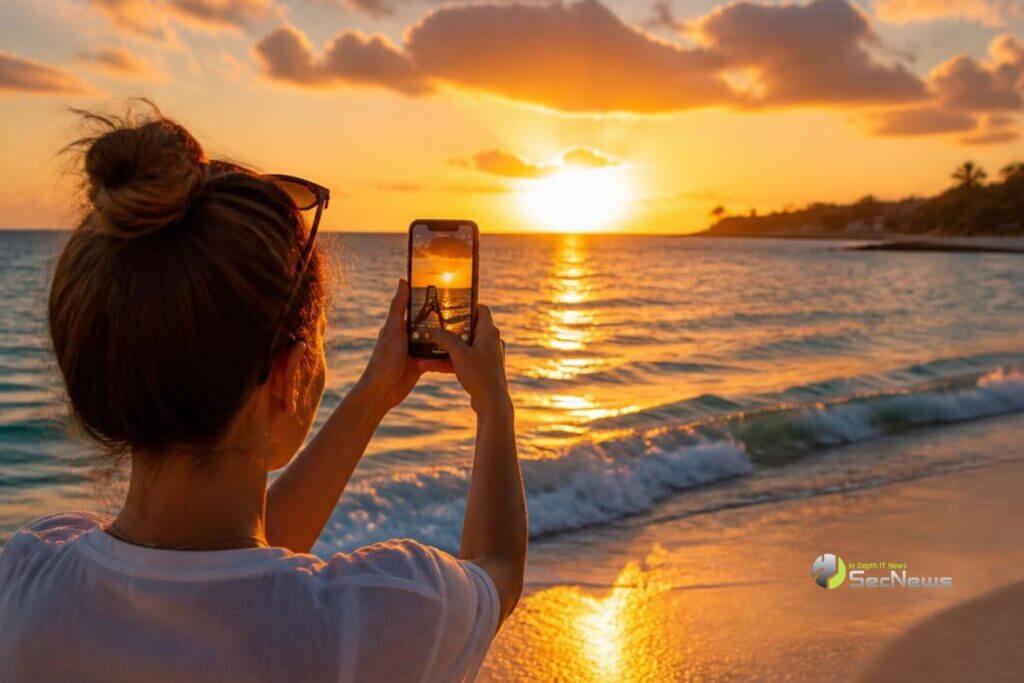
Modern smartphones have excellent cameras and advanced image processing algorithms. However, even the best technology needs proper use to achieve maximum results.
Make good use of natural light
Light is the most important factor in any photograph. At the beach, the bright midday light creates very harsh shadows and greatly increases contrast.
See also: How to save smartphone battery when traveling
If you have the opportunity, prefer to photograph early in the morning or just before sunset. The so-called Golden Hour offers warmer lighting, more natural colors and more flattering shadows, creating images with a professional aesthetic without special processing.
If you're shooting at noon, try to have the sun slightly to the side instead of directly behind your subject.
Clean the lens before each shot
It sounds obvious, but it's one of the most common mistakes. The lens of a cell phone easily becomes clogged with fingerprints, sunscreen, dust, or sea salt. Even a small smudge can significantly reduce the sharpness and contrast of the image.
A quick wipe with a soft microfiber cloth before shooting can make a huge difference in the final quality.
Avoid digital zoom
As tempting as it may seem, digital zoom usually reduces the quality of the photo. Instead of enlarging the image on the screen, get as close as you can to your subject or use the telephoto lens on your phone, if it has optical zoom.
The final photo will have much greater detail and less digital noise.

Use the sea for creative compositions
The beach offers unique natural elements that can make any photo more interesting. The ripples of the water, the reflections of the sun, the rocks, the wooden piers or even the footprints in the sand can act as natural lines that lead the eye towards the main subject of the image.
See also: How to prepare your smartphone before going on vacation
At the same time, leave some “air” around your subject instead of always placing the face right in the center of the photo. The rule of thirds is still one of the most effective composition techniques.
Turn on HDR when needed
Most modern devices have an HDR (High Dynamic Range), which helps when there is a large difference in lighting between the sky and the face of the person you are photographing.
With HDR enabled, the phone combines multiple shots at different exposures, preserving more detail in both bright and dark areas. The result is more balanced photos without burnt spots or overly dark shadows.
Protect your smartphone from sand and water
Taking photos at the beach poses risks for your device. Sand can scratch the lens or screen, and even phones with water resistance certification should not be unnecessarily exposed to seawater, as salt can cause problems over time.
A waterproof case or a special protective bag is an economical solution that can prove particularly useful on summer outings.
Pay attention to the horizon
One of the most common mistakes in beach photos is a crooked horizon.
Most camera apps have a grid, which helps you align the sea with the frame correctly. Proper alignment makes the photo look more professional and more pleasing to the eye.
See also: How to protect your smartphone from heat, sand & moisture

Don't overdo it with filters
Editing can improve a photo, but overuse of filters often leads to unnatural colors.
Prefer small adjustments to brightness, contrast, and color vibrancy. Even the built-in image editors on Android and iPhone now offer enough tools to achieve impressive results without any special knowledge.
Creativity makes the difference
The best summer photos don't necessarily come from the most expensive smartphone, but from the right use of lighting, composition, and the moment. Try different angles, shoot low to the sand, take advantage of water reflections, or capture spontaneous moments instead of staged poses.
With a little attention to detail and applying a few simple techniques, you can transform your summer memories into photos that look like they were taken with a professional camera, using only the mobile phone you already have in your pocket.
