

Smartphones have become the digital hubs of our daily lives. From banking apps and messaging services to health apps and personal notes, the iPhone now hosts a huge amount of data personal . It's no wonder that more and more users are looking for ways to protect their privacy by hiding specific apps from their device's home screen.
Apple has significantly enhanced iOS's privacy features in recent years, offering several options for hiding apps without requiring third-party apps or complicated procedures.
Why hide apps on iPhone
There are many reasons why someone might want to hide apps on their iPhone. Many users want to banking apps and digital wallets their, others want to protect personal conversations or social networking apps, while many simply prefer a more organized and “clean” home screen.
See also: iPhone: How to automatically dismiss app pop-ups
Hiding apps is not just a matter of aesthetics. In cases where the phone is lent to friends, colleagues or family members, the ability to limit direct access to specific apps can provide an additional layer of privacy protection.
It's worth noting that when you hide an app, its name will still be visible in some places, such as Screen Time, Battery Usage by App (in Settings), and your App Store purchase history.
Note: It is not possible to hide apps that are pre-installed – you can only hide apps that you have downloaded from the App Store. It is also not possible to hide apps that have been set by the user as the default browser or app purchase platform (available in the EU only).
How to remove an app from the home screen
The easiest way to hide an app is to remove it from the home screen.
Long-press the app icon you want to hide and select “Require Face ID” (or Touch ID or passcode). Then tap “Hide and Require Face ID” (or Touch ID or passcode), authenticate with Face ID (or Touch ID or passcode), then tap “Hide App.”
The application is not deleted from the device. It remains installed on the iPhone and can be found at any time in the "Hidden" folder at the bottom of the Application Library.
Tip: To view a list of your hidden apps, go to “Settings > Apps > Hidden apps”.
See also: iPhone spyware: How to tell if you're being monitored
Using the Application Library for better organization
The App Library, which was introduced to iOS a few years ago, is a particularly practical way to organize apps.
By swiping left to the end of the home screens, the App Library appears, where all apps are automatically sorted into categories. This way, apps can remain installed on the device without taking up space on the home screen.
This particular approach is ideal for applications that are rarely used or for applications that the user does not want to appear constantly in front of them.
How to hide entire app pages
The iPhone also allows hiding entire pages of apps.
Long-press on an empty spot on the home screen until editing mode. Then, select the small dots at the bottom of the screen that represent the available pages. From there, you can turn off the display of any page you want.
This feature is particularly useful for users who have a large number of applications and wish to create different user environments, such as one work screen and a second one for personal applications.
See also: How to find your iPhone using your Apple Watch
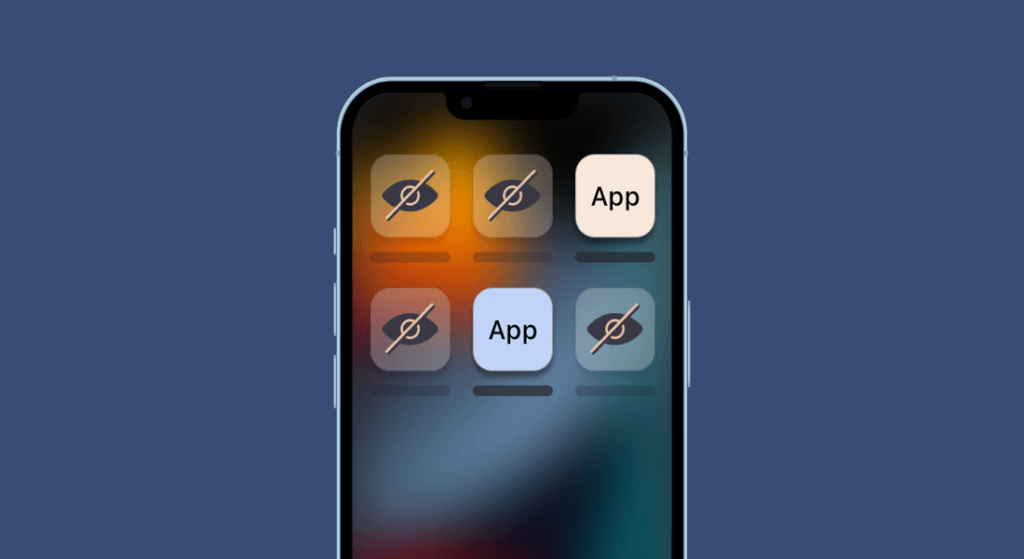
How to restrict access to apps through Screen Time“
For even greater protection, iOS offers tools through the “Screen Time” feature.
Through Settings, you can set access restrictions for specific apps or categories of apps using a passcode. This feature is often used by parents, but can also be useful for users who want to protect personal apps from unauthorized access.
Privacy is becoming increasingly important
As smartphones become digital identities for users, privacy is becoming increasingly important. The iPhone now has several tools that allow users to better organize their apps and limit their exposure to prying eyes.
Hiding apps isn't a foolproof security solution, but it's a useful extra layer of protection. Combined with Face ID, strong passwords, and modern iOS privacy features, it can go a long way toward maintaining privacy and control over your iPhone.
