

Google has announced the permanent shutdown of Project Mariner , an experimental AI agent designed to automatically perform tasks on the web. The decision marks the end of one of the company’s most ambitious projects in the field of autonomous web browsing, as its technology is integrated into other Google products . The move reflects the company’s broader strategy of consolidating experimental features into core products rather than maintaining parallel platforms.
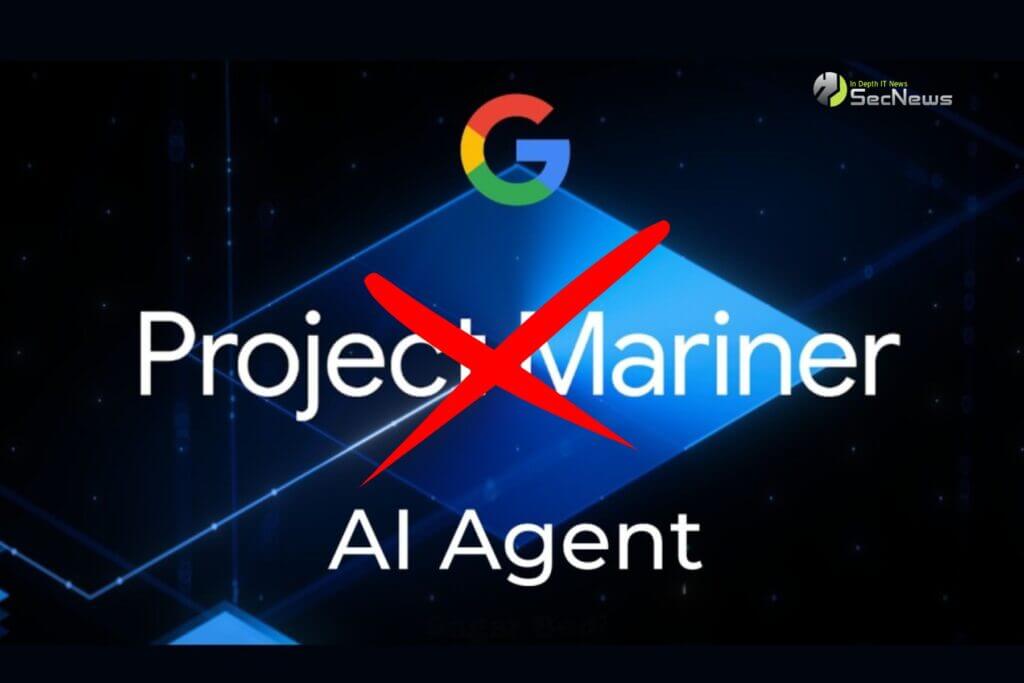
According to a report by The Verge, the Project Mariner now displays the message: “Thank you for using Project Mariner. It was discontinued on May 4, 2026, and its technology has traveled to other Google products.”
The shutdown comes just 17 months after the project was initially announced in December 2024, making it one of Google's shortest-lived experimental products.
See also: Google AI search summaries will now lead to Reddit
What was Google's Project Mariner and how did it work?
Project Mariner was an autonomous web browser agent that could complete multi-step tasks, such as filling out forms, booking trips, and searching directories. This approach was revolutionary because it allowed artificial intelligence to “see” and interact with web pages just as a human would, without the need for special APIs or programming interfaces.
Project Mariner’s development has been impressive on a technical level. Originally designed to run one task at a time, it was upgraded in early 2025 to handle up to 10 simultaneous tasks, a significant technological advance that required advanced resource management and parallel processing. The project was available exclusively to Google Workspace with “AI Ultra Access” licenses, restricted to people over 18 in the US, and operated as a research prototype under Google Labs. These restrictions suggest that Google was treating the project with caution, likely due to concerns about data security and privacy.
See also: Google Home Gemini 3.1: New complex command capabilities
Integrating Project Mariner technology into other products
Despite being discontinued as a standalone product, Project Mariner 's technology was not lost but strategically transferred to more central products of the company. Google has integrated its capabilities into other AI tools, including Gemini Agent , which can perform tasks such as archiving emails or helping with hotel reservations. In addition, Project Mariner's agentic capabilities were integrated into the AI search function, AI Mode , significantly expanding the automation capabilities of the platform.
Google also recently introduced a new AI-powered feature, “auto-browse,” which can perform multi-step tasks in Chrome, such as researching flight costs and comparing products. While Google doesn’t explicitly state whether it’s powered by Project Mariner, the similarities in functionality are obvious and it appears to be a response to agentic web browsing tools offered by OpenAI, Perplexity , and OpenClaw. This development shows that competition in the AI agent space is intensifying, with each company trying to integrate similar capabilities into its products.
See also: Google offers up to $1.5 million for Android exploits

The decision to discontinue Project Mariner reflects broader trends in the AI automation market and Google 's approach to managing experimental products. Competitors in this space include OpenAI , which is developing autonomous agent capabilities, Anthropic , which is working on AI agent frameworks, and Microsoft , which is integrating automation into its Copilot ecosystem .
The removal of Project Mariner may make room for other AI features that could debut during this year 's Google I/O , which begins on May 19. This strategy suggests that Google sees web automation as a core feature of Gemini rather than a standalone product, showing confidence in the underlying technology while questioning the standalone product's market fit.
