

Μια φοιτήτρια κολεγίου ανέπτυξε ένα πρωτότυπο βερνίκι που μετατρέπει τα νύχια σε γραφίδες για οθόνες αφής, αφού παρατήρησε ότι άτομα με μακριά νύχια ή σκληρυμένα ακροδάχτυλα δυσκολεύονταν να χειριστούν τα smartphones τους.
See also: The Apple Watch charger upgrades your manicure
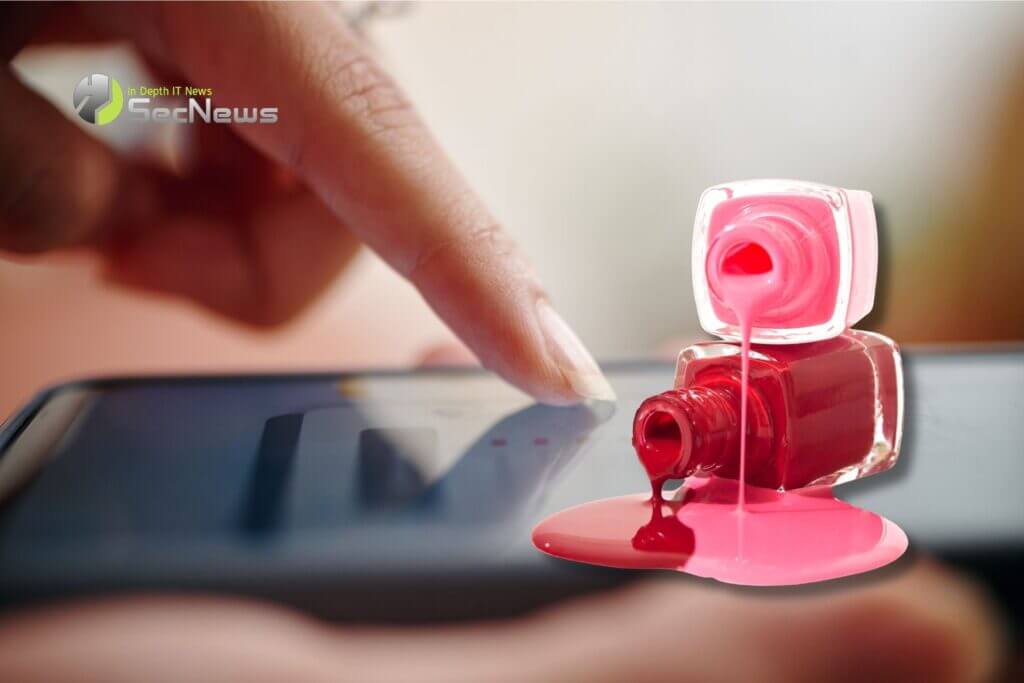
Manasi Desai, a student at Centenary College of Louisiana with an interest in cosmetic chemistry, began the project with her research supervisor, Joshua Lawrence, an associate professor of chemistry at the same institution. Their goal was to create a transparent, non-toxic polish that would allow nails to interact with a touchscreen like a human finger. Desai and Lawrence presented their research Monday (March 23) at the American Chemical Society.
Although touchscreens are now almost everywhere, they aren't equally easy to use for everyone. For example, guitarists or carpenters with calluses on their fingers may be unable to activate the screen because the hard skin blocks the flow of electricity — a phenomenon that Consumer Reports dubbed "zombie finger" in 2015. They also become difficult to use when hands are gloved, very dry, or have long nails.
After the researchers asked a blood donor with long nails, who had difficulty using her phone, whether such a nail polish would be useful to her — and they got a clear «yes» — they proceeded with developing the new product.
See also: Your long nails can be used as a stylus on touch screens
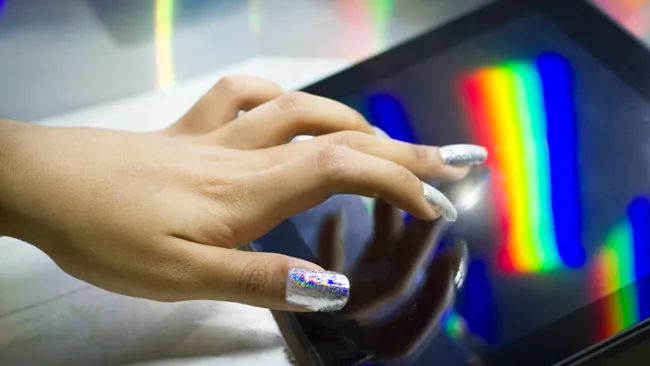
Touch screens on modern tablets and smartphones operate based on a property called capacitance. On the surface of the screen a small electric field is created and, when a conductive material — such as a human finger — touches it, this field is disturbed. The device detects this change in capacitance and records it as a touch at a specific point. Conversely, contact with a non-conductive material, such as a nail, is not recorded.
Previous attempts to create a “conductive” nail polish were based on adding carbon nanotubes or metal particles, so that the nail gains electrical conductivity. However, these materials can be dangerous if inhaled and limit the available shades of polish.
Within the framework of her research, Desai systematically tested combinations of 13 commercially available transparent varnishes and more than 50 additional substances, in order to identify a formulation that meets three basic criteria: to be transparent, non‑toxic, and to create a conductive top layer.
In her experiments, Desai found that the best-performing polishes contained the amino acid taurine and the organic molecule ethanolamine. The combination of these two additives created a composition that could register as a touch on a smartphone.
See also: Google develops Gemini AI app for Mac

The new formula was designed to be based on acid‑base chemistry rather than the addition of metallic ingredients. In this specific chemistry, acids provide protons while bases accept them. Desai and Lawrence continue to improve their composition, seeking the most efficient combination of ingredients and aiming to make the existing formula completely non‑toxic.
