

During Lex Fridman's podcast, Nvidia CEO Jensen Huangmade a statement that sparked heated debate: "I think we've achieved AGI."
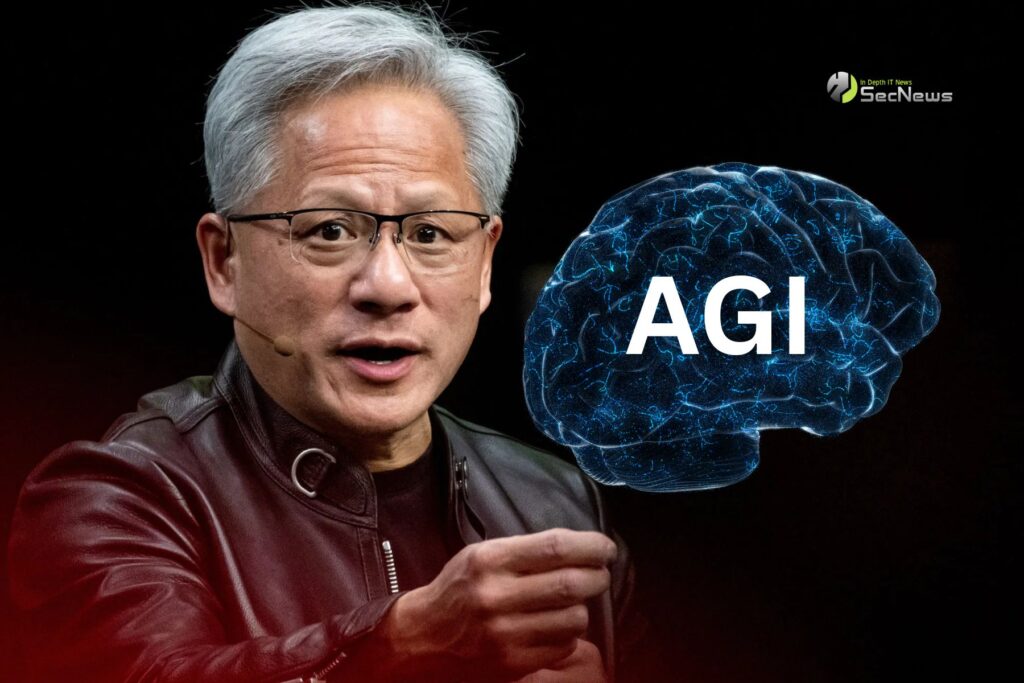
AGI , or artificial general intelligence, is a blanket term that has sparked much discussion among tech CEOs, tech workers, and the general public, as it typically refers to AI that equals or exceeds human intelligence. In recent months, tech leaders have attempted to distance themselves from the term and create their own terminology that is less overblown, more useful, and more clearly defined.
The term has also been the subject of key clauses in huge contracts between companies like OpenAI and Microsoft.
See also: Nvidia's DLSS 5 is like motion smoothing for video games, but worse
Fridman, the podcast host, defines AGI as an AI system that is capable of “essentially doing your job.” He then asks Huang when he thinks AGI will be a reality — asking if it’s, say, five, 10, 15 or 20 years away — and Huang replies, “I think it’s now. I think we’ve achieved AGI.”

Fridman commented, “You’re going to get a lot of people excited about that statement.” Huang then mentioned OpenClaw, the open-source AI agent platform, and its success. He said people are using their own AI agents to do a variety of things, and he expects even more development.
See also: Nvidia turns OpenClaw into NemoClaw enterprise platform
However, he then slightly retracted his previous statements, saying: "A lot of people use it for a few months and then it kind of dies. Now, the chances of 100,000 of those agents building Nvidia are zero percent."
AGI: Ultimately, have we achieved it or do we still have a future?
Jensen Huang's statement on Lex Fridman's podcast captures in the most characteristic way the dichotomy that currently dominates the concept of AGI. On the one hand, the optimism – or even the audacity – to declare that humanity has already reached this level. On the other, the reality of the market and technology, where AI systems, despite their impressive capabilities, remain tools with clear limits and dependencies. The reference to platforms such as OpenClaw and the increasing use of AI agents shows that the direction is clear, but the distance from full autonomy and generalized intelligence remains the subject of intense debate.
See also: Chinese BYD and Geely to use Nvidia's robotaxi platform

Ultimately, perhaps the most interesting piece of information is not whether AGI has actually been achieved, but how technology leaders themselves are redefining the rules of the game. Huang’s more subdued statements then reveal that even the most advanced forms of AI cannot replace the complexity of human creation and collaboration. In a landscape where companies like Nvidia and OpenAI continue to invest billions, AGI may serve more as a benchmark than a final destination — a goal that, for now, remains more philosophical than technologically accomplished.
