

NVIDIA GTC 2026 opens today in San Jose with 30,000 attendees, a keynote at the SAP Center , and announcements that could reshape the AI infrastructure of the next two years, from Vera Rubin 's deep analytics to a business agent platform and a gigawatt deal with Mira Murati 's startup .
See also: Autonomous driving: Nvidia wants to surpass Waymo and Tesla
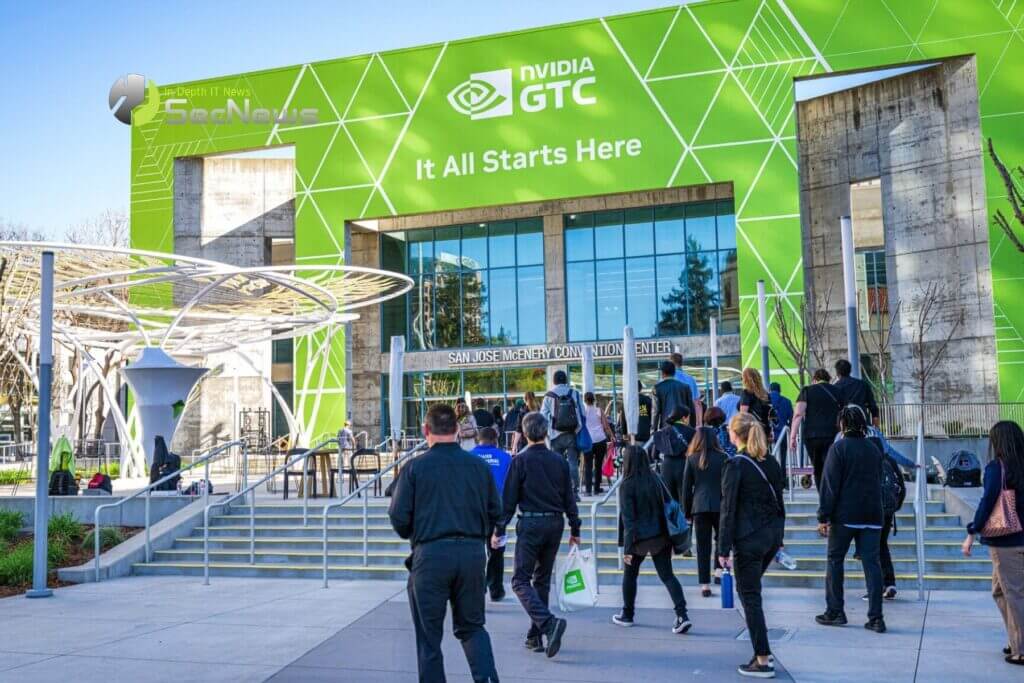
Every March, San Jose turns green. The city's conference center fills with programmers, research engineers, and enterprise technology buyers who have flown in from 190 countries.
The SAP Center, usually home to the San Jose Sharks, is transformed into an arena for a two-hour keynote that is simultaneously watched by hundreds of thousands more online.
NVIDIA GTC 2026 opens today, March 16, and runs through March 19. It is, by any objective measure, the most-watched event in the tech industry right now: the moment when Jensen Huang, founder and CEO of the world's most valuable chipmaker, tells an audience what the next phase of artificial intelligence will look like and, by extension, who will benefit from building it.
The company entered this week with significant momentum. In its fourth-quarter 2025 earnings report, released in February, NVIDIA reported revenue of $68.1 billion, up 73% year over year. It has reported record revenue in each of the past several quarters.
The valuation has fluctuated with the broader market conditions. Geopolitical pressures, including the ongoing conflict in Iran that is driving up oil prices, have weighed on tech stocks, but NVIDIA's fundamental position has not changed: it supplies the computing power on which global AI development relies.
NVIDIA GTC 2026 is the place where the company reminds everyone of this event. In the press release announcing GTC 2026, Huang shaped the conference around a unique idea: AI is no longer an application or a model. It is infrastructure.
See also: Nvidia invests $4 billion in photonics to stay ahead of AI
“Every company will use it. Every nation will build it,” he said. “From energy and chips to infrastructure, models and applications, every layer of the stack is moving forward simultaneously.”
What is already known or strongly expected completes a significant part of the picture.
Beyond the main talk, NVIDIA GTC 2026 includes over 1,000 sessions scattered across ten venues in downtown San Jose. Physical AI, which covers robotics, autonomous systems, digital twins and the use of simulation environments for training, is a dominant topic.
Speakers include Ashok Elluswamy, VP of AI Software at Tesla, Raquel Urtasun, CEO of Waabi, Deepak Pathak, CEO of Skild AI, and representatives from Johnson & Johnson, Disney Research Imagineering, and PhysicsX.
Disney's session at GTC has attracted particular attention: the company will demonstrate how it uses AI-powered physical robotics to bring animated characters into real-world environments, using NVIDIA Isaac and reinforcement learning trained on GPU-accelerated infrastructure.
On Tuesday, March 17, Dario Gil, now Under Secretary at the U.S. Department of Energy, is participating in a session on AI in climate and energy research.
The participation of a senior government official is not accidental: the energy consumption of AI data centers has become both a political and a technical issue, and NVIDIA is clearly interested in supporting that accelerated computing, despite its energy requirements, also speeds up solutions to the problems created by energy demand.
See also: OpenAI: $110 billion investment from Amazon, Nvidia & Softbank

Quantum computing is featured in a dedicated session titled “The Genesis of Accelerated Quantum Supercomputing,” which outlines a vision for the convergence of AI and quantum hardware, with a stated goal of achieving scientifically useful accelerated quantum supercomputers by 2028.
