

The next big revolution in artificial intelligence may not just be about chatbots or digital assistants, but machines that perceive and act in the real world . That’s what Nvidia CEO Jensen Huang said during his presentation at CES in Las Vegas. Huang said that “ the ChatGPT moment for natural AI has arrived ,” describing a new generation of systems that can understand their environment, reason, and make decisions in real time . At the heart of this strategy is Alpamayo , an advanced AI model that aims to transform autonomous driving and surpass similar technologies from Tesla and Waymo.
Nvidia Alpamayo: A model that «sees», understands and acts
Alpamayo is a Visual Language Action (VLA), which combines visual perception, language understanding, and action planning. The idea is that an autonomous vehicle will not be limited to simply analyzing images from cameras, but will be able to process the situation as if a human driver were thinking logically.
See also: Waymo: Testing robotaxi service in 4 new cities
During the presentation, Huang showed a video of a test vehicle equipped with Alpamayo driving through the streets of San Francisco. The car maneuvers , changes lanes , and navigates complex traffic conditions without human intervention.
The demonstration immediately sparked comparisons with two of the biggest players in the autonomous driving space: Tesla and Waymo of Alphabet.
Nvidia's ambition for autonomous vehicles
Nvidia has been involved in autonomous driving for more than a decade, developing platforms like DRIVE Hyperion. Huang believes that in the future there will be more than a billion autonomous vehicles on the roads, creating a market worth trillions of dollars.
The company announced that Mercedes-Benz 's upcoming CLA EV electric model will be the first to fully integrate Nvidia's new autonomous driving platform , which is based on Alpamayo.
At the same time, Nvidia plans to partner with companies like Uber and Lucid Motors to create robotaxi services by 2027.
Currently, the system is at Level 2 autonomy, which means it can perform many driving functions but requires human supervision. The goal is to reach Level 4, where vehicles will be able to drive fully autonomously in specific geographic areas.
See also: Waymo and Tesla call for legislation to regulate robotaxis

Two different philosophies: Nvidia and Tesla
Nvidia's approach differs significantly from Tesla's Full Self-Driving (FSD). Tesla uses an neural network end-to-end, which is trained on vast amounts of driving data from the company's fleet.
Tesla CEO Elon Muskhas transformed the system into a single model that takes data from cameras and directly generates driving commands.
The key difference is that Tesla's system operates like a "black box": its decisions arise from training on data, but there is no clear explanation for how it arrived at each action.
In contrast, Nvidia's Alpamayo attempts to incorporate explicit reasoningso that the system can explain its decisions and plan next steps.
The approach “think fast and slow”
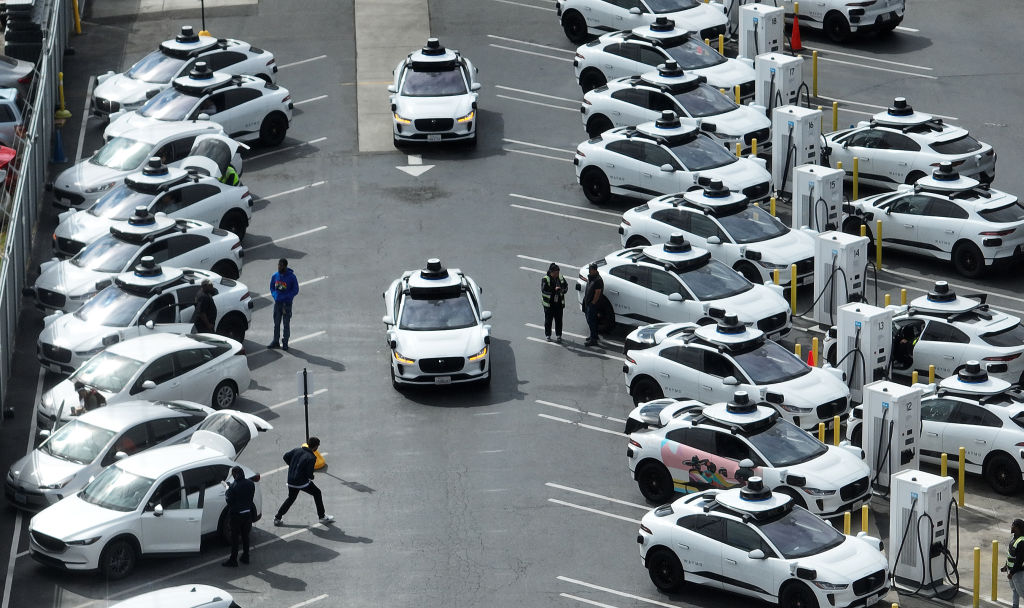
Nvidia's philosophy resembles Waymo's architecture, which uses a two-level decision-making system.
The first system reacts quickly to sensor data, while the second processes more complex situations and plans the vehicle's movement strategy . This approach allows the vehicle to deal with rare or unpredictable scenarios, such as an intersection with broken traffic lights.
However, the biggest challenge of these models is decision-making speed. Reasoning requires more processing time, which can be critical in real-world driving situations.
See also: Viral video: Tesla 'Full Self-Driving' goes through railway barriers
The big bet of full autonomy
Professor Katie Driggs-Campbell from the University of Illinois notes that reasoning models like Alpamayo show promise, but transferring them from lab tests to the real road remains difficult.
On the other hand, Tesla's system has the advantage of scale. With nearly nine million vehicles on the road, the company collects vast amounts of driving data, which continually improves its models.
The future of autonomous driving will likely be determined by the balance between these two approaches: the speed and scale of deep learning and the transparency of reasoning models.
In any case, achieving full autonomy remains one of the biggest technological challenges of the era, which many compare to the complexity of a mission to the Moon.
