

Caitlin Kalinowski spent 16 months building OpenAI's natural-intelligence program. On Saturday, she said the company was moving very quickly on something very important.
See also: Microsoft Copilot Tasks: New AI service for automatic task execution
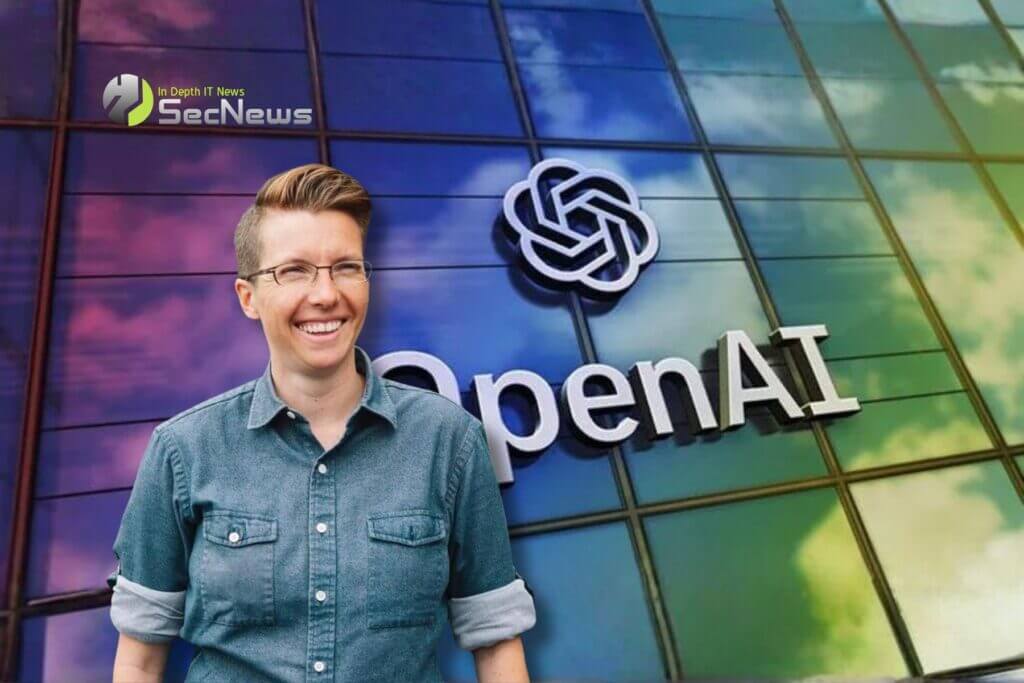
The week that began with Anthropic being blacklisted by the Pentagon and ended with OpenAI getting its contract has now resulted in the resignation of OpenAI's senior hardware executive.
Kalinowski, who joined OpenAI in November 2024 to lead its robotics and consumer hardware division, announced her resignation on Saturday at X. Her statement was short, direct, and more honest than anything OpenAI itself has said about the deal.
“Artificial intelligence has an important role in national security,” he wrote. “But surveillance of Americans without judicial oversight and lethal autonomy without human authorization are lines that deserved more thought than they received.”
In a subsequent post, she was more explicit about the nature of her concern. “It’s mainly a governance issue,” she wrote. “These are too important to make deals or announcements in a hurry.”
Kalinowski was careful to put her departure on personal terms. “This was about principles, not people,” she wrote. “I have deep respect for Sam and the team.”
This last note carries some weight: Sam Altman himself has acknowledged that the Pentagon deal was “definitely rushed,” and that its release provoked significant backlash.
What Kalinowski's resignation adds to this admission is a name and a title: the most senior person at OpenAI, whose job it was to bring artificial intelligence to natural systems, decided that the process by which it would now enter weapons systems and surveillance infrastructure was not good enough.
See also: OpenAI defeats xAI in trade secret lawsuit

The sequence of events that led to this unfolded over about a week. Anthropic, which was the only AI company approved to operate on the Pentagon’s classified networks after a $200 million contract was awarded in July 2025, spent several weeks in tense negotiations with the Department of Defense over the terms of its continued use.
Anthropic’s position was that its models should not be developed for mass domestic surveillance or fully autonomous weapons. The Pentagon, under Defense Secretary Pete Hegseth, insisted on language that allows use “for all lawful purposes,” without specific exceptions.
On February 28, with negotiations having collapsed, President Trump ordered all federal agencies to stop using Anthropic's technology and called the company a "radical wake-up call" to Truth Social.
Hegseth officially designated Anthropic as a national security supply chain risk, a category previously reserved for foreign adversaries, and which requires Department of Defense suppliers and contractors to certify that they are not using Anthropic's models.
A few hours later, Altman posted on X that OpenAI had reached its own agreement to deploy its models on the Pentagon’s classified network. OpenAI’s stated position is that its agreement includes the same basic protections that Anthropic sought: no mass domestic surveillance, no autonomous weapons.
The company published a blog post outlining its approach and arguing that its cloud-only deployment architecture, maintained security stack, and contractual provisions, based on existing U.S. law rather than specific prohibitions, make its deal stronger than any previous classified AI deployment, including Anthropic.
See also: OpenAI: Is it preparing to release AI devices?

Kalinowski's career before OpenAI was unusual in its scope. She spent nearly six years at Apple as a technical lead on the Mac Pro and MacBook Air programs, including the original unibody MacBook Pro, before moving to Meta's Oculus division, where she led virtual reality hardware for more than nine years.
