

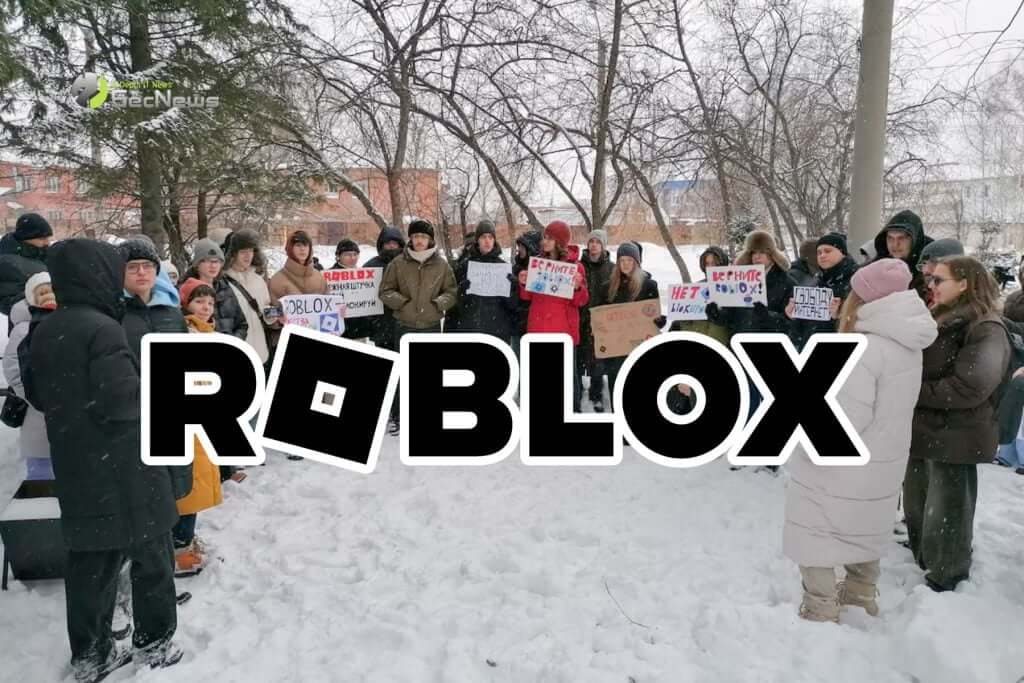
A rare public protest was recorded on Sunday in the city of Tomsk, with citizens gathering to protest against the ban on the popular gaming platform Roblox in Russia. Although the number of protesters was limited, the message was loud: digital censorship is now touching the daily lives of children and families.
Roblox in the crosshairs of Russian censorship
The ban on Roblox was officially announced on December 3 by Roskomnadzor, Russia’s communications regulator. According to the announcement, the platform was deemed “full of inappropriate content” that could negatively affect the intellectual and moral development of minors. The decision is part of a broader framework of strict control of the internet, which has intensified especially since the start of the war in Ukraine.
See also: Roblox: Age verification via selfie video
A rare public reaction
In Tomsk’s Vladimir Vysotsky Park , about 2,900 kilometers east of Moscow, about 25 people braved the snow and freezing temperatures to hold handwritten signs with slogans such as “ Hands off Roblox ” and “ Roblox is a victim of the digital Iron Curtain .” Other messages directly accused the state of responding to every technological challenge with “bans and blockages.”
In a country where public gatherings are strictly controlled, even such a small protest takes on special significance, revealing the accumulated resentment over the restriction of digital freedom.

Wartime Russia and the "digital wall"
The Roblox ban is not an isolated incident. In recent years, and especially since 2022, Russia has blocked or restricted major Western platforms, such as Facebook, Instagram, Snapchat, WhatsApp, and YouTube, while promoting its own narrative through state media and domestic social networks.
See also: Iraq blocks Roblox over concerns for children
For many analysts, this strategy is reminiscent of building a “digital Iron Curtain,” gradually isolating Russian users from the global internet.
Child safety or pretext?
The ban on Roblox has sparked heated debate within Russia. On the one hand, parents and educators are expressing genuine concerns, arguing that the platform could expose children to sexual content or facilitate communication with adult strangers. Similar concerns have led other countries, such as Iraq and Turkey, to restrictions or bans.
On the other hand, critics of the decision argue that a complete ban does not solve the problem, but simply shifts it, depriving children of a creative platform without effectively addressing the risks.

VPN and the ineffectiveness of bans
One of the main arguments of protesters and younger users is the ease of bypassing blocks. VPNs are used in Russia, allowing access to banned services with just a few clicks. This raises reasonable questions about how effective censorship is in a digital world and why the state is not investing more in creating reliable domestic alternatives.
See also: Florida: Charges against Roblox over child safety
Roblox's stance and broader message
Roblox, based in California, did not immediately comment on the Russian authorities' decision, but has repeatedly stated its "deep commitment to security" and the existence of built-in user protection. Despite these assurances, the platform remains at the center of international controversy.
Ultimately, the Roblox case in Russia goes beyond the game itself. It touches on fundamental issues of freedom, control, and the role of technology in shaping the new generation. And as the small but symbolic protest in Tomsk shows, even in conditions of strict censorship, digital indignation finds ways to express itself.
