

NASA's Peregrine 1, launched by the US after half a century, has "no chance" of successfully landing on the moon's surface due to a fuel leak, operators , adding that their goal is now to travel as far as possible before losing energy .
See also: First American spacecraft lands on the moon since Apollo
Peregrine 1, which aimed to become the first commercial space robot to land on the moon, suffered a “critical fuel loss” a few hours after liftoff on Monday due to an “anomaly” in its propulsion system, according to Astrobotic, the American company behind the project.
Initially fearing that spacecraft would not be able to position itself toward the sun to charge its batteries, the Astrobotic team announced that it had achieved a "spontaneous maneuver" and the solar array was operational.
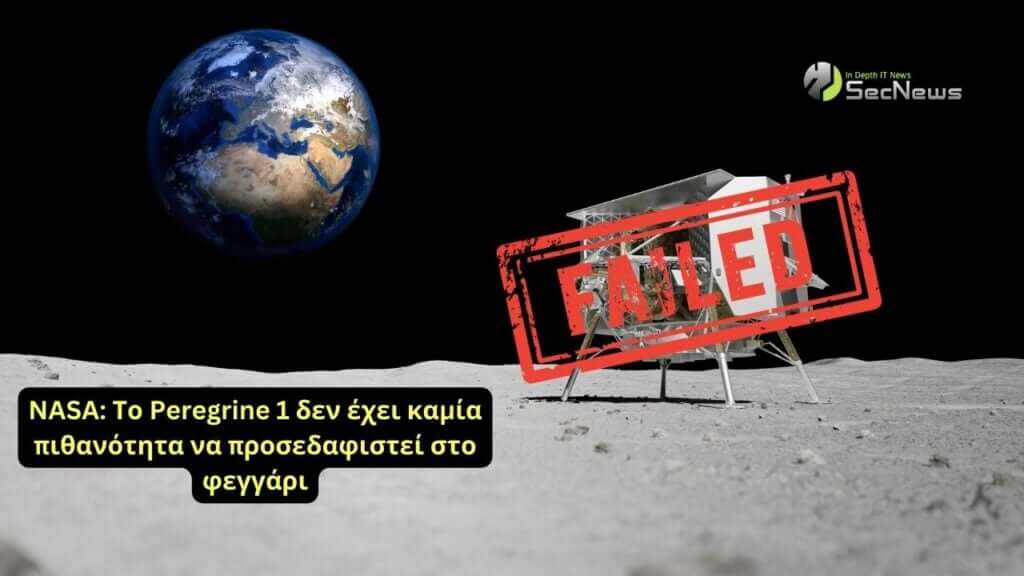
However, in a more recent statement, the Pittsburgh-based company said its thrusters “could probably operate for another 40 hours at most.” It added: “At this point, the goal is to get Peregrine as close to the Moon before it loses its ability to maintain its position facing the sun and then loses its power.”
See also: The United States returns to the Moon after 50 years
In its latest update, released on Tuesday, the company confirmed that the spacecraft unfortunately had no chance of landing on the moon. The updated mission was intended to collect data from Peregrine 1 that could be used for a future lunar landing mission , Astrobotic added
The robotic spacecraft, carrying NASA scientific equipment, was launched aboard a Vulcan Centaur from Cape Canaveral, marking the first use of the powerful new rocket built by United Launch Alliance, a joint venture of Boeing and Lockheed.
Peregrine was scheduled to land on the moon on February 23, where it would begin collecting data about the lunar surface to help research future human missions.
See also: NASA: Aimed to buy minerals from the moon!
Responding to reports of the failure, NASA said it was working with Astrobotic to identify the real cause of the problem, adding: "Space is tough."
Source: The Guardian
