

One of NASA is to explore Mars in the near future. But in order to send people to Mars, there must be oxygen. Now, a small device (MOXIE) from NASA, the size of a toaster, can create oxygen on the surface of Mars, so that people can be transported there.
In a study published this week in a scientific journal, researchers from the Massachusetts Institute of Technology (MIT) showed that the “ Mars Oxygen In-Situ Resource Utilization Experiment” – known as MOXIE – can produce oxygen from carbon dioxide, which is abundant in the Martian atmosphere
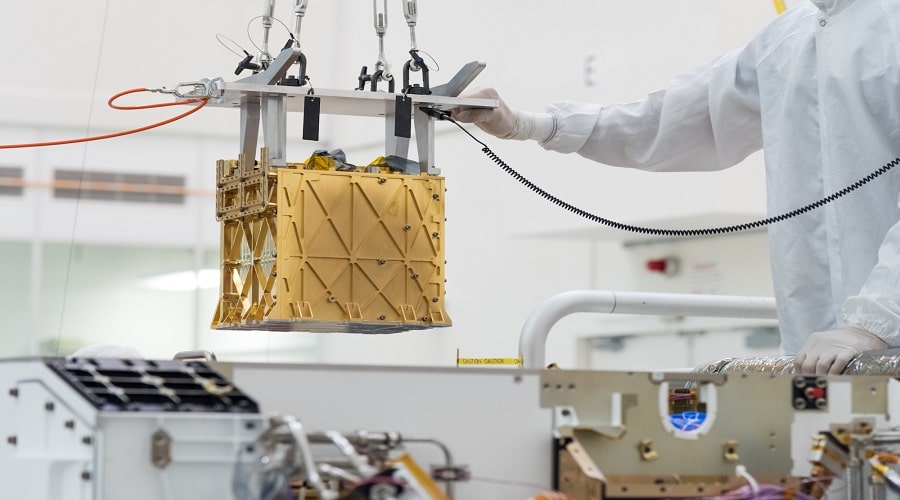
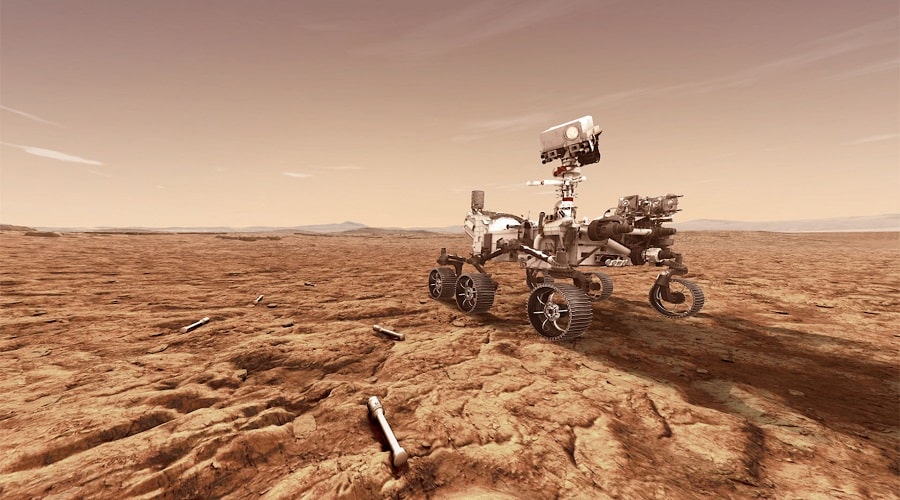
According to the researchers, the experiment, part of Perseverance Rover that landed on Mars in February 2021, is the first to use resources from another planet and turn them into something useful for human missions. The small device , created by NASA's Jet Propulsion Laboratory and MIT, produces as much oxygen as a small tree on Earth , and can do so during the day and night and throughout multiple Martian seasons.
See also: NASA: SpaceX will carry out 5 more astronaut missions to the ISS
Thanks to the MOXIE device, Mars exploration may be possible sooner than we thought. Space agencies, scientists and entrepreneurs are calling on humans to explore Mars. NASA's long-awaited Artemis mission to the moon is seen as a stepping stone to Mars exploration in the next decade or so. China also aims to send humans to the red planet by 2033. Elon Musk , the world's richest man and CEO of SpaceX , has hinted that he will do so by 2029.
But getting humans to Mars is a huge challenge, according to Jeffrey Hoffman, a former NASA astronaut and principal investigator for the MOXIE mission. Astronauts would have to endure high levels of cosmic radiation during the long journey to the planet. The trip to and from Mars could take more than 8 months, so there would need to be plenty of food and medicine for the travelers.
Perhaps the most important thing is the reliable supply of oxygen, said Hoffman. The astronauts need it to breathe in any temporary habitat they will have created on Mars.
Space agencies could send enough oxygen to Mars for astronauts to breathe and make the return trip home, Hoffman said, but that would be very expensive, requiring multiple rocket. Producing oxygen on Mars from carbon dioxide in its atmosphere would be cheaper, he said. And that's what NASA's new MOXIE device does. The Martian atmosphere is about 96 percent carbon dioxide.
See also: NASA solved the mystery of Voyager 1's strange data transmissions
To test its ability to convert carbon dioxide into oxygen, NASA brought a small, golden box aboard the Perseverance Rover mission last year. Since April 2021, MOXIE has conducted several tests in which it produced oxygen at various times of the Martian day and in different seasons. During each experiment, the box created about 6 grams of oxygen per hour, equal to the output of a medium-sized tree on Earth. (In his most recent test, which will be published in a future paper, Hoffman said the machine’s output increased to 10 grams per hour.)
If all goes well, scientists will need to significantly increase the size of the machine and ensure it can operate continuously. To sustain a human mission to Mars and bring people back, a larger amount will need to be generated per hour over the course of a multi-year mission.
The device can operate during most periods of the Martian day, except for a few specific hours.
See also: James Webb & Hubble: Impressive combined image of the Phantom Galaxy
“The only thing we haven’t demonstrated is production at dawn or dusk, when the temperature [on Mars] changes substantially,” said Michael Hecht, principal investigator of the MOXIE mission at MIT’s Haystack Observatory. “We have an ace up our sleeve that will allow us to do this, and once we test it in the lab, we can get to that final milestone to show that we can actually run at any time.”
Engineers plan to push the MOXIE device to its limits, increasing its oxygen production capacity and ensuring it will operate during the Martian spring, when the planet is thick and carbon dioxide levels are high.
Engineers will monitor the device for wear and tear to see if it can withstand enough pressure to suggest it could be converted into a full-scale system that could operate continuously for thousands of hours. If it can, and there is enough oxygen to put humans on Mars, then exploration of the red planet could begin soon.
Source: www.washingtonpost.com
