

The idea that humans will soon visit the red planet has been gaining traction in recent years. However, one of the biggest concerns is the dangerous radiation during long-duration spaceflights, such as those needed to reach Mars. Scientists have expressed concerns about human safety, fearing possible brain damage, gastrointestinal problems, and cancer that could be caused by a trip to Mars.
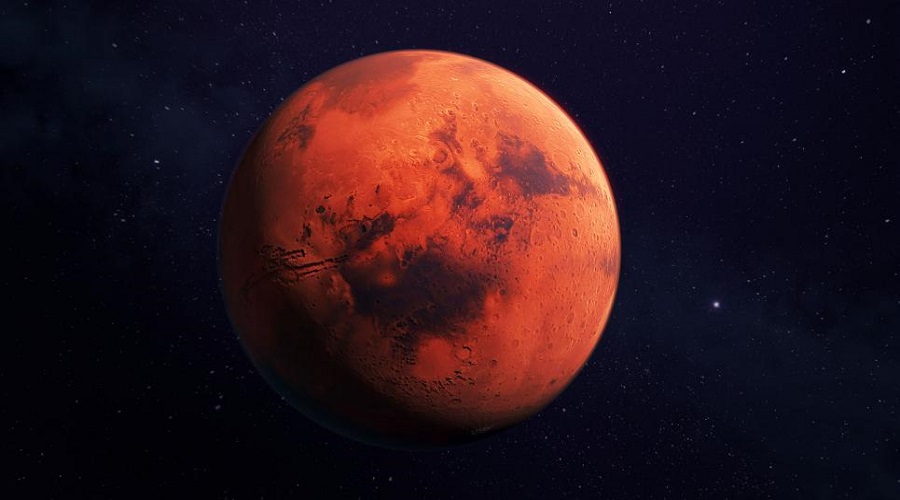
A new study suggests that these safety-related issues could be addressed if the journey to Mars is timed appropriately.
See also: NASA Curiosity: Celebrates 9 years on Mars with impressive panoramic image
“This study shows that while space radiation imposes severe constraints and presents technological difficulties for sending humans to Mars, such a mission is still viable,” says the paper published this month in the journal Space Weather.
The scientific paper states that there are two main types of dangerous radiation: Solar Energetic Particles (SEP) that come from the sun and Galactic Cosmic Rays (GCR) that come from other galaxies. The intensity and evolution of both depend on solar activity. The activity of Galactic Cosmic Rays is most enhanced during the so-called solar minimum and decreases during solar maximum. Conversely, the intensity of Solar Energetic Particles is maximized during solar maximum and minimized during solar minimum. Solar minimum is the period with the lowest solar activity in the 11-year solar cycle. Correspondingly, solar maximum is the period with the highest solar activity.
See also: NASA asks 4 people to live on Mars for 1 year - Application forms

Researchers point out that the ideal time for humans to travel to Mars is during solar maximum, when the sun is at its highest level of activity.
"Scientists' calculations show that it would be possible to shield a spacecraft from energetic particles from the sun because, during solar maximum, the most dangerous particles from distant galaxies are deflected by increased solar activity," said UCLA on Wednesday.
If the trip takes place during this time, spacecraft designers will need to focus on protecting astronauts from Solar Energetic Particles, as the impact of dangerous Galactic Cosmic Rays will be reduced. The research team suggests that the trip to Mars and back to Earth should be done in less than four years, to be safe.
See also: Perseverance: Ready to collect the first rock samples on Mars
The average flight to Mars takes about nine months, so depending on launch time and available fuel, it's possible that a human mission could reach the planet and return to Earth in less than two years.
In the coming years, it is expected that the trip to Mars will be able to take place in a shorter period of time and coincide better with the solar maximum.
Source: CNET
