

SpaceX launched its second commercial crewed mission to the International Space Station (ISS) for NASA this morning . The flight crew consists of four astronauts – two from NASA , one from the Japan Aerospace Exploration Agency (JAXA) and one from the European Space Agency (ESA) . On the International Space Station, the four astronauts will perform a variety of tasks. Specifically, they will conduct scientific experiments while maintaining and upgrading the orbital platform .
Read also: NASA: Chooses SpaceX to land astronauts on the Moon
This is the second commercial crewed mission from SpaceX, which officially certified its Dragon spacecraft and Falcon 9 rocket for crewed flight last year. NASA then sent four astronauts using SpaceX’s certified Human Landing System (HLS) in November of that year. Elon Musk’s SpaceX thus became the first private company to fly humans to the ISS, with the first American vehicle since the retirement of the Space Shuttle in 2011. Since the end of that program, NASA has focused on purchasing engines from Russian Soyuz rockets to continue its mission to the ISS.
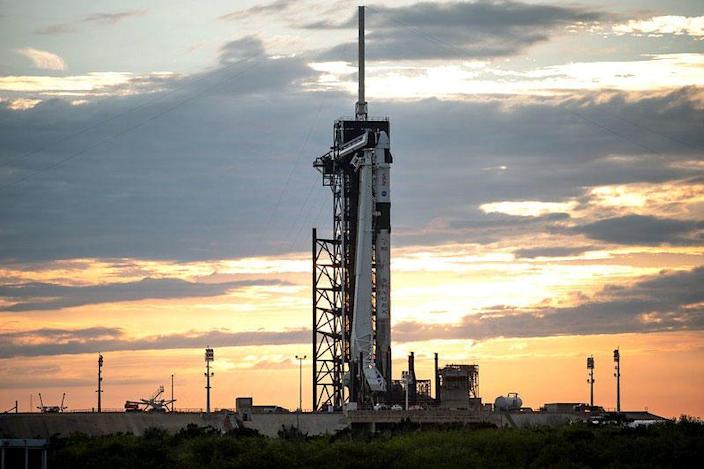
There is already one SpaceX Crew Dragon on the International Space Station – Crew-1 – which launched last year and was relocated to another port on the station earlier this month in preparation for the arrival of Crew-2. The Crew-1 Dragon is set to return to Earth with astronauts on April 28.
See also: NASA surprises again with the creation of oxygen on Mars

A major change in this new launch is the use of a proven Falcon 9 rocket. SpaceX has previously used new boosters straight from the factory for its manned flights.
The astronauts making up the crew of today's flight are Shane Kimbrough and Megan McArthur from NASA, Akihiko Hoshide from JAXA , and Thomas Pesquet from ESA.

Proposal: Historic moment: NASA helicopter flies to Mars for the first time
The Crew-2 launch was delayed 24 hoursdue to severe weather along the rocket's flight path, marking the eleventh launch this year for SpaceX and the company's third mission overall as part of NASA's Commercial Crew Program.
