

Microsoft is scheduled to end support for Windows 7 on January 14. With about a month left, you would expect the majority of users to have already upgraded to Windows 10.
However, according to new NetMarketShare data for October-November, this is not the case, as Windows 7's market share declined only slightly last month.
What's even worse for Microsoft is that Windows 10 saw a slight decline at a time when it was supposed to benefit from the end of Windows 7 support.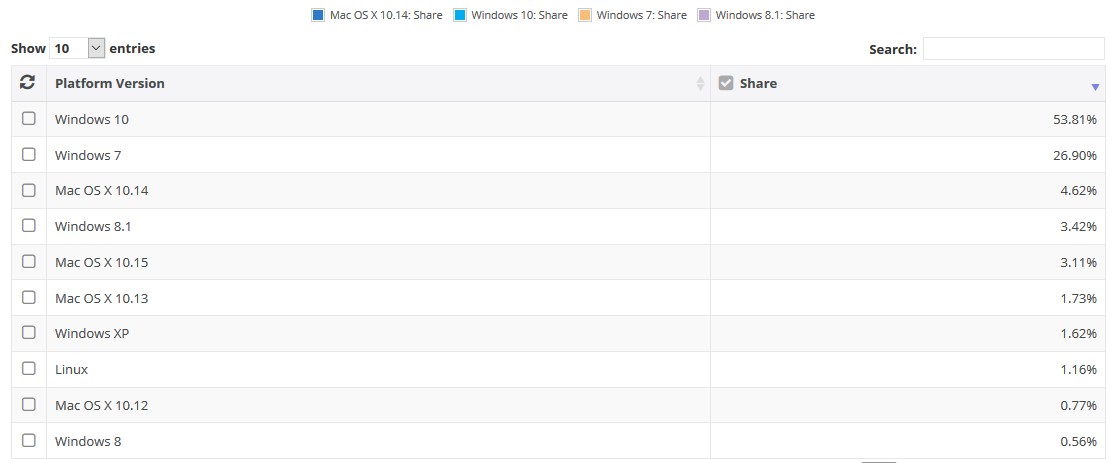
More specifically, Windows 10 remains the number one desktop operating system, but its usage fell from 54.30% to 53.81%. Windows 7 was still the second most popular choice, and the decline in adoption appears to be much slower than Microsoft had expected. Windows 7's market share fell from 26.94% in October to 26.90% in November.
Non-Windows desktop operating systems remain far behind in the charts. macOS 10.14 is the first non-platform to follow Windows in November with a market share of 4.62%. macOS 10.15 follows closely behind with 3.11%.
Linux is at 1.16%, according to the same source.
The transition from Windows 7 will take much longer than Microsoft had predicted, and this is due to the fact that more than 1 in 4 computers run on the 2009 operating system. Home users may decide to change operating systems, but businesses using Windows 7 face more problems, such as incompatibilities in hardware and in specialized software they use.
Dell recently revealed that Intel chip delays may affect Windows 7 to Windows 10 upgrades, forcing some companies to upgrade to the new operating system later in 2020.
____________________
