

The Kotlin mobile app development community is growing. Last year, Google recognized the Kotlin programming language as the second official language for Android App Development. Since then, Kotlin has also steadily built partnerships with Google Cloud Platform, Spring Frame, and Gradle. Android app developers are finally getting the realistic, modern, and intuitive language they’ve been waiting for.

What is Kotlin?
Kotlin is a statically typed programming language for the Java Virtual Machine (JVM) and JavaScript. Described as a general-purpose language, Kotlin introduces functional features to support interoperability and comprehension. The Kotlin project was born out of an ambition for increased productivity. The goal was to improve the coding experience in a practical and efficient way.
Kotlin is both an object-oriented (OO) and a functional programming (FP) language. It is compatible with OO and FP styles, allowing developers to incorporate elements from any form. Kotlin supports higher-order functions and function types, making it an excellent choice for functional programming.
A central focus for Kotlin is to enable mixed-language projects. Kotlin is fully compatible with Java and Objective C, which makes learning the new language painless. Kotlin introduces improved syntax, as well as concise expressions and abstractions. Using Kotlin with Java eliminates the need for excessive boilerplate code, which is a huge win for Android developers.
Kotlin 2018: A Year in Review
After Google I/O 2017, Kotlin saw tremendous growth in Android development. Since then, JetBrains hosted the first KotlinConf and announced the beta release of Kotlin/Native.
Last year, JetBrains released the first review of Kotlin/Native, and as we move into 2019, developers now have access to the Kotlin/Native Beta. On Kotlinverse, adoption of cross-platform development is moving slowly. Pusher’s State of Kotlin reveals that out of 3,000 respondents, only a quarter used some kind of cross-platform support, with most abandoning Kotlin/Native.
In 2018, Airbnb began transitioning from React Native to Kotlin. In fact, they have written 80% of their new code in Kotlin. So while Kotlin adoption hasn’t been explosive, industry insiders are noting the many benefits Kotlin has to offer.
Is this the end of Java?
There are mixed opinions from developers.
Java is a great programming language with a huge range of open source tools and libraries to help developers. So, no language is wrong, and even Java is subject to complications that can make a developer's job tedious. If nothing else, Kotlin will introduce solutions to common programming headaches and improve the Java ecosystem as a whole.
Over the past year, Kotlin has become a more stable and exciting development option for Android Studio. Some developers seem to believe that Kotlin will eliminate Java development for Android in the coming years. Other experts believe that Kotlin and Java will continue to exist side by side without any competition between them.
For most, Kotlin's strengths outweigh the language's drawbacks. There are some limitations within Java that hinder Android API design. Kotlin is inherently lightweight, clean, and less complex to understand, especially when it comes to writing callbacks, data classes, and getters/setters. In other words, Kotlin was specifically designed to improve upon existing Java models by providing solutions to API design deficiencies.
Kotlin addresses a number of weaknesses caused by Java:
Brevity
Many developers have praised Kotlin for being concise. Isn’t that a trait that Java is known for? However, readability should always take precedence over concise practices. Yes, Kotlin’s concise nature simplifies the developer’s job and leaves less room for errors, but Kotlin doesn’t practice brevity for the sake of brevity. Boilerplate code is a problem that leads to more bugs and wastes time until the problem is identified.
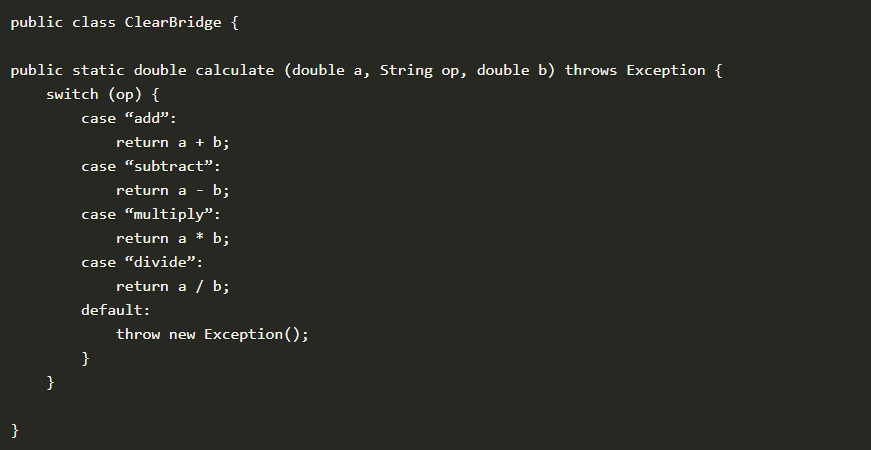
The above is a simple calculator function written in Java. For comparison, here is the same calculator written in Kotlin:
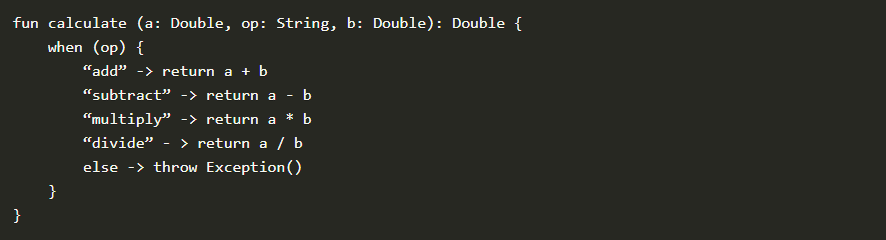
As we can see, the Kotlin version of this calculator is written in half the lines of code that it took to program the Java function. Consistency is a key factor in productivity. Writing large projects becomes easier when a programmer has more power per line of code. A key observation here is that Kotlin does not neglect understanding for the sake of brevity. The syntax is concise and yet meaningful.
Interoperability
Interoperability is the core goal of Kotlin. From the beginning, the project’s intention was to use existing knowledge and experience to make every library available to Kotlin developers. Developers can simply write modules in Kotlin that work seamlessly within existing Java code. By emitting Bytecode, a Kotlin compiler allows the two languages to work together in the same project.
Built-in Null Safety
The Kotlin type system has built-in safety. The infamous NullPointerException is largely responsible for Android and Java development errors. But what we didn’t mention is that Null can easily crash an application. Kotlin solves this problem by building in null safety. This addition saves developers time from having to write additional code to fix the problem.
There are no checked exceptions
The checked exception feature in Java can be problematic. Checked exceptions are when the compiler forces the caller of a function to catch or rethrow an exception. The fact is that checked exceptions are often unnecessary and cause “empty catch blocks.” Non-existent checked exceptions are a nuisance for developers because they are forced to check the code for a possible exception that never occurred. As a solution, Kotlin removed them entirely, which improves type-safety.
Is it necessary for developers to learn Kotlin?
Again, there are mixed opinions.
While it’s not absolutely necessary for developers to make the switch to Kotlin, they are going to encounter the language eventually. If you already know Java, learning Kotlin will be simple. The language is poised to impact application development on a massive scale, so it doesn’t hurt to learn the basics first and then develop modern development techniques and styles over time. All of this will certainly help grow any developer’s skill set.
Kotlin 2019 Outlook
With partnerships with colossal brands like Amazon, Pinterest, Netflix, Uber, and Trello, support from JetBrains and Google , and near-universal adherence to the programming language, it's pretty safe to say that Kotlin will be with us for quite some time.
Kotlin is quickly proving to be a superior programming language for mobile app development and presents developers with a rich opportunity to experiment with modern programming. Developers can switch between OO, FP, and scripting with zero effort, easily setting a new standard for what a programming language should be able to accomplish.
